Welcome to KSM SOLAR


Welded Carbon Steel Solar Carport
Single-Column Segmented Back-to-Back PV Carport
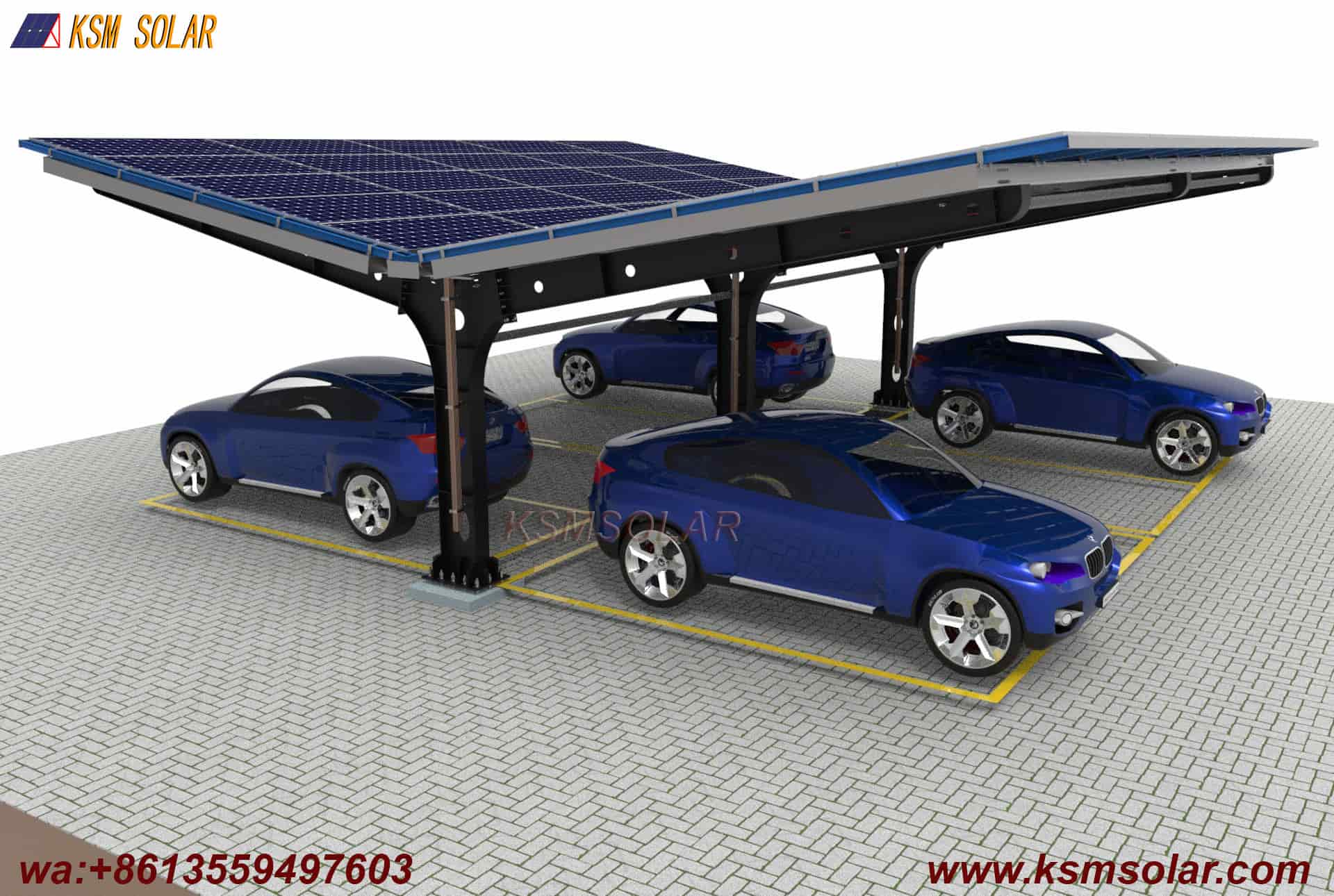
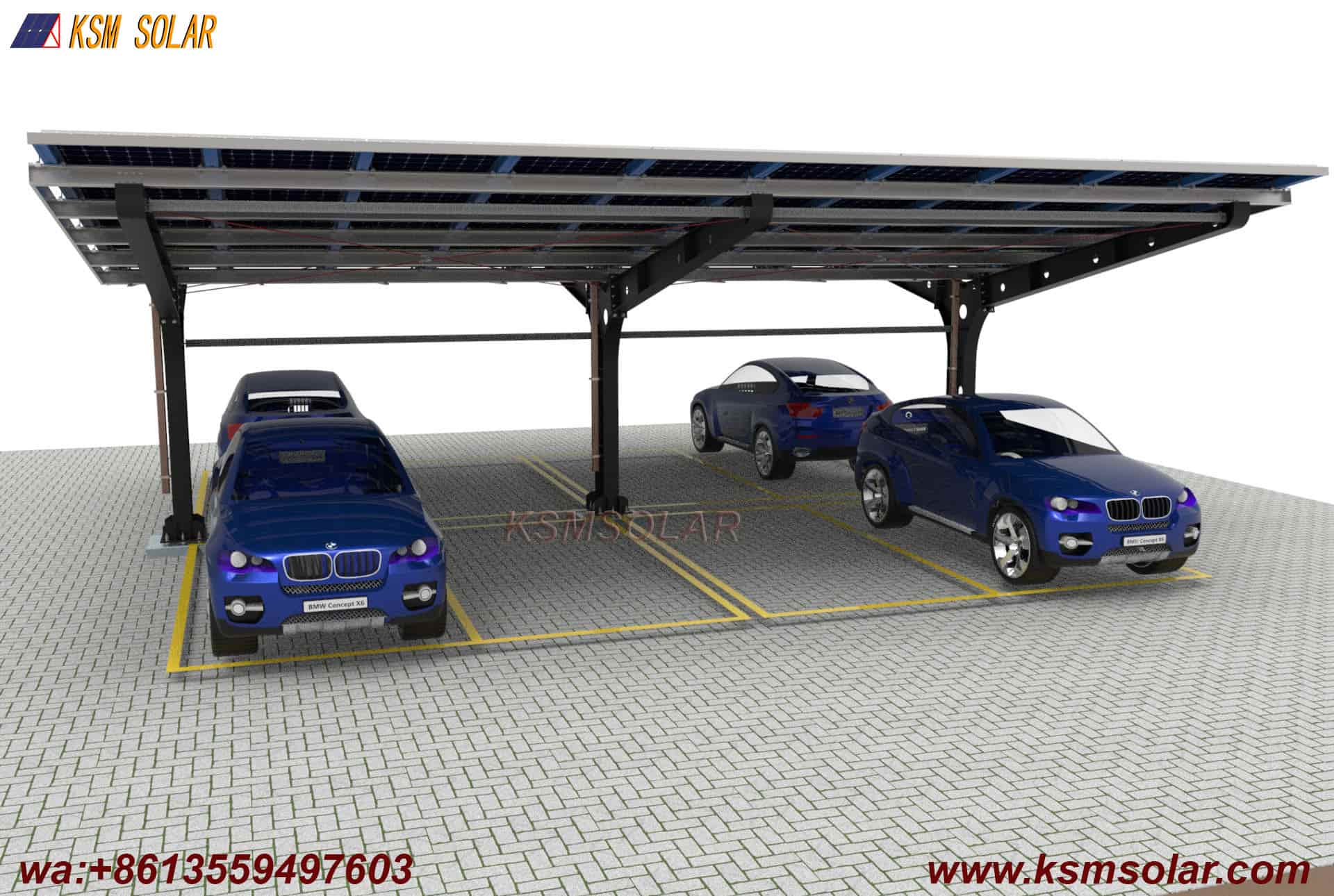
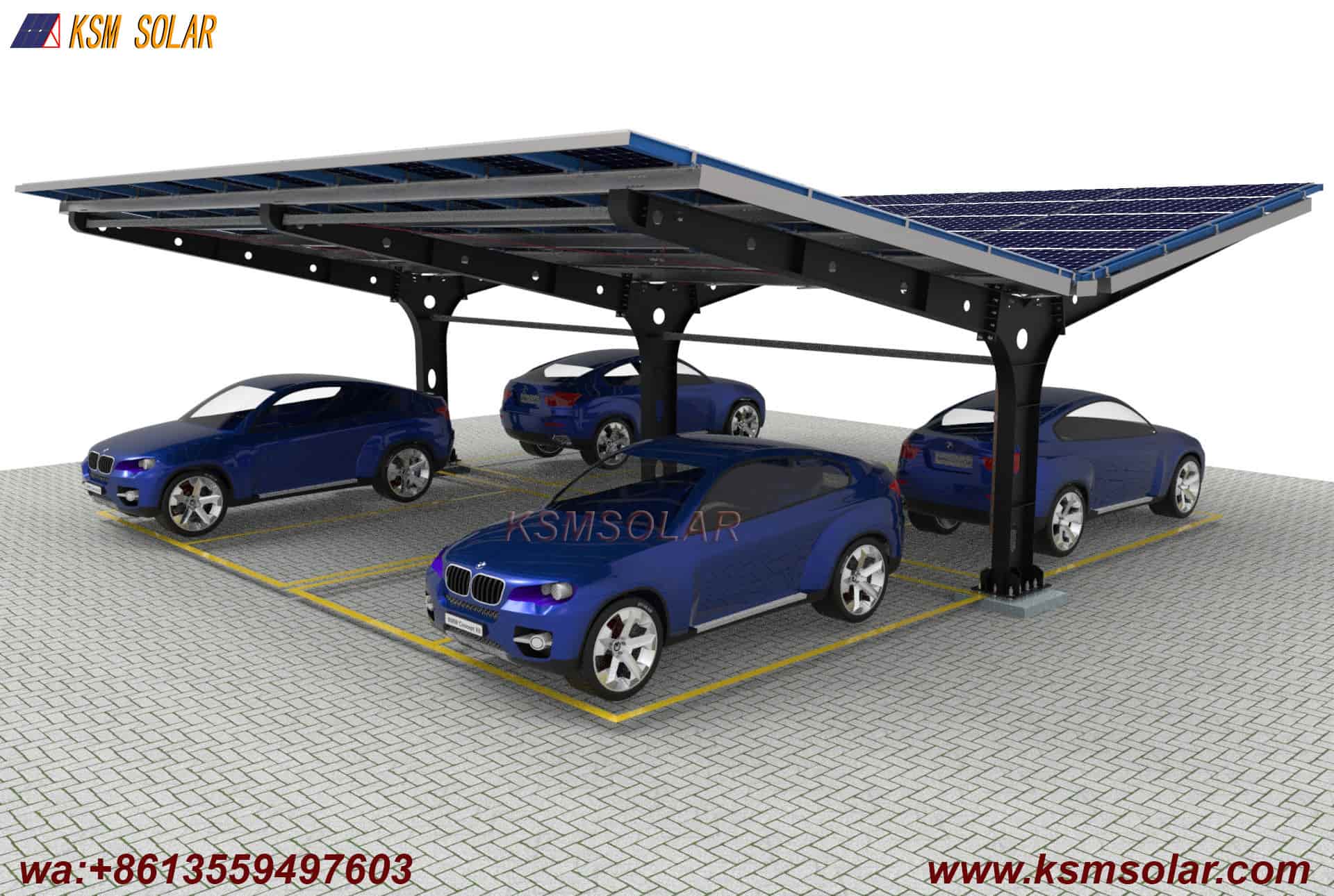
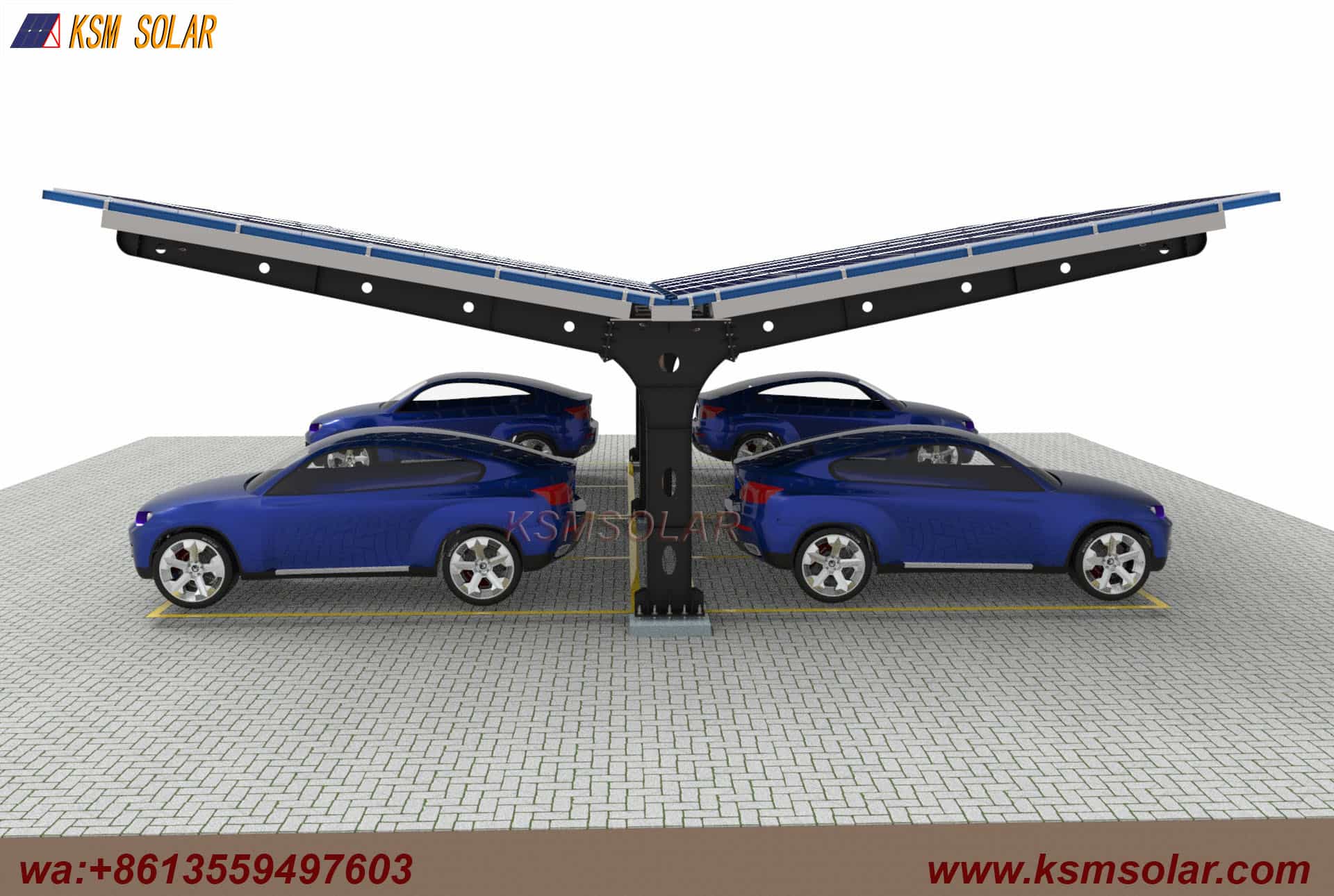
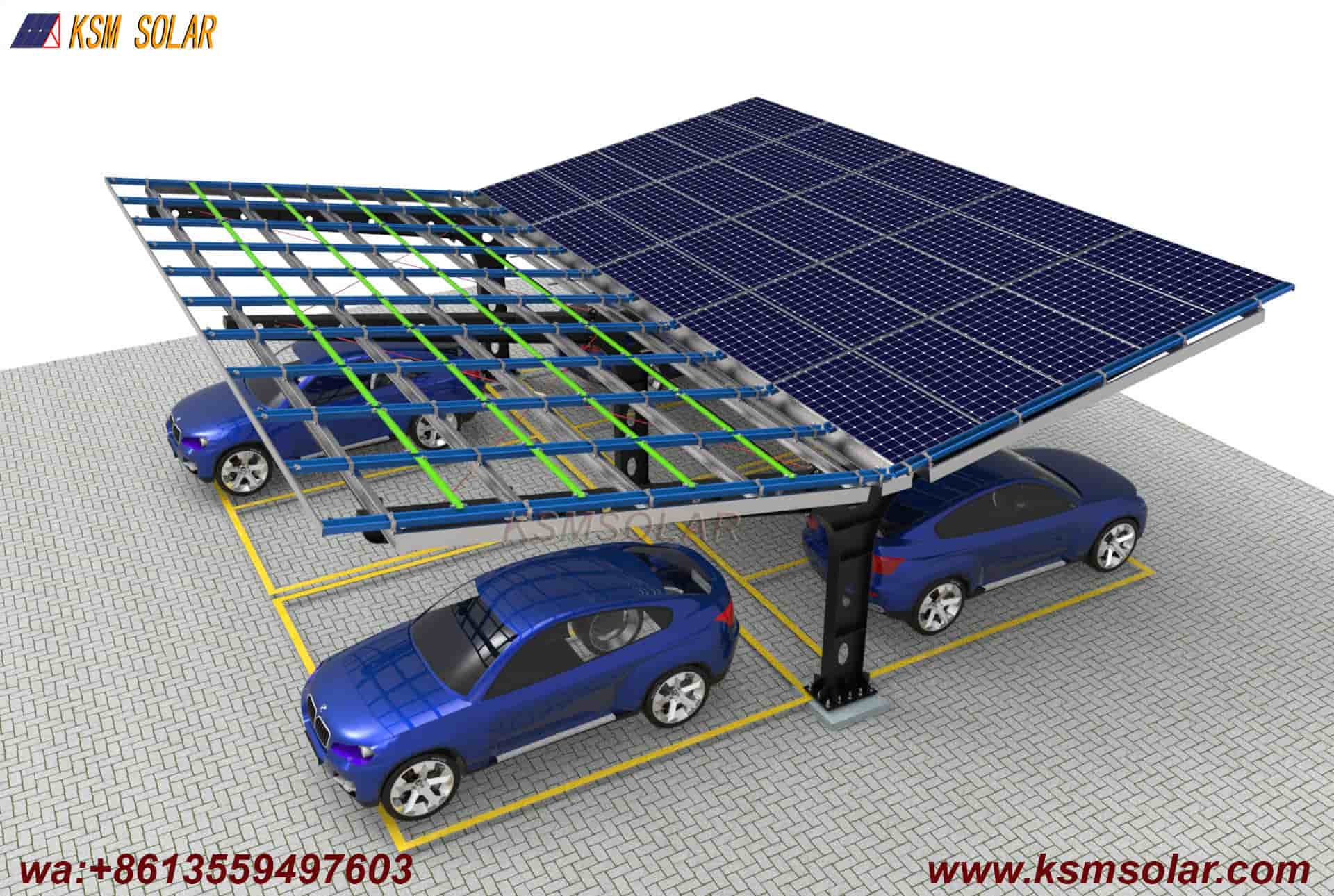
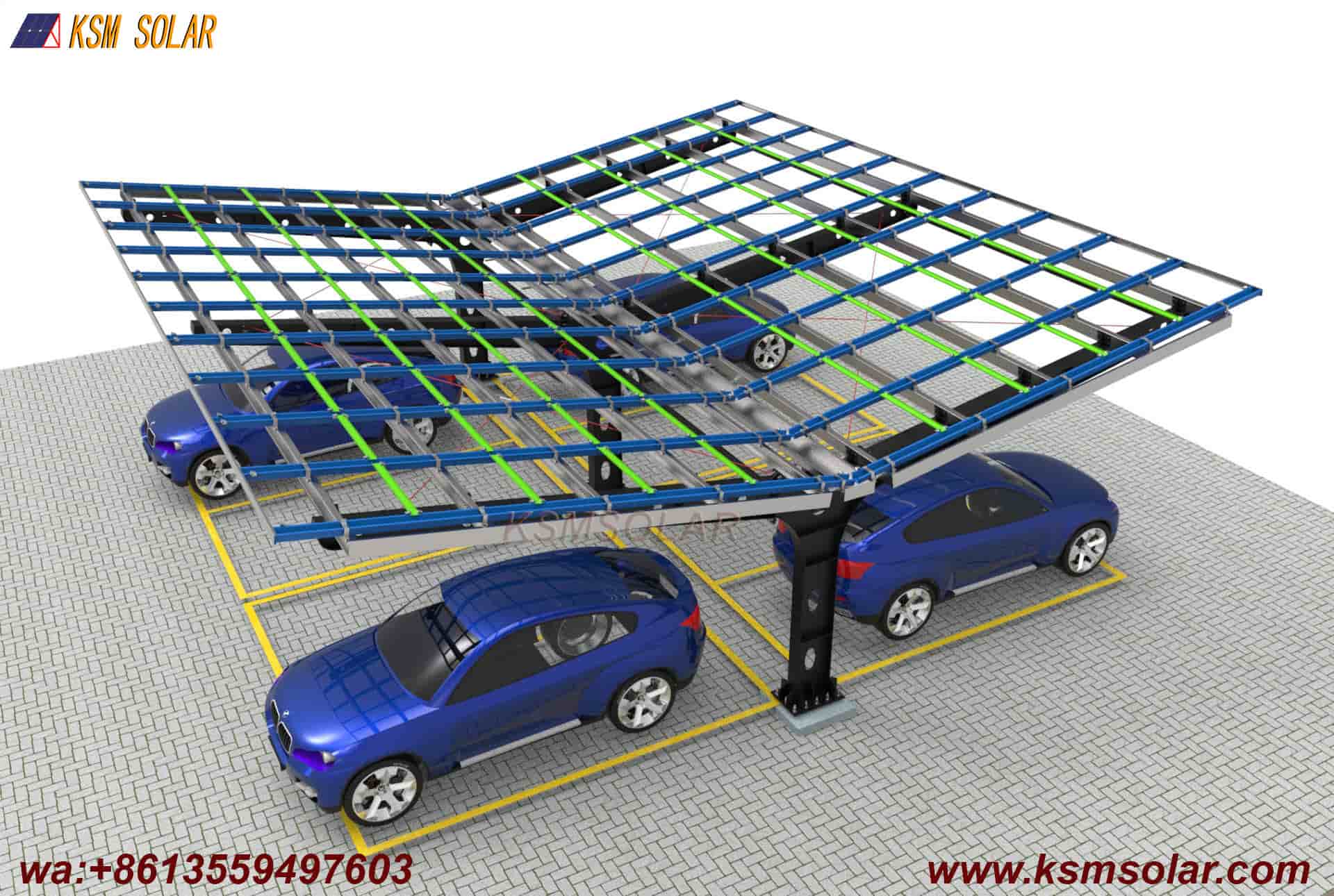
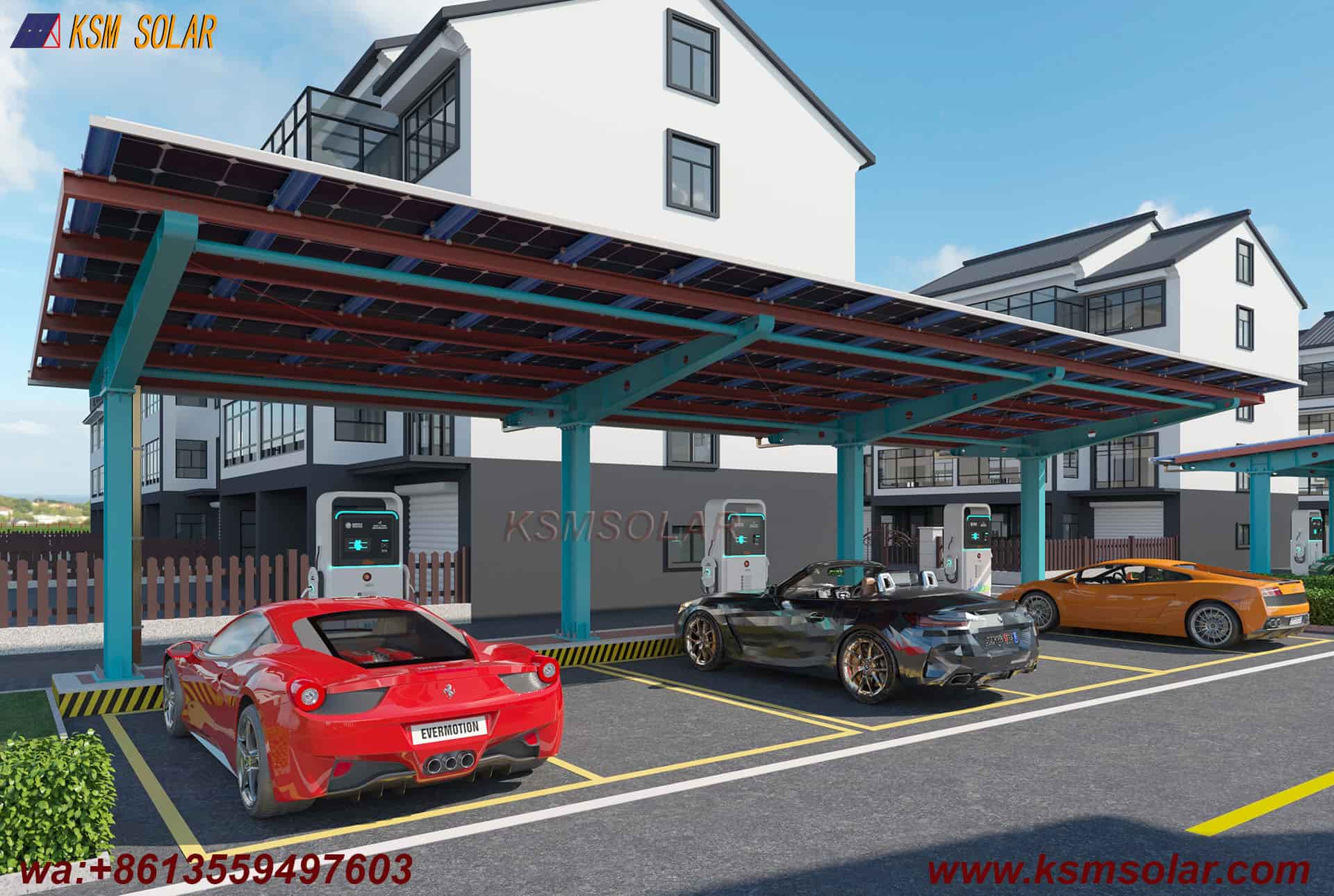
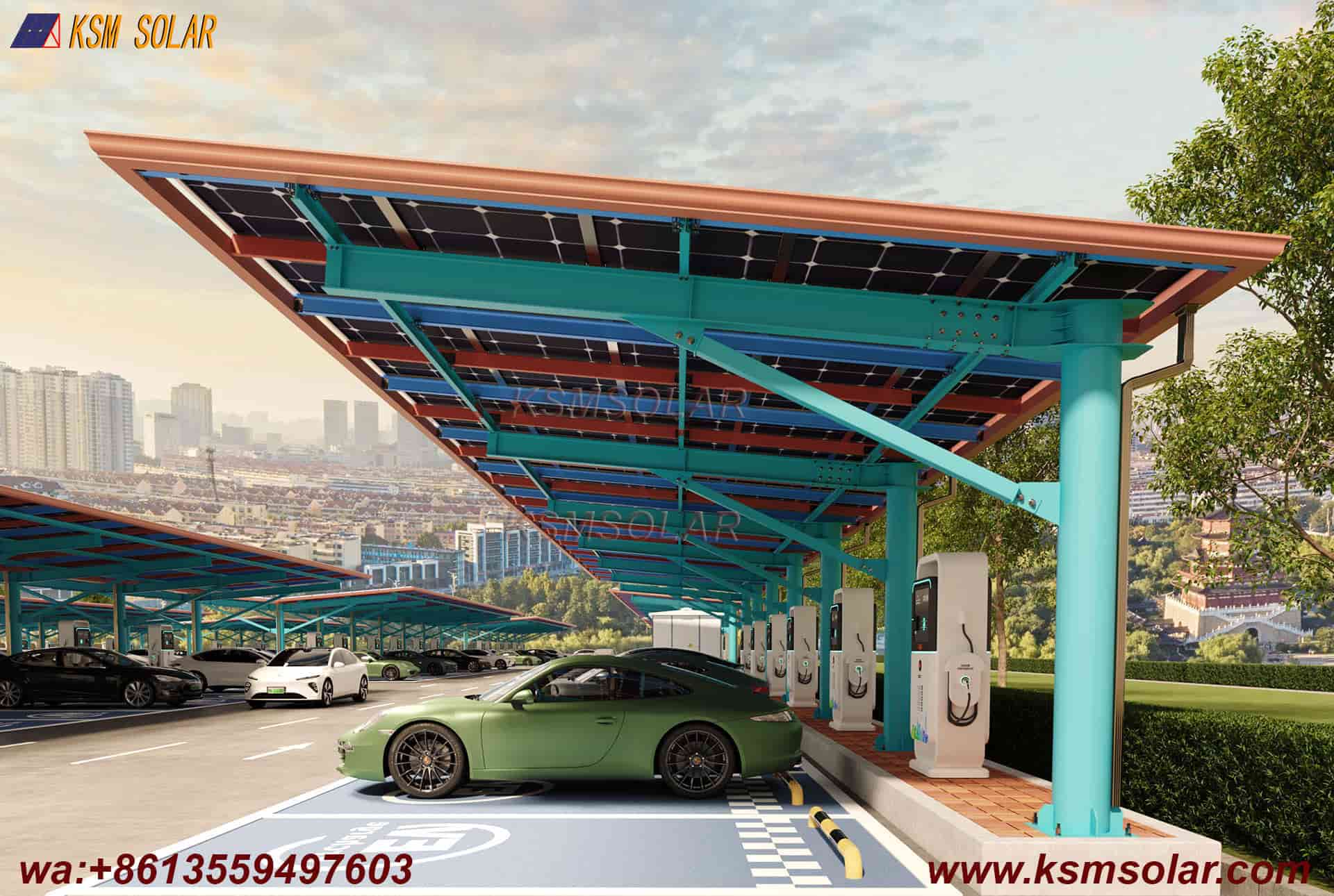
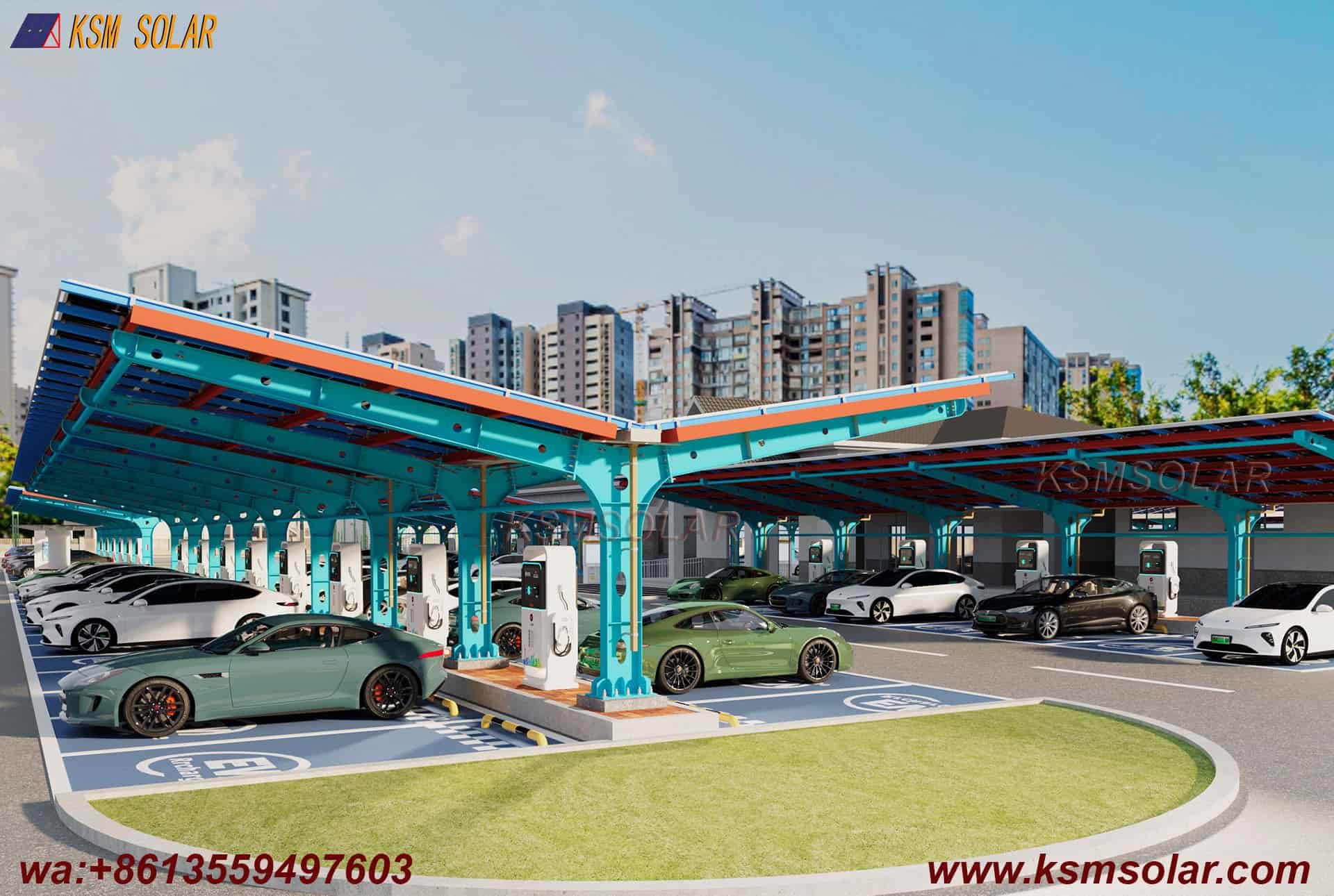
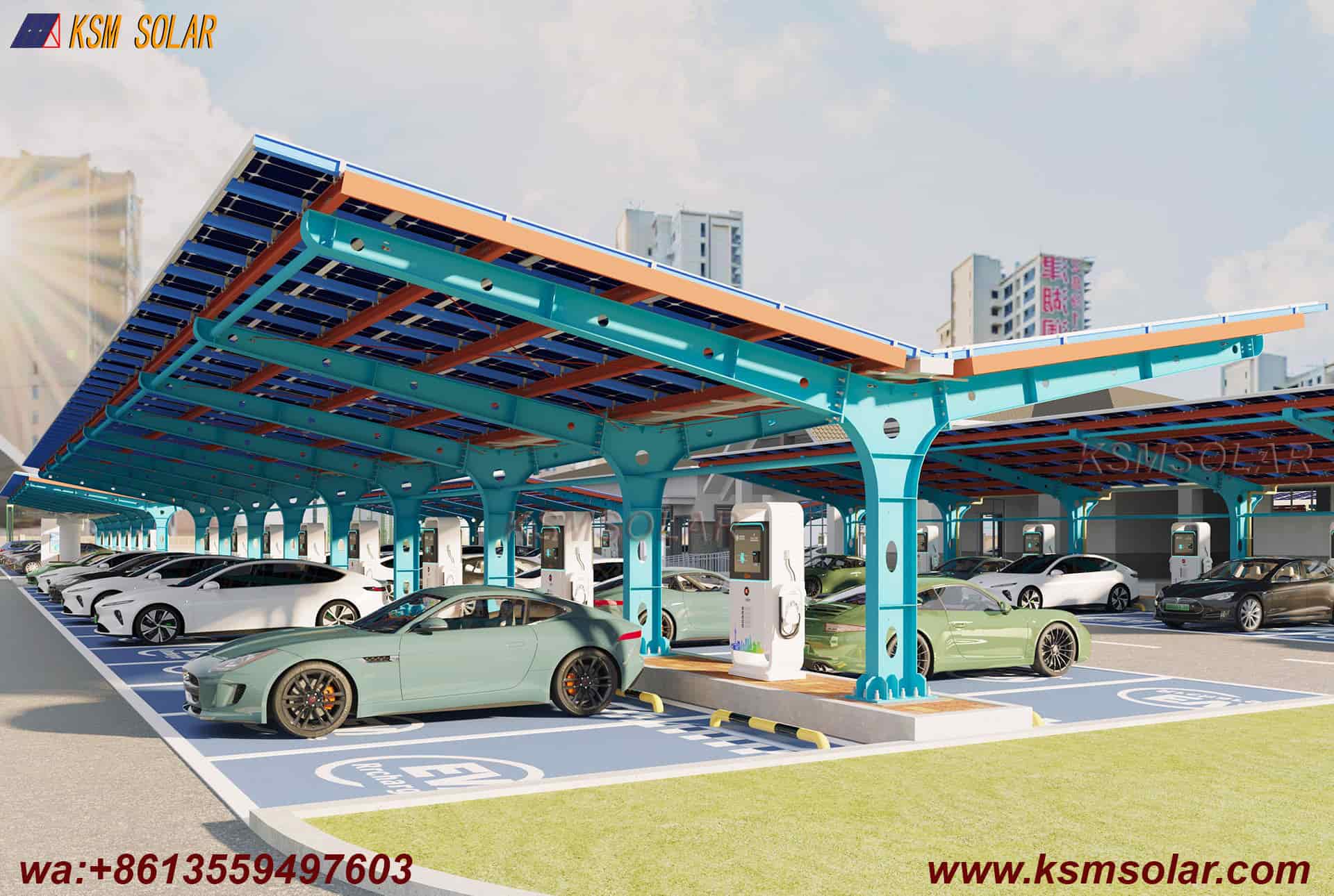
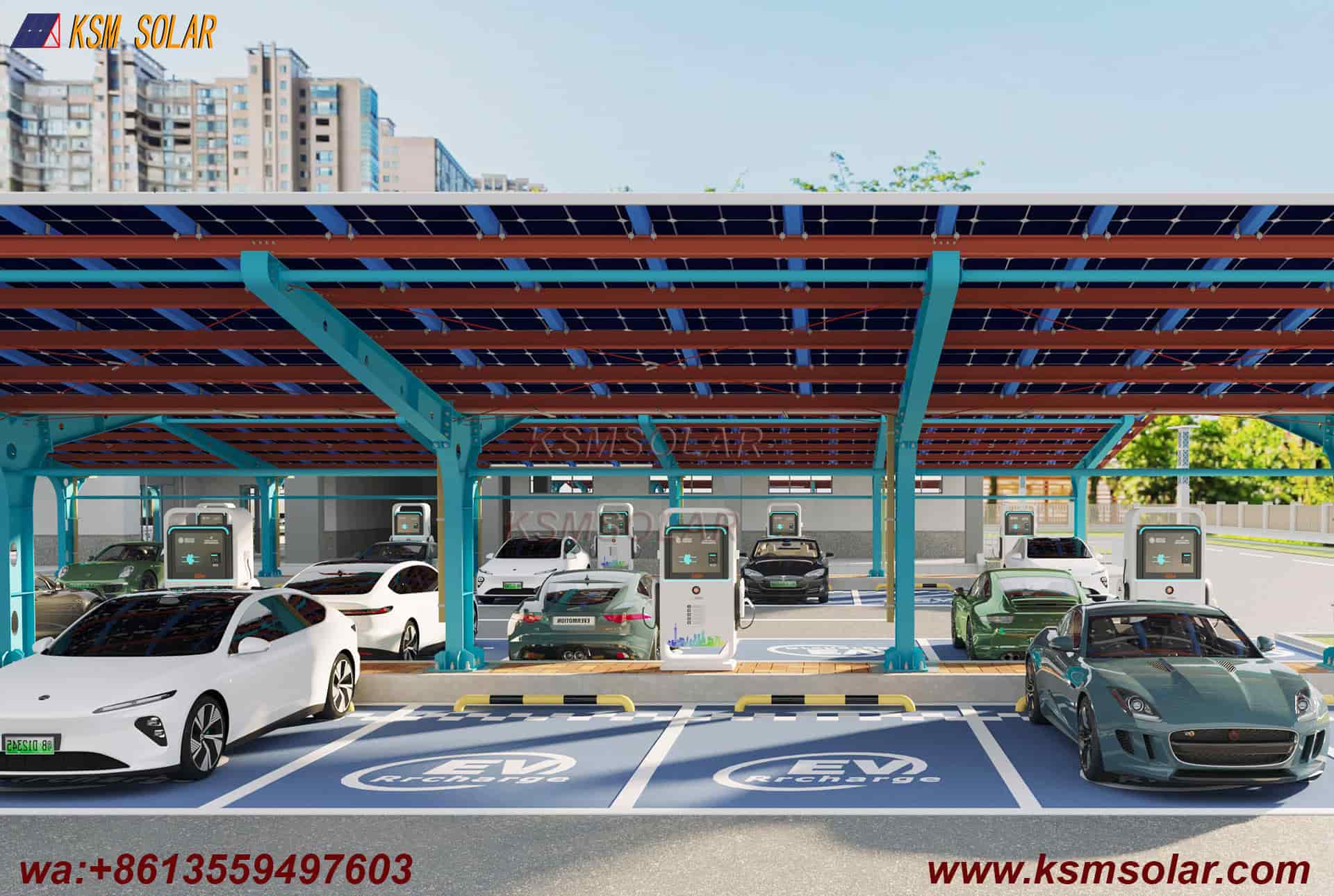
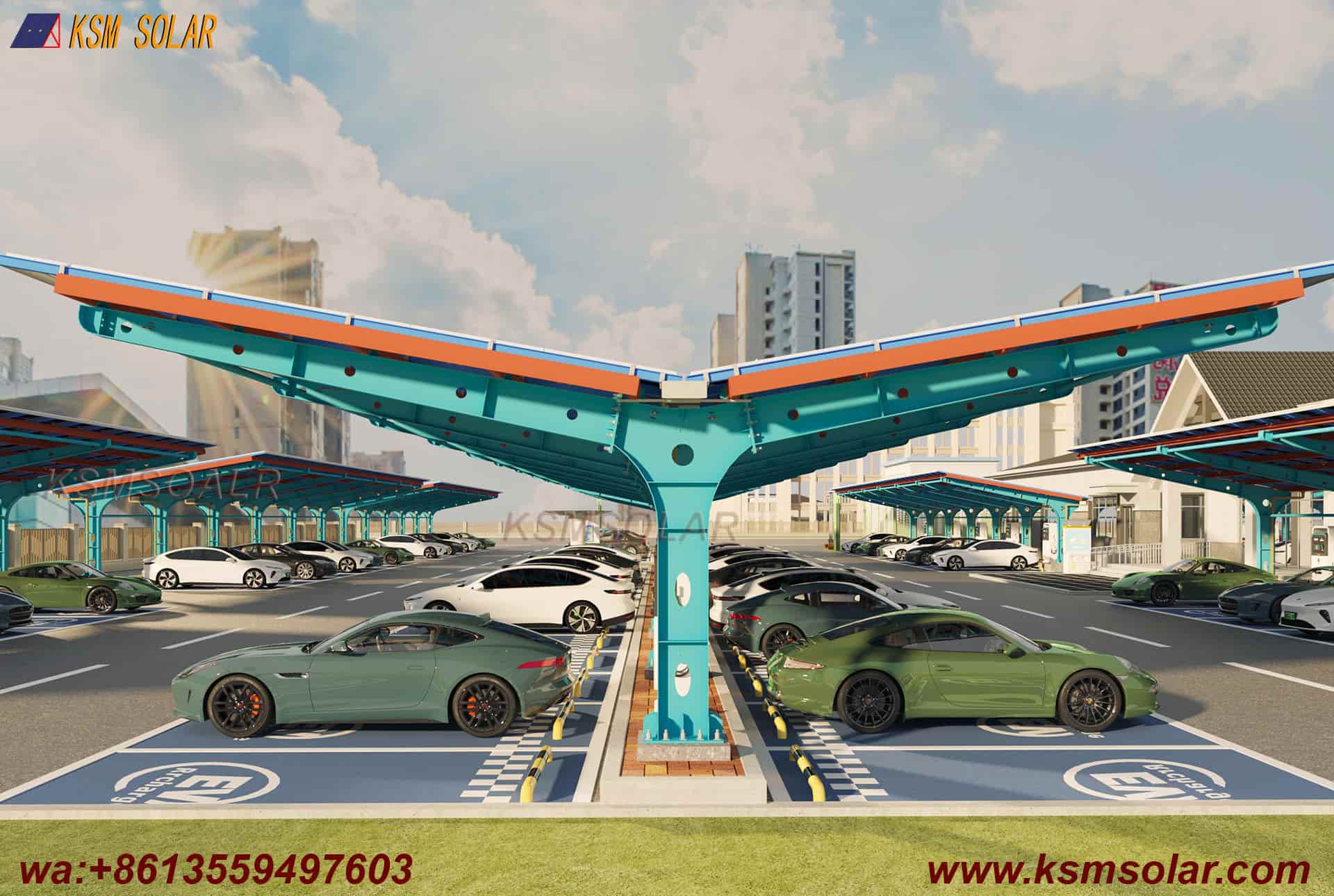
The Single-Column Carbon Steel Segmented Beam-Column Back-to-Back Photovoltaic Carport integrates a modular construction approach with a space-efficient dual-sided layout. This system utilizes a single central column to support two opposing roof planes via segmented, factory-fabricated beam elements, creating a high-density parking and energy generation structure that optimizes land use while maintaining structural integrity and installation flexibility.
Core Engineering & Configuration Features
1. Centralized Single-Column Support with Segmented Beams
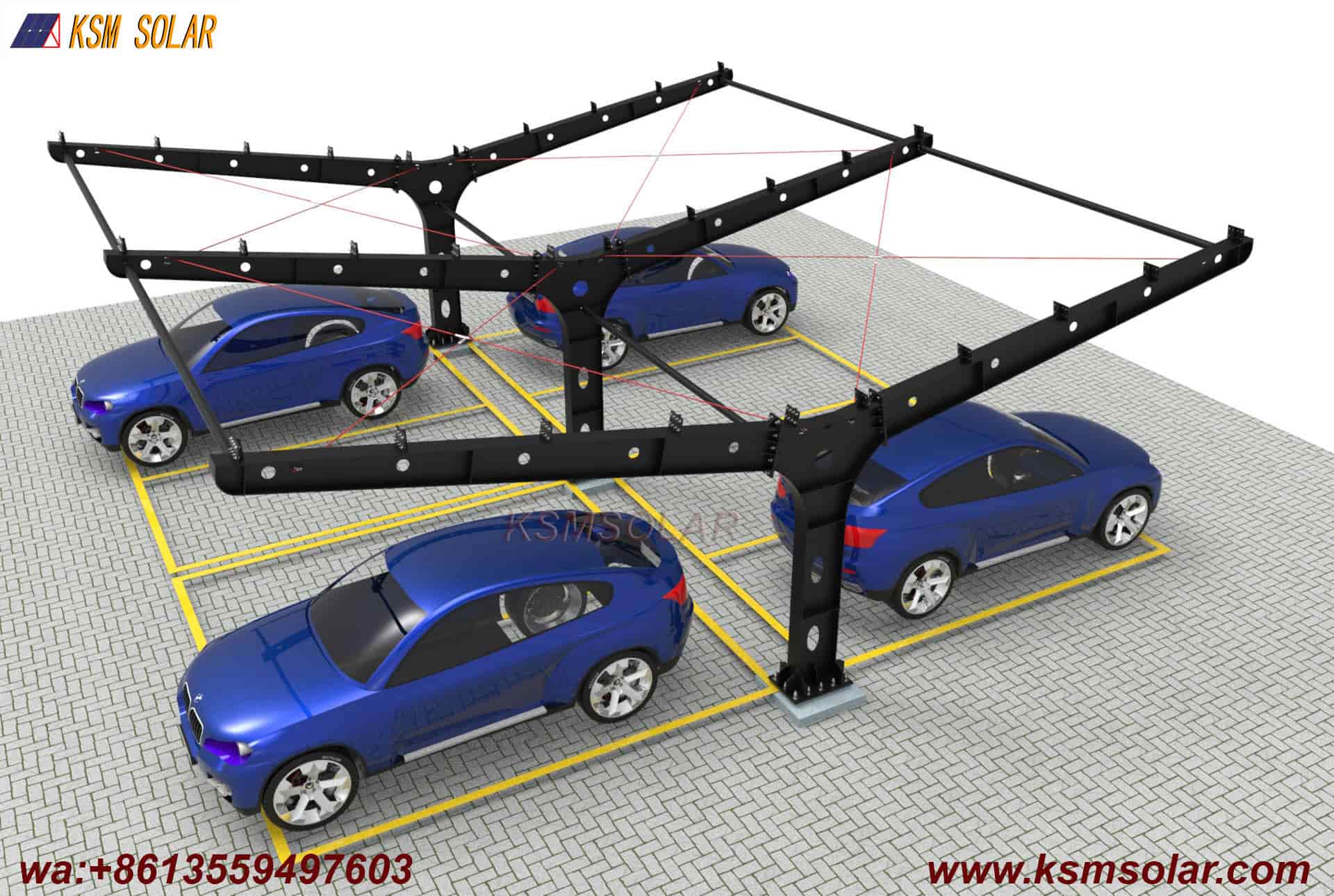
Unified Load-Bearing Core: A single, robust carbon steel column (typically using circular or rectangular hollow sections) serves as the primary vertical support. From this central core, pre-fabricated beam segments extend symmetrically in opposite directions to form the two opposing roof planes of the back-to-back configuration.
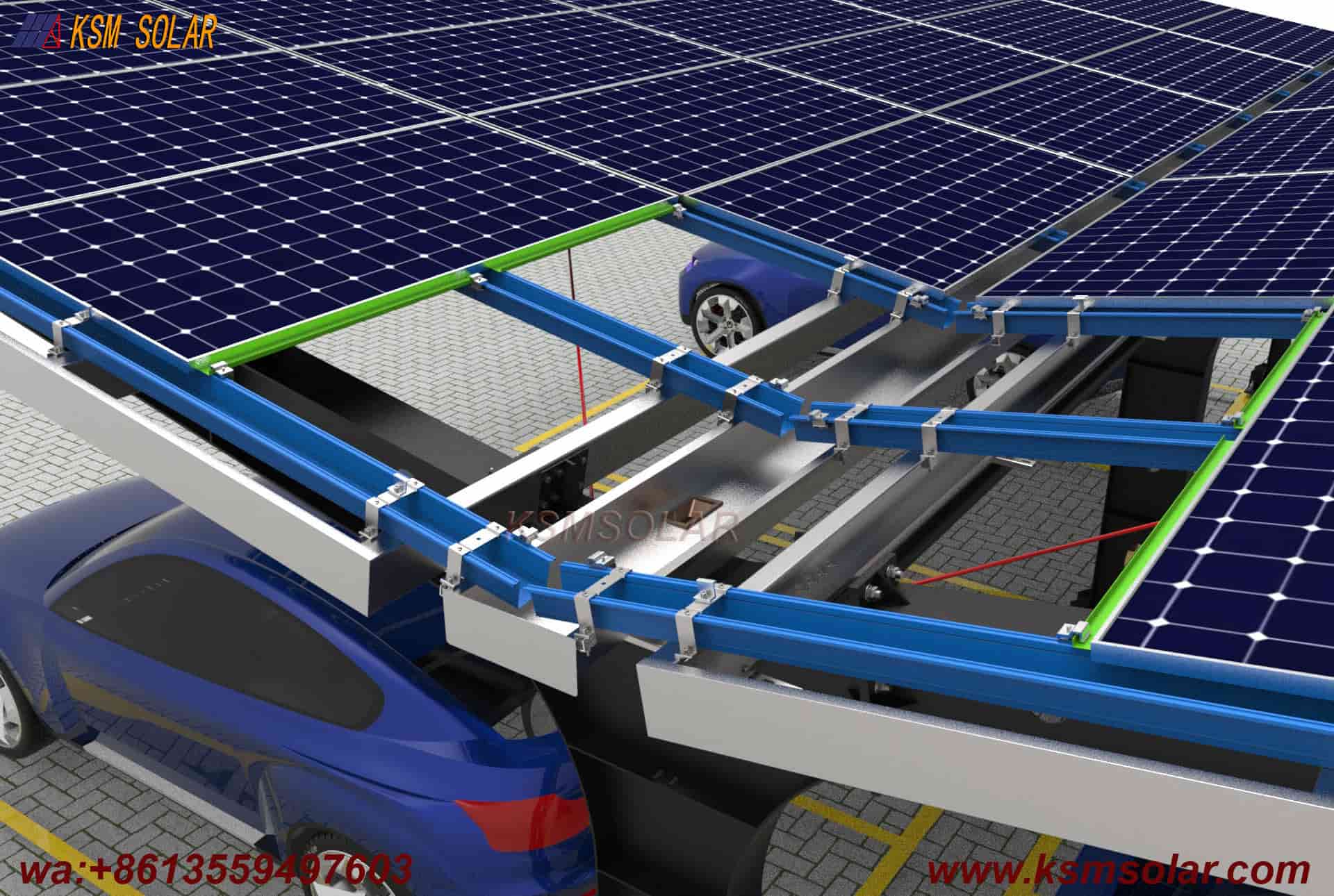
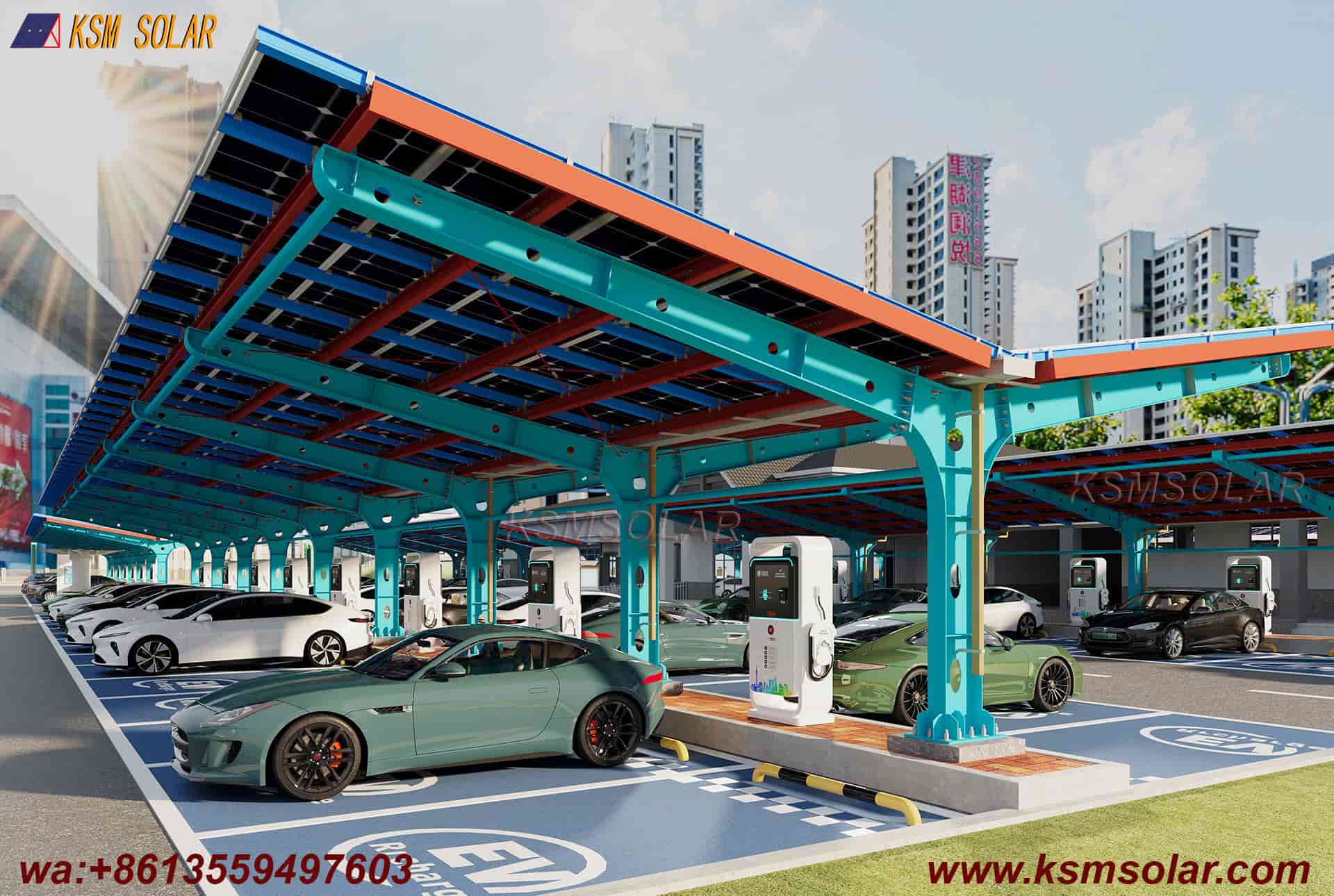
Modular Beam Segmentation: Each cantilevered beam arm is constructed from multiple shorter carbon steel segments (e.g., 3-5 meter lengths) that are connected end-to-end via high-strength bolted splices with machined contact surfaces. This segmentation facilitates transportation, allows for variable cantilever lengths, and simplifies replacement or modification.
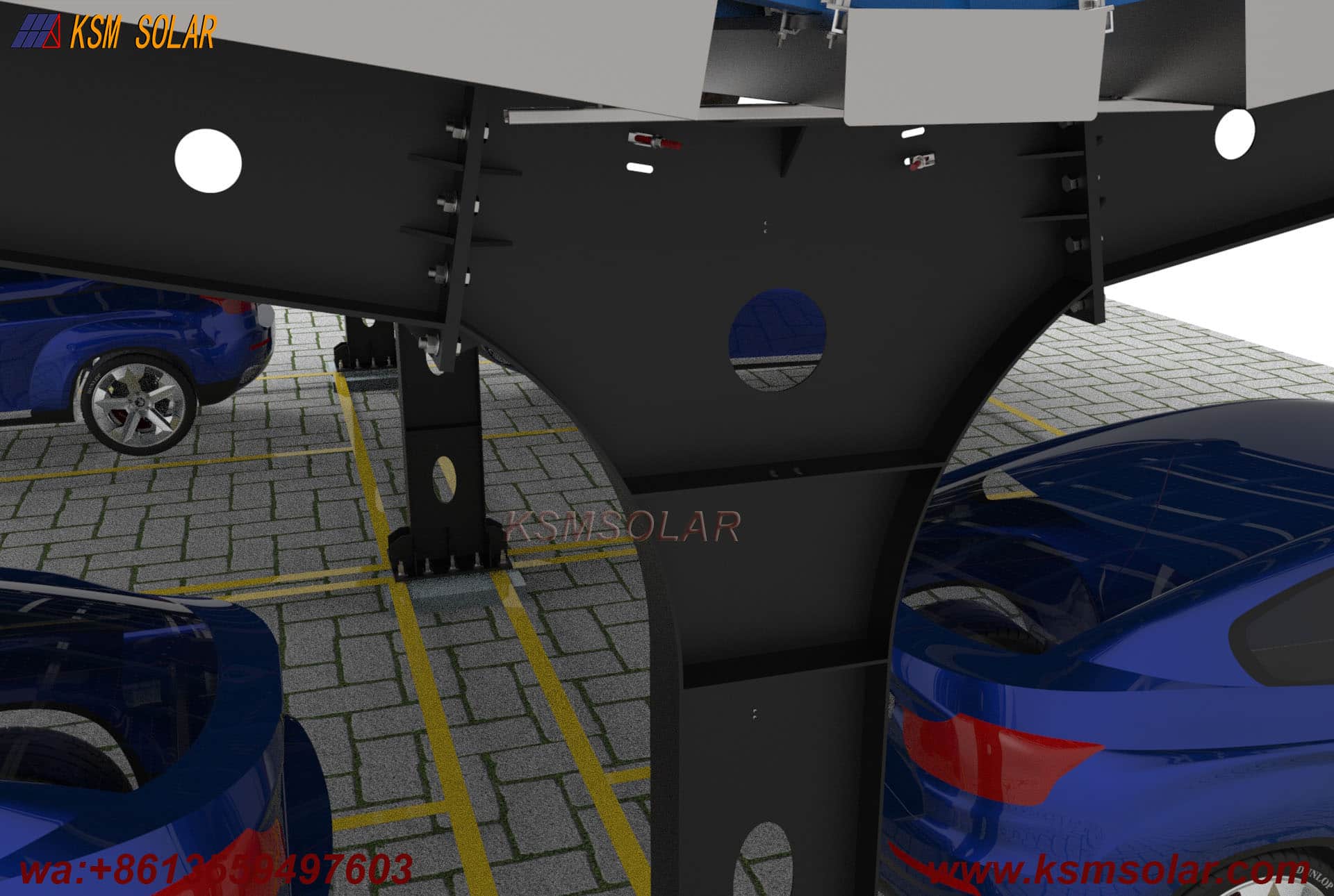
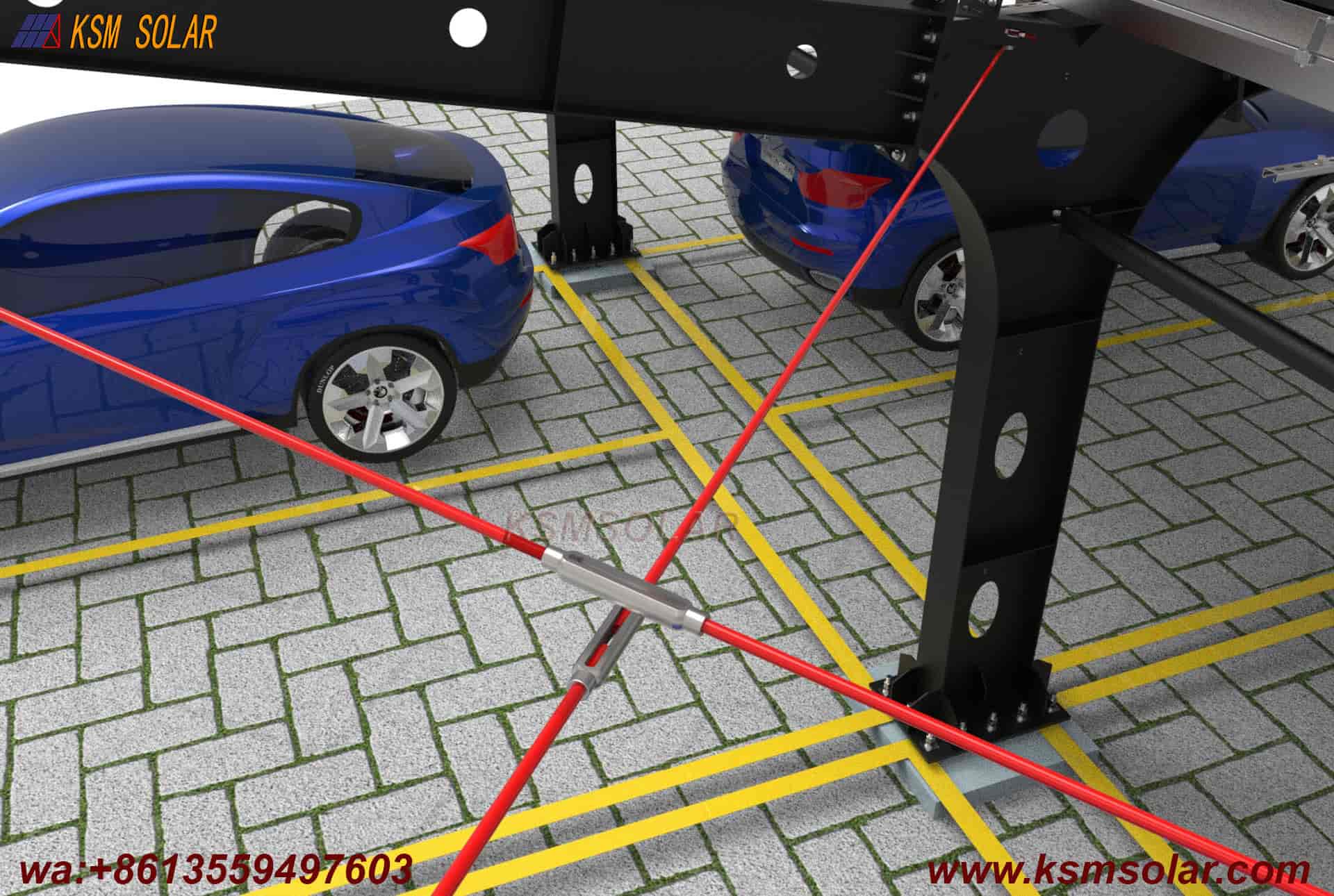
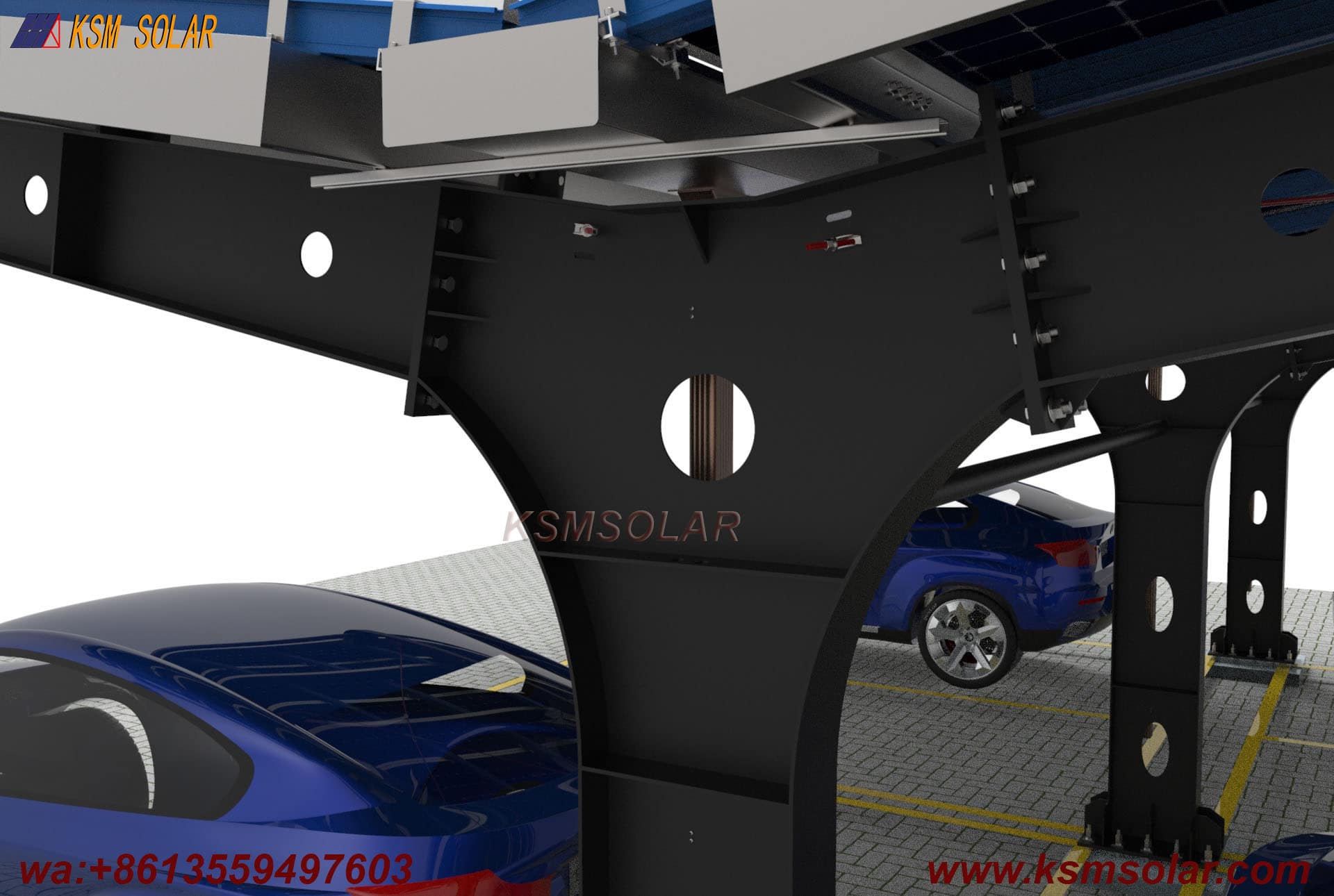
Engineered Moment Connection: At the column, the beam segments are connected via a custom fabricated steel moment node. This node is often a welded assembly of thick steel plates that transfers the bending moment from the two opposing beams directly into the column, creating a rigid, stable frame.
2. Back-to-Back Dual-Plane Roof Structure
Symmetrical Roof Geometry: Two independent, single-slope roof planes extend in opposite directions from the central column. This creates a mirrored, back-to-back profile that efficiently shelters two rows of vehicles parked facing each other.
Independent or Unified Water Management: Each roof plane can drain independently to its own side via eaves gutters, or can be designed to form a shallow central valley at the column (with appropriate high-level flashing), directing water to downpipes integrated into the column.
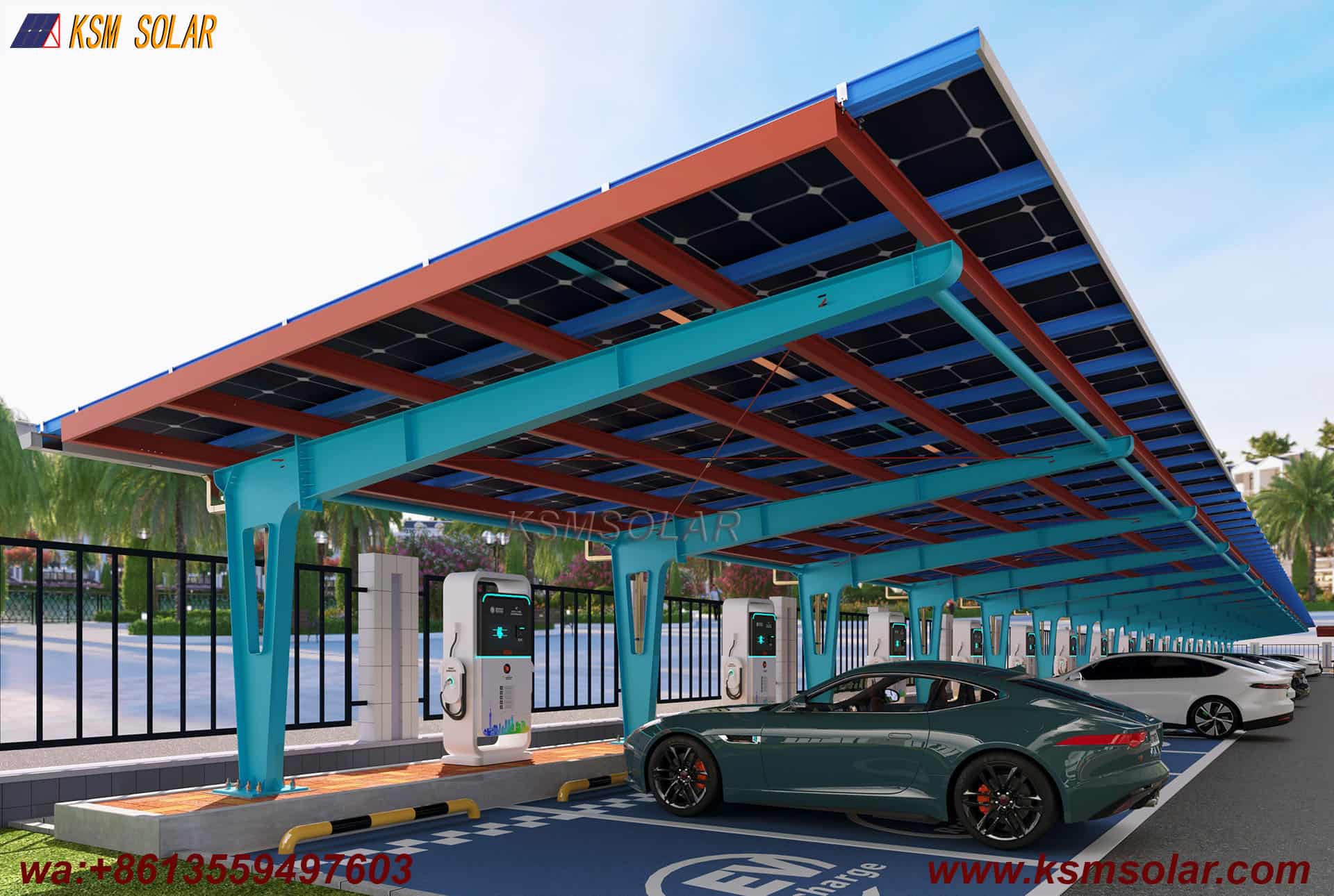
Optimized Column Spacing: Multiple single-column units are arranged in a linear series, with the spacing between columns determining the bay length. This creates a rhythmic, modular appearance and highly efficient use of materials.
3. Advanced Fabrication & Corrosion Protection
Precision Factory Fabrication: The central column, beam segments, and the critical moment connection node are all pre-fabricated under controlled factory conditions. Beam segments are cut, drilled, and welded with high precision using CNC machinery.
Comprehensive Coating Application: All components undergo surface preparation (shot blasting to Sa 2.5) and receive a multi-layer protective coating after fabrication but before shipment. This typically includes a zinc-rich epoxy primer, an epoxy intermediate coat, and a polyurethane topcoat, applied to a total dry film thickness of 280-320 microns for C4 environment protection.
Protected Splice Details: Bolted splice connections between beam segments are designed with oversized splice plates and are assembled with sealant applied between faying surfaces to prevent moisture ingress and internal corrosion.
4. High-Efficiency Photovoltaic Integration
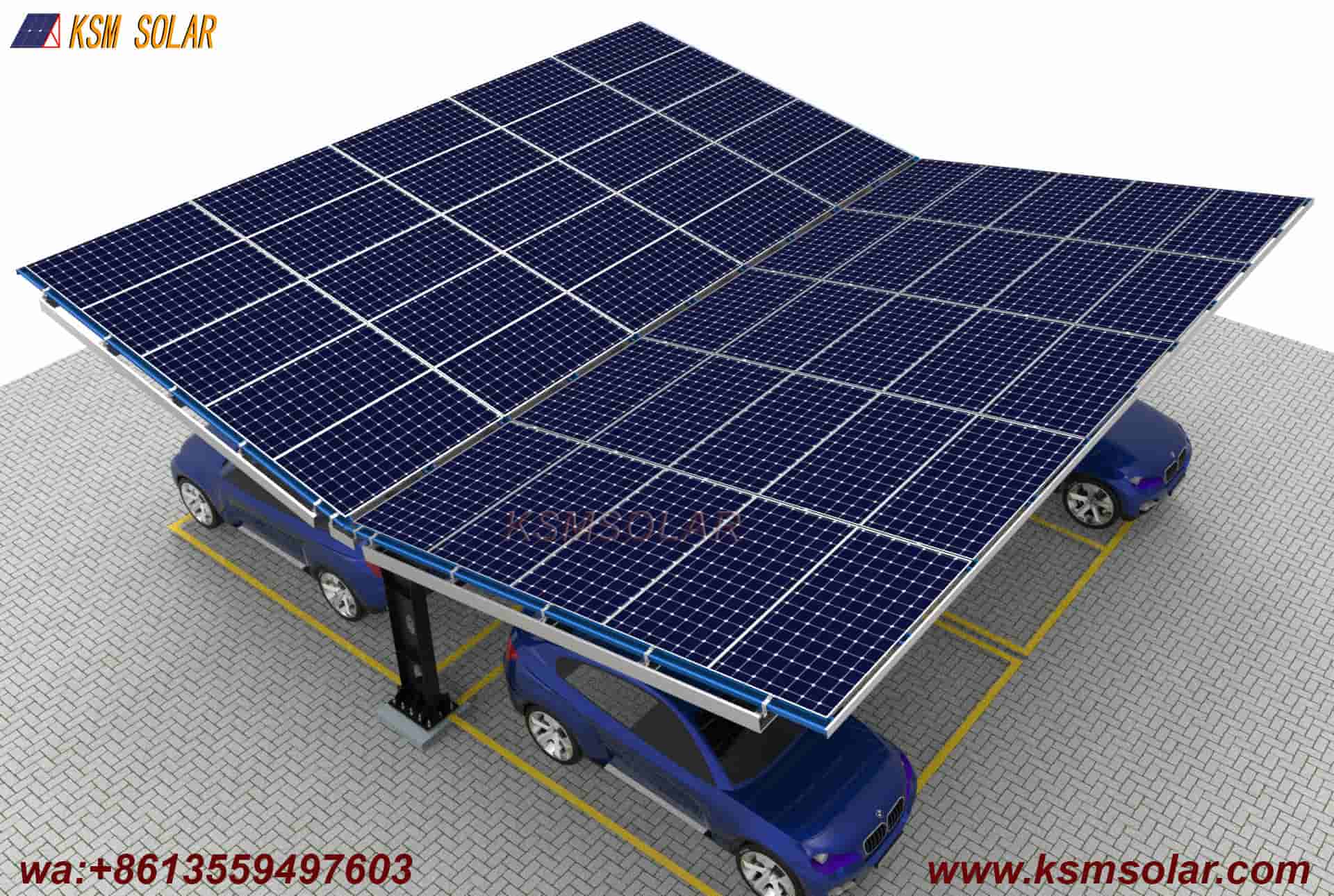
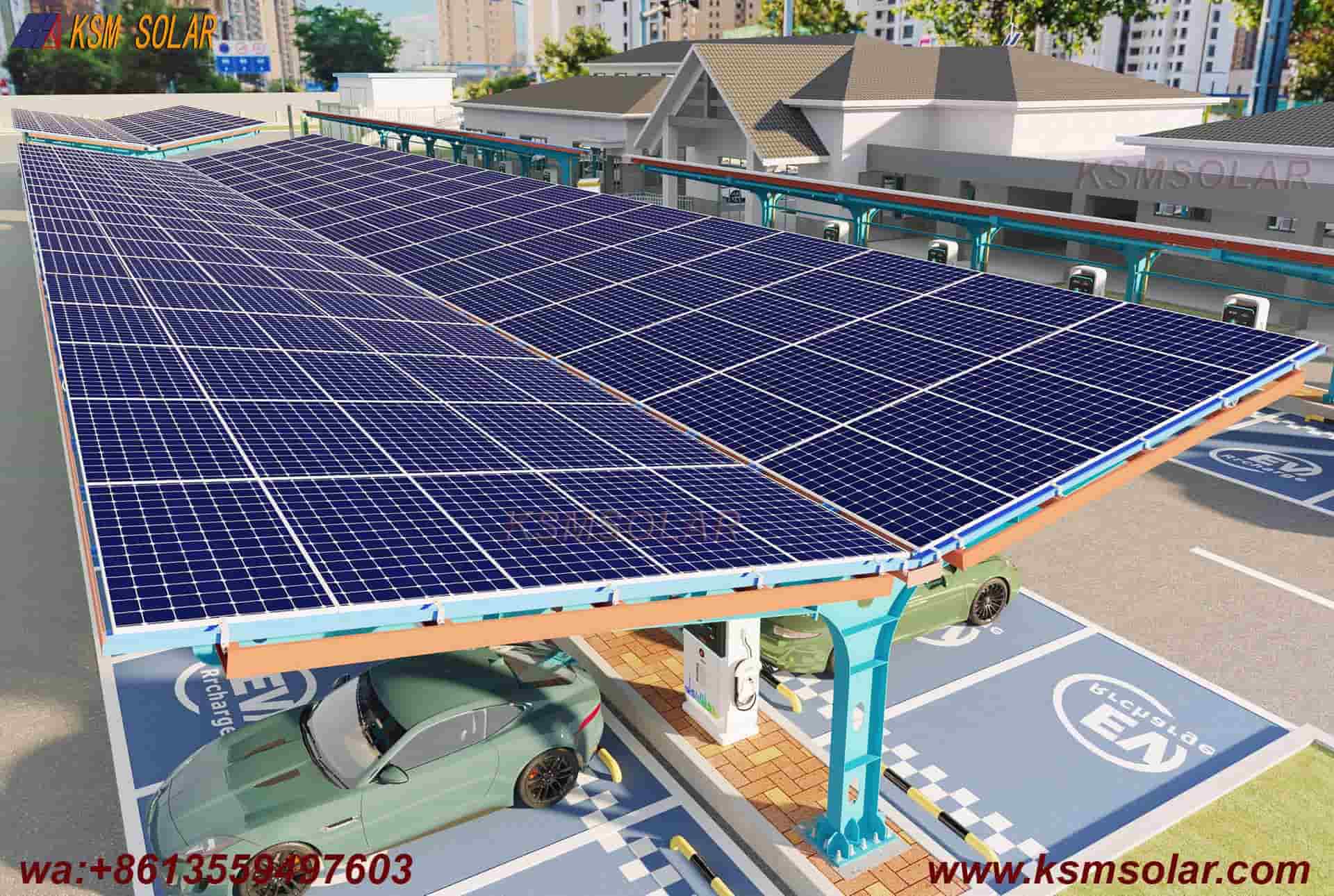
Dual-Aspect Solar Harvesting: The two opposing roof planes provide ideal surfaces for installing two independent PV arrays. These can be oriented identically (e.g., both south-facing) or in complementary directions (east and west) to flatten the daily power generation curve.
Centralized Electrical Hub: All electrical conduits from both roof arrays converge at the central column. This column can be designed as a hollow section with removable access panels, allowing it to house and protect inverters, combiners, and other balance-of-system components in a single, accessible location.
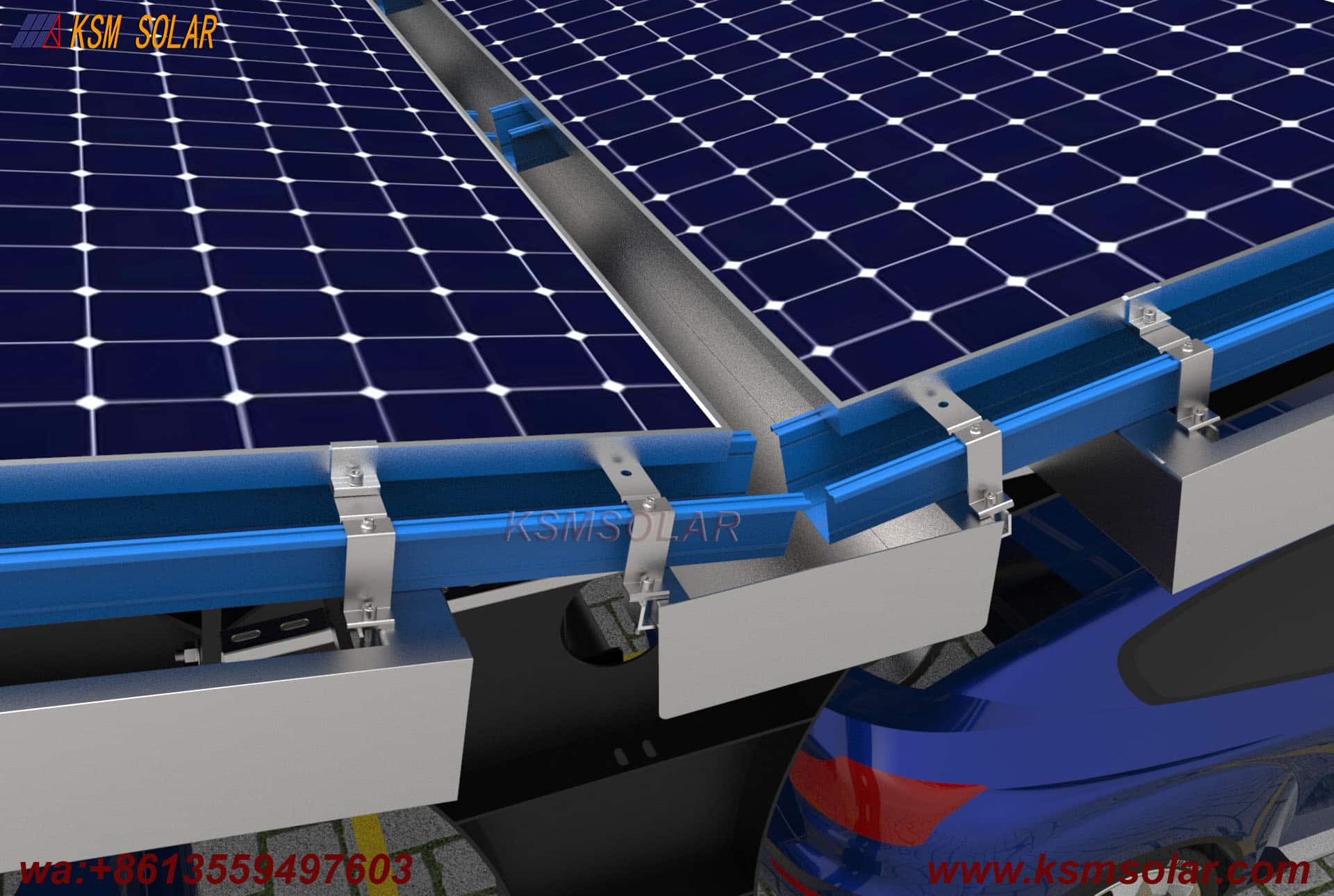
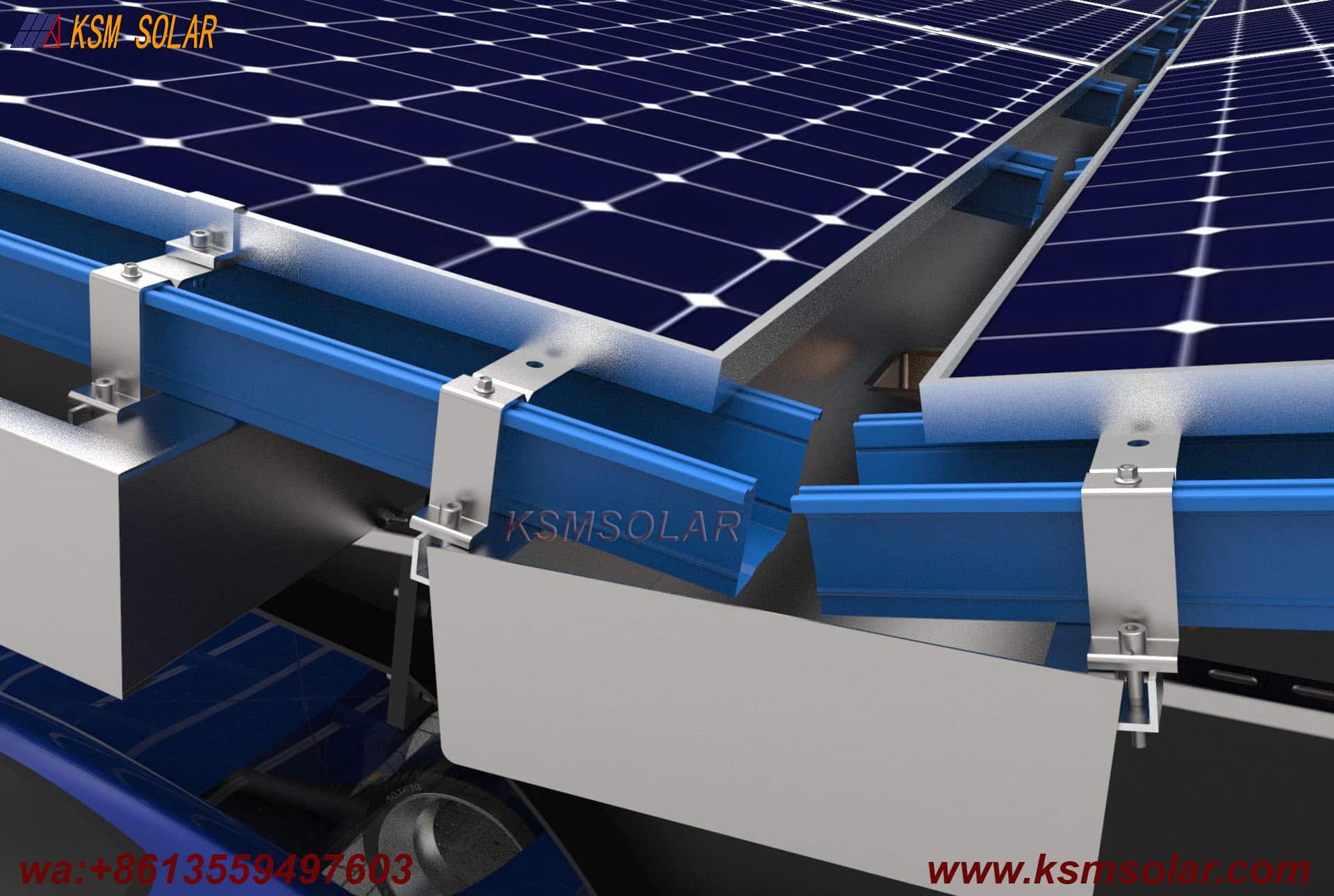
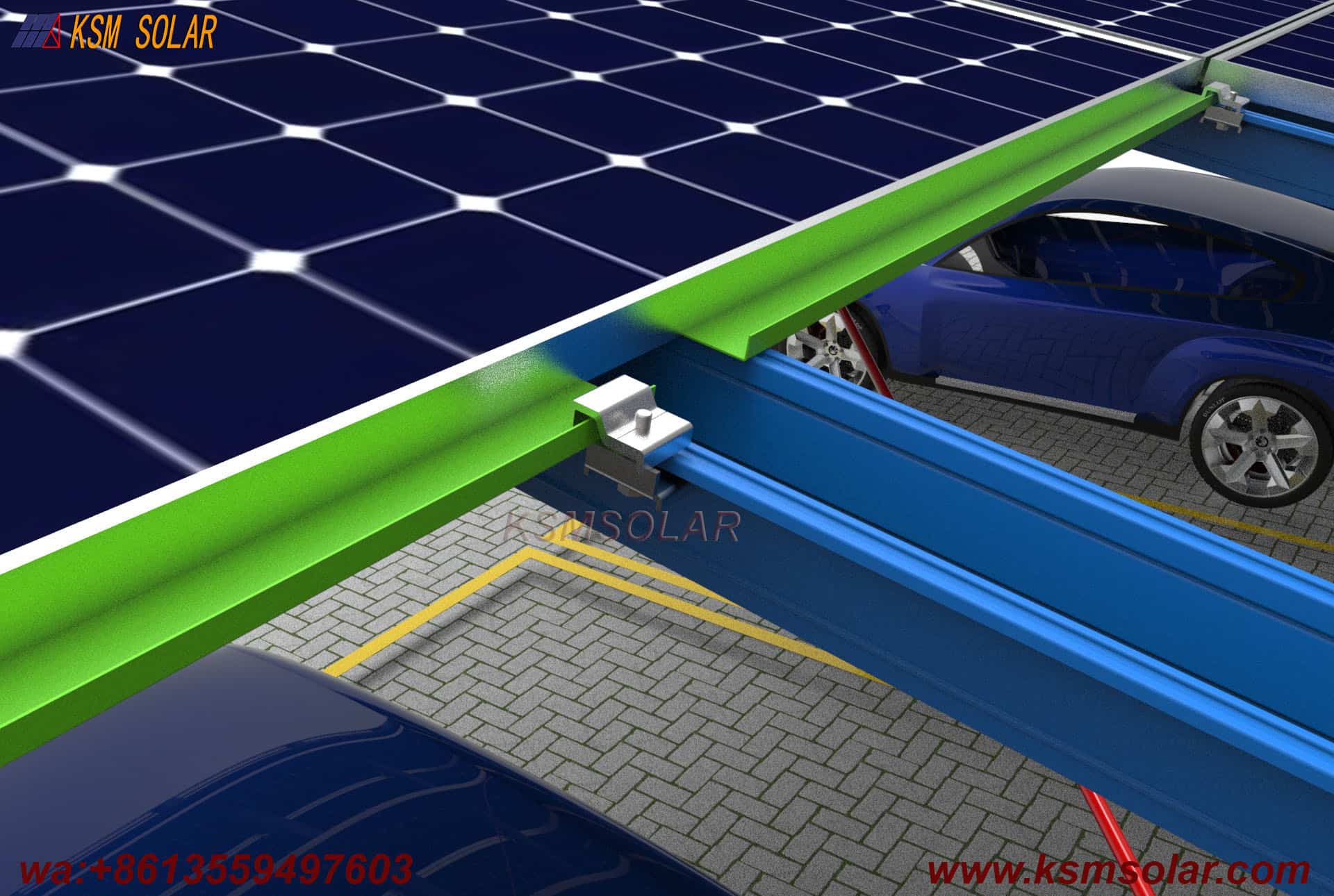
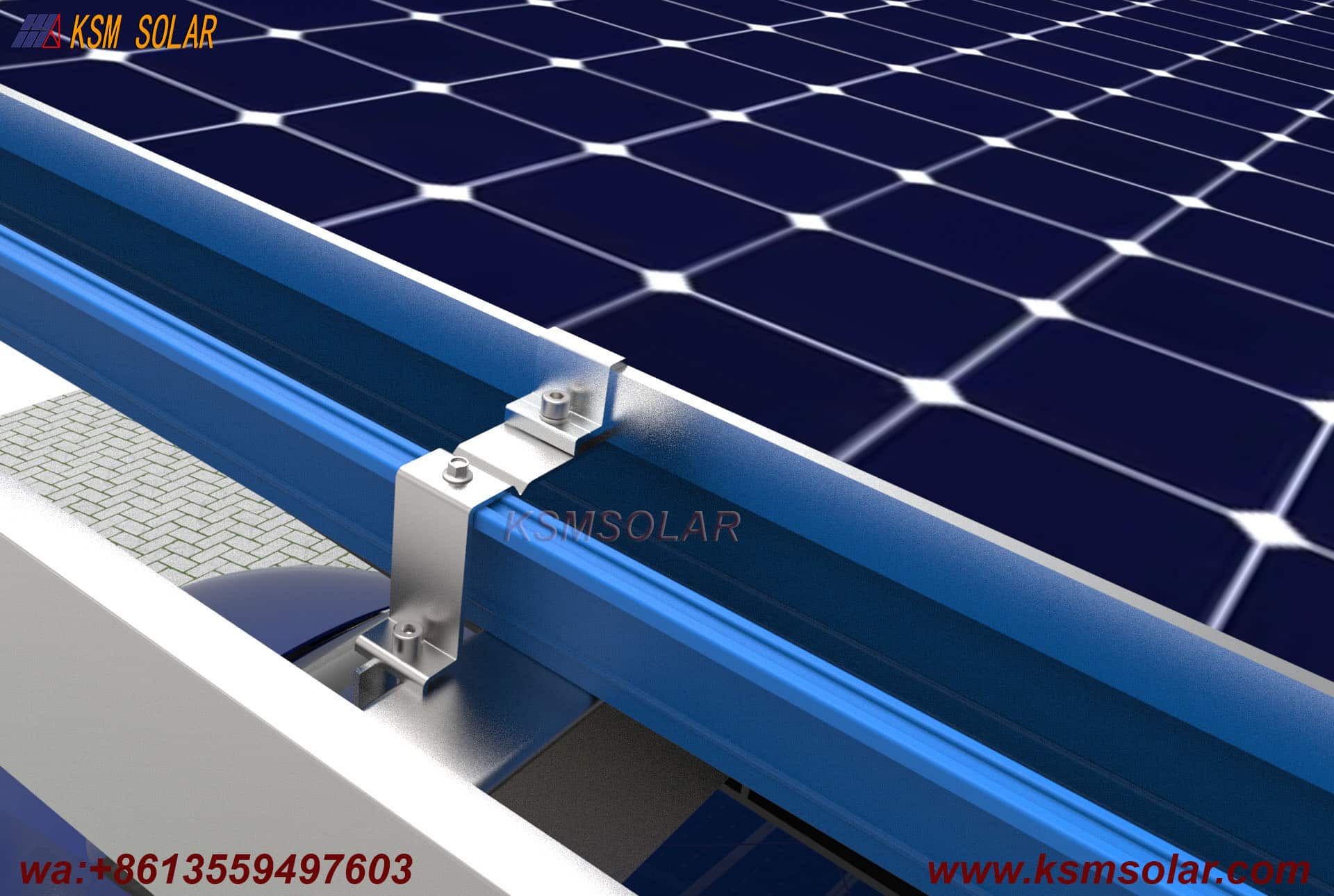
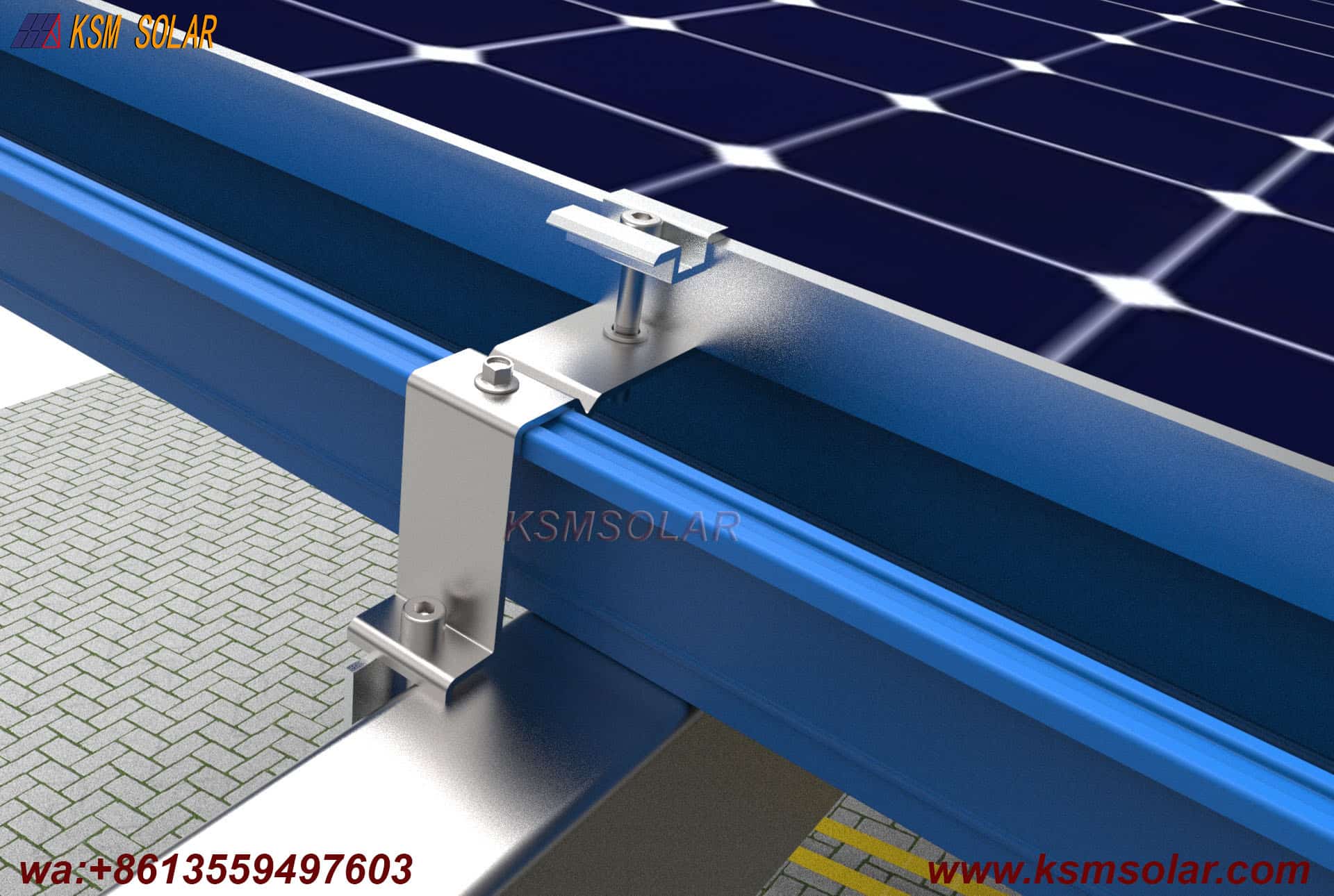
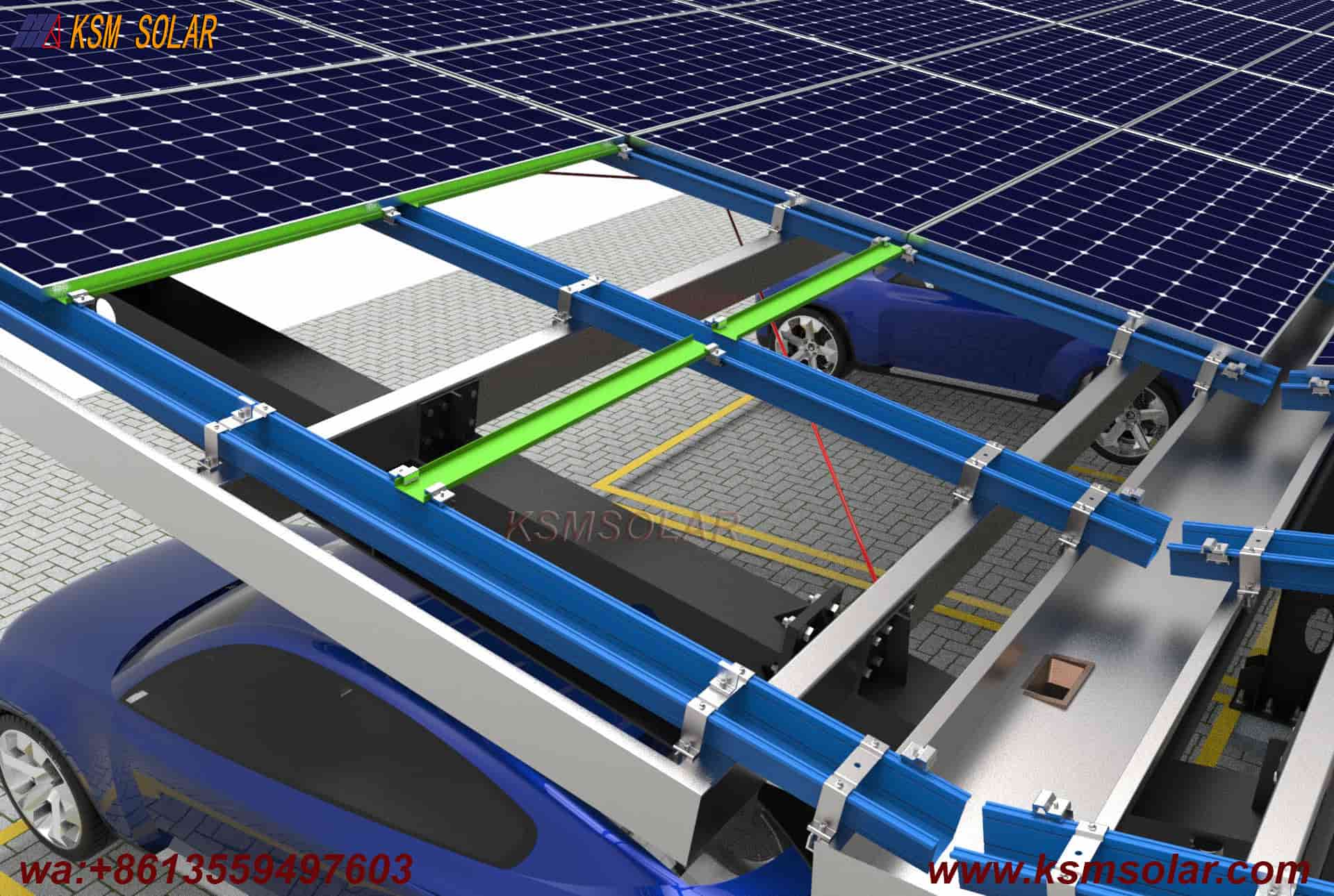
Unobstructed Mounting Surface: The segmented beam design provides a continuous, linear support for PV mounting rails along each roof plane. The absence of intermediate supports on the roof itself allows for maximum panel layout flexibility.
5. Installation & Constructability Advantages
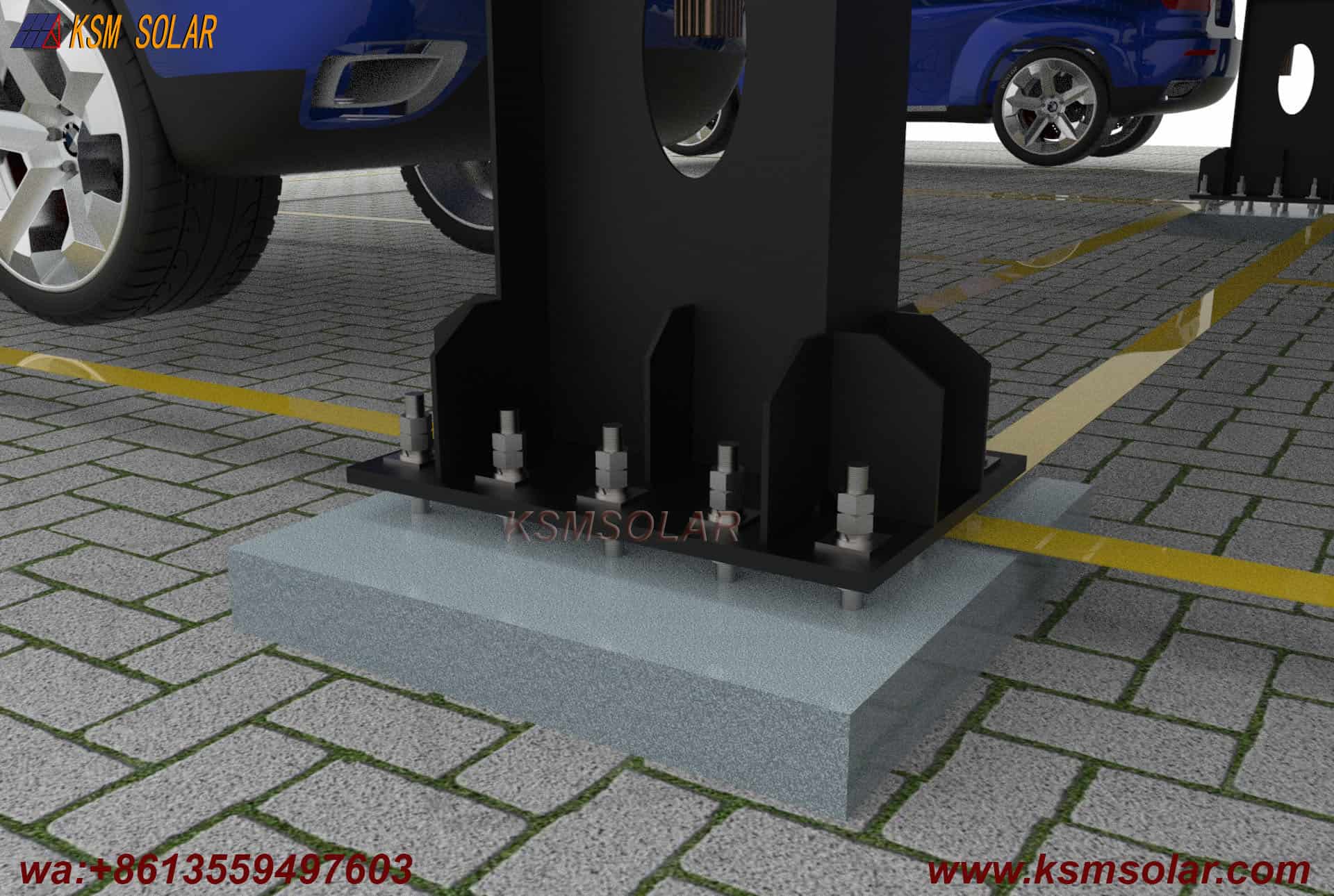
Sequential Modular Erection: Installation follows a clear sequence: 1) Set and grout column bases, 2) Erect columns, 3) Bolt pre-assembled moment nodes to columns, 4) Attach and splice beam segments sequentially from the column outward, 5) Install purlins and roofing.
Reduced Site Complexity: The majority of complex fabrication is completed off-site. On-site work primarily involves bolting pre-finished components, minimizing the need for skilled field welding, heavy cutting, or extensive surface preparation.
Adaptability to Site Constraints: The segmented nature allows for last-minute adjustments to cantilever lengths if site conditions require it, simply by modifying the number or length of beam segments used.
Parameters
Material: | Q235B/Q355B |
Standard: | ASCE7-10/EU/JISC8955-2017 |
Surface Treatment: | Hot-Dip Galvanized/Spray Paint |
Wind Load: | 0-60m/s |
Snow load | 0-150cm |
Warranty | 10 Years |
Service Life | 25 Years |
Details