Welcome to KSM SOLAR


Welded Carbon Steel Solar Carport
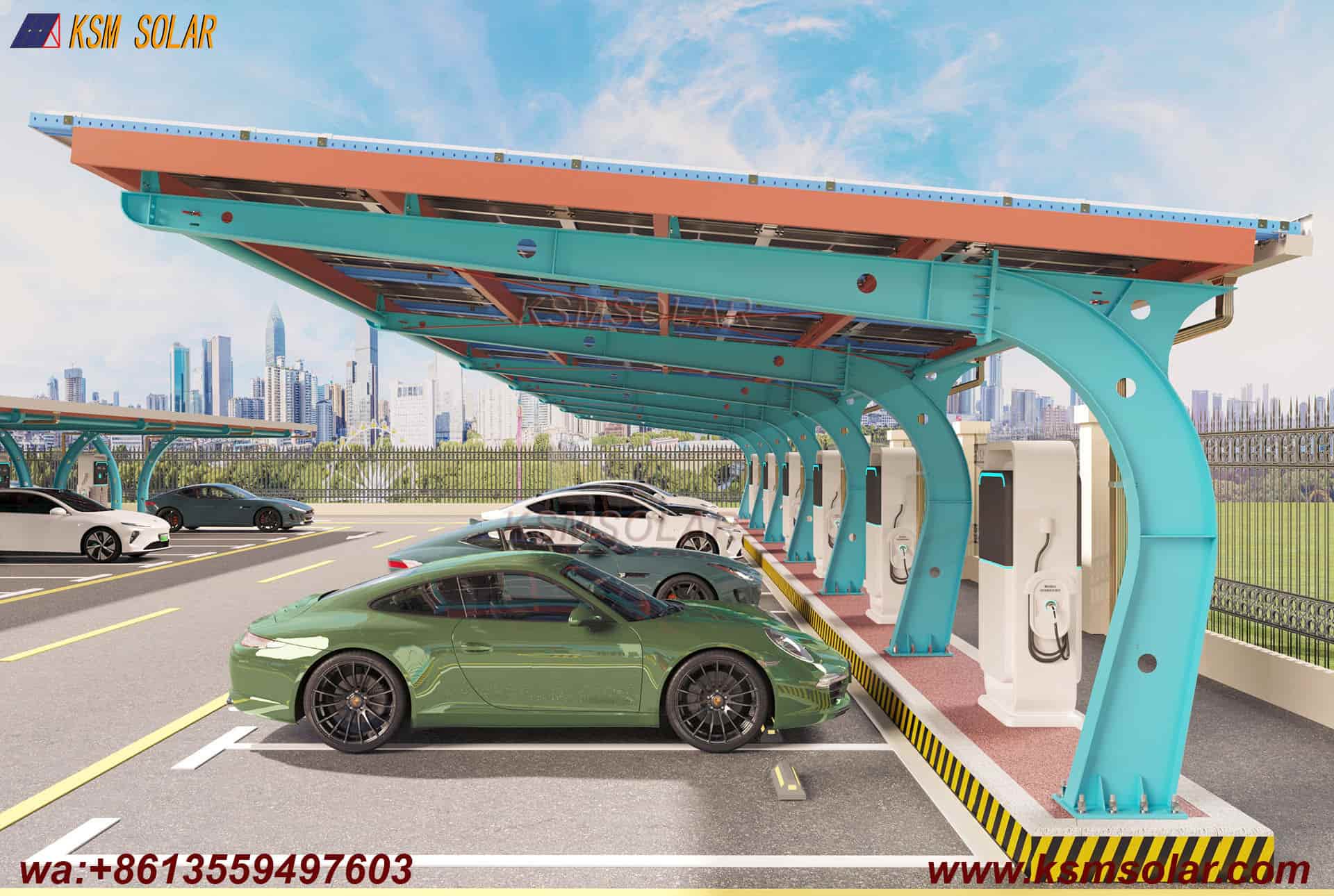
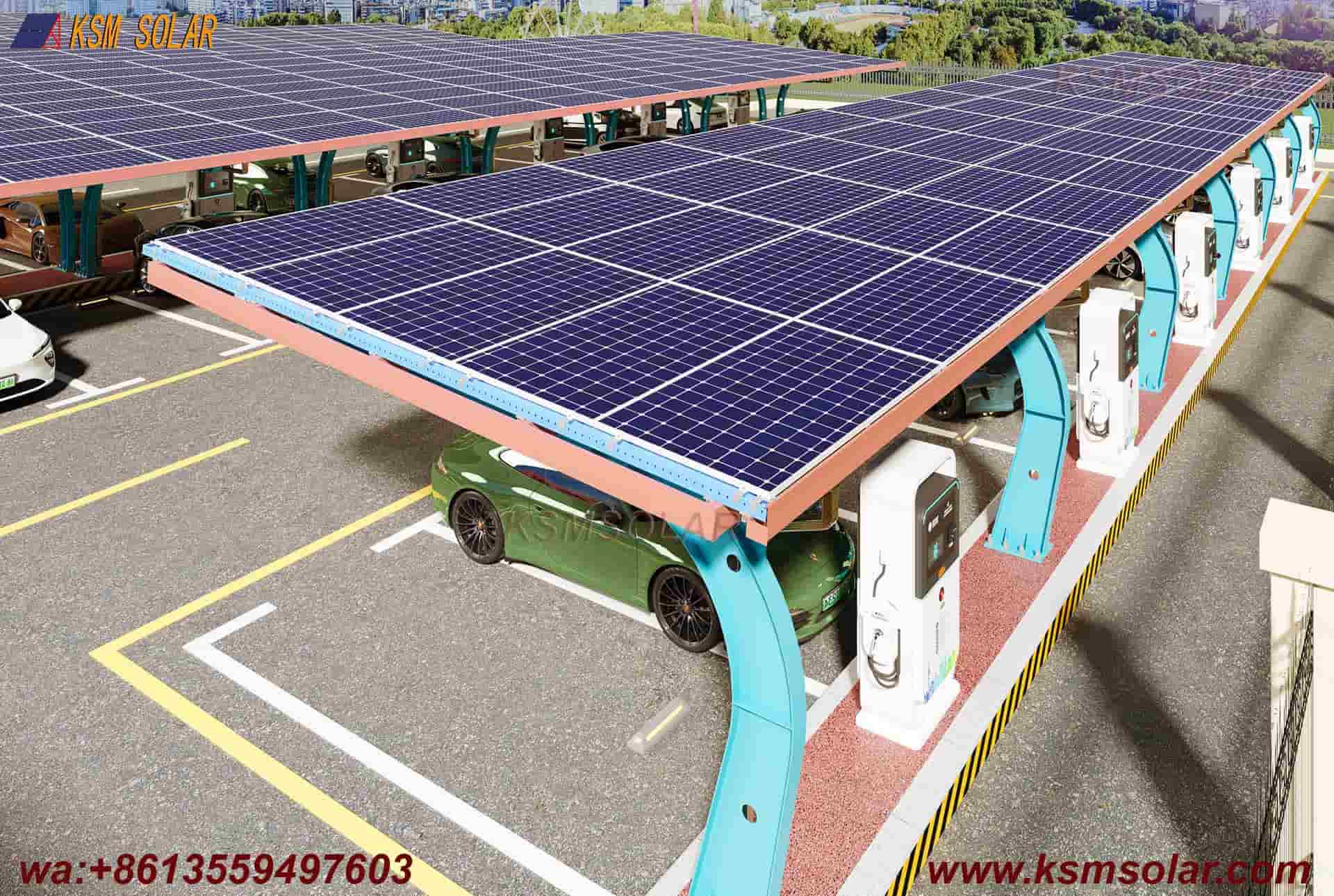
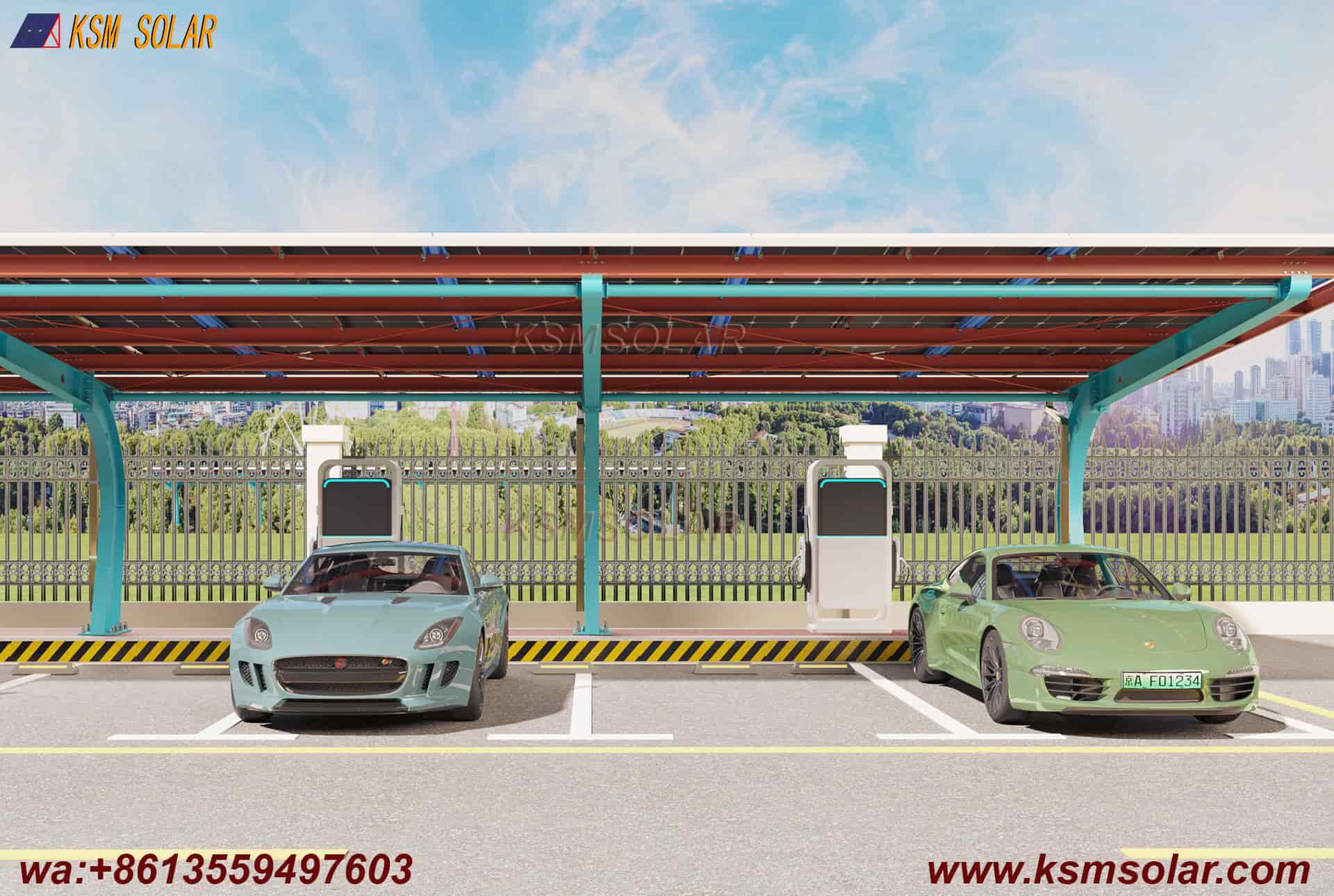
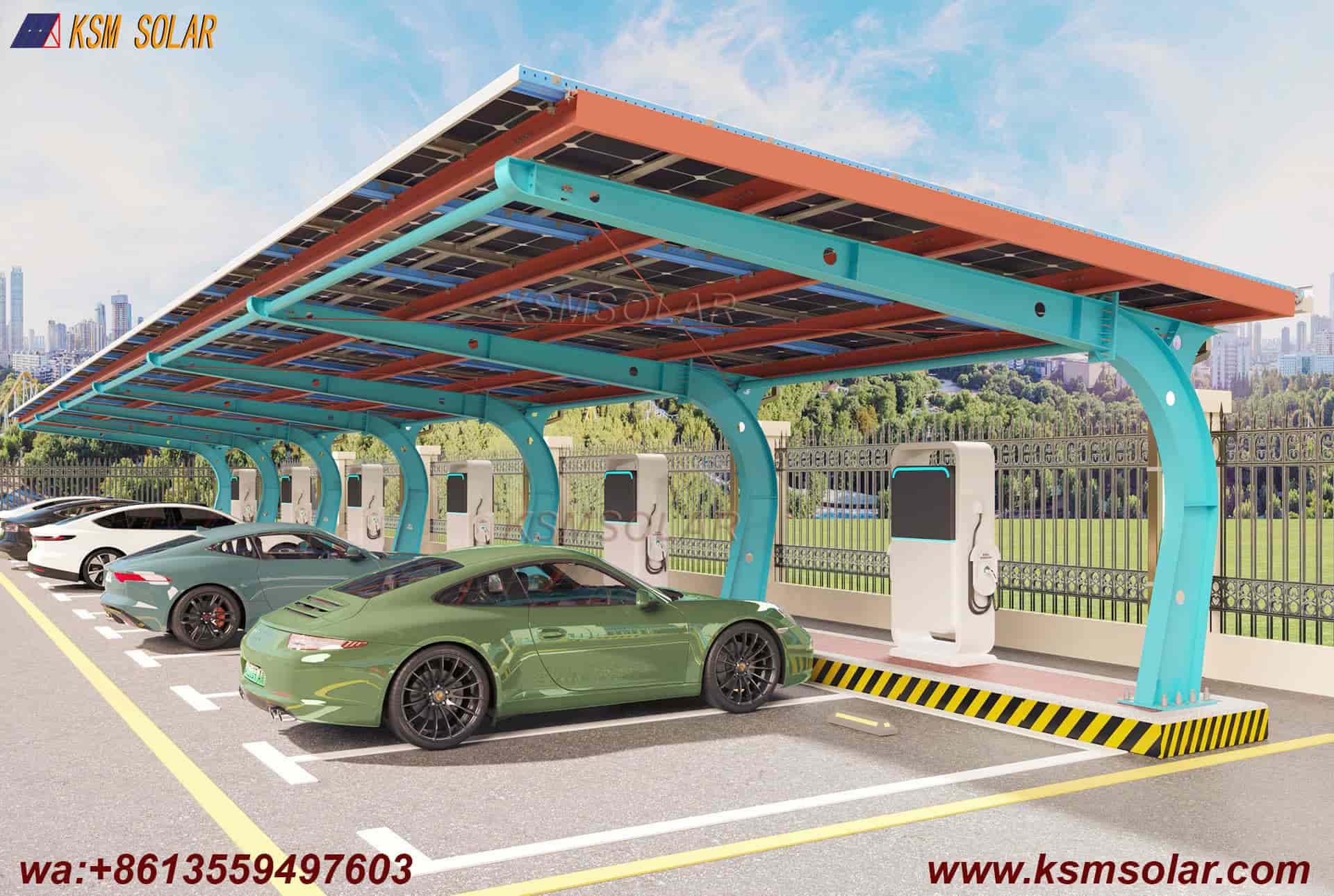
Carbon Steel Segmented Beam-Column PV Carport
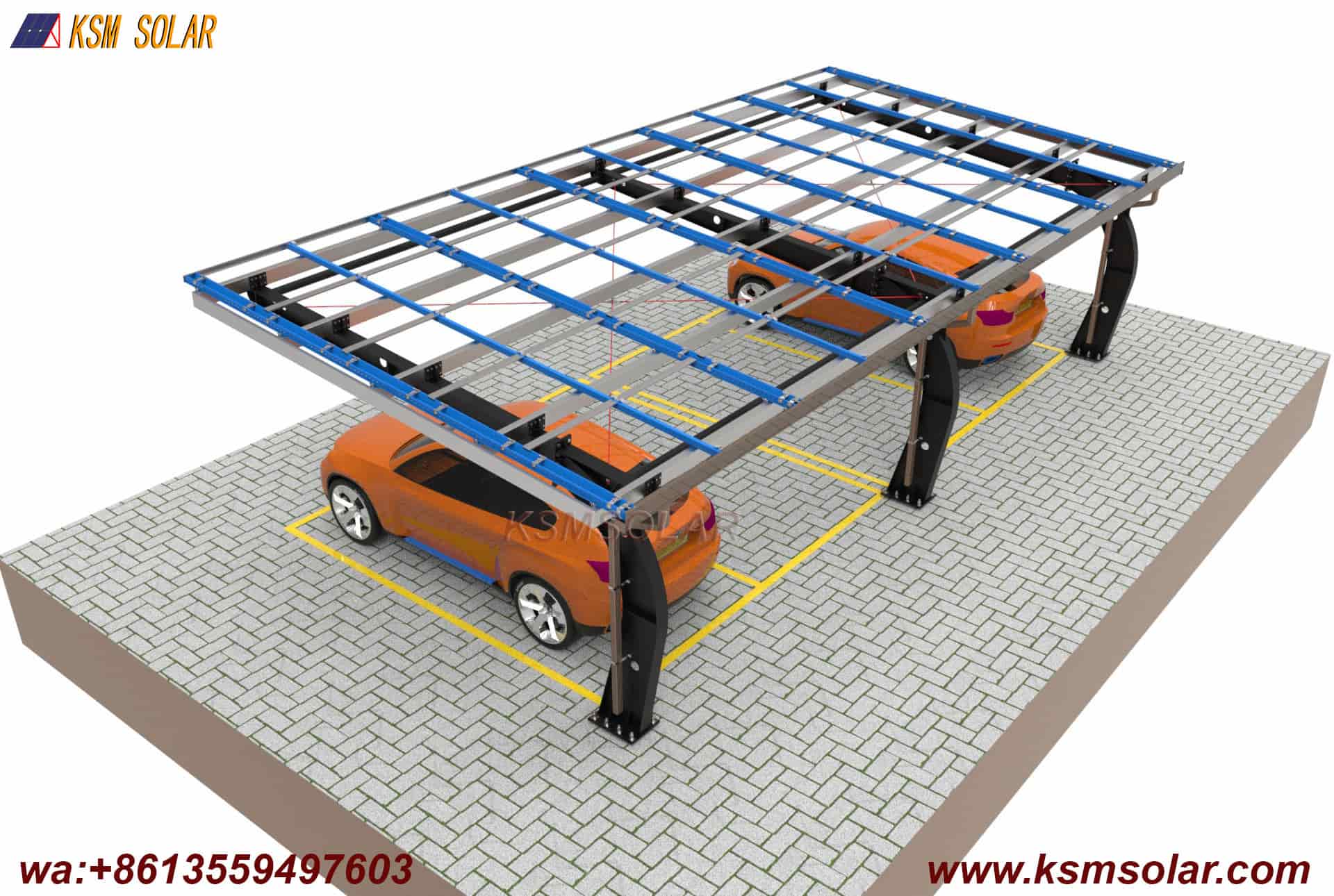
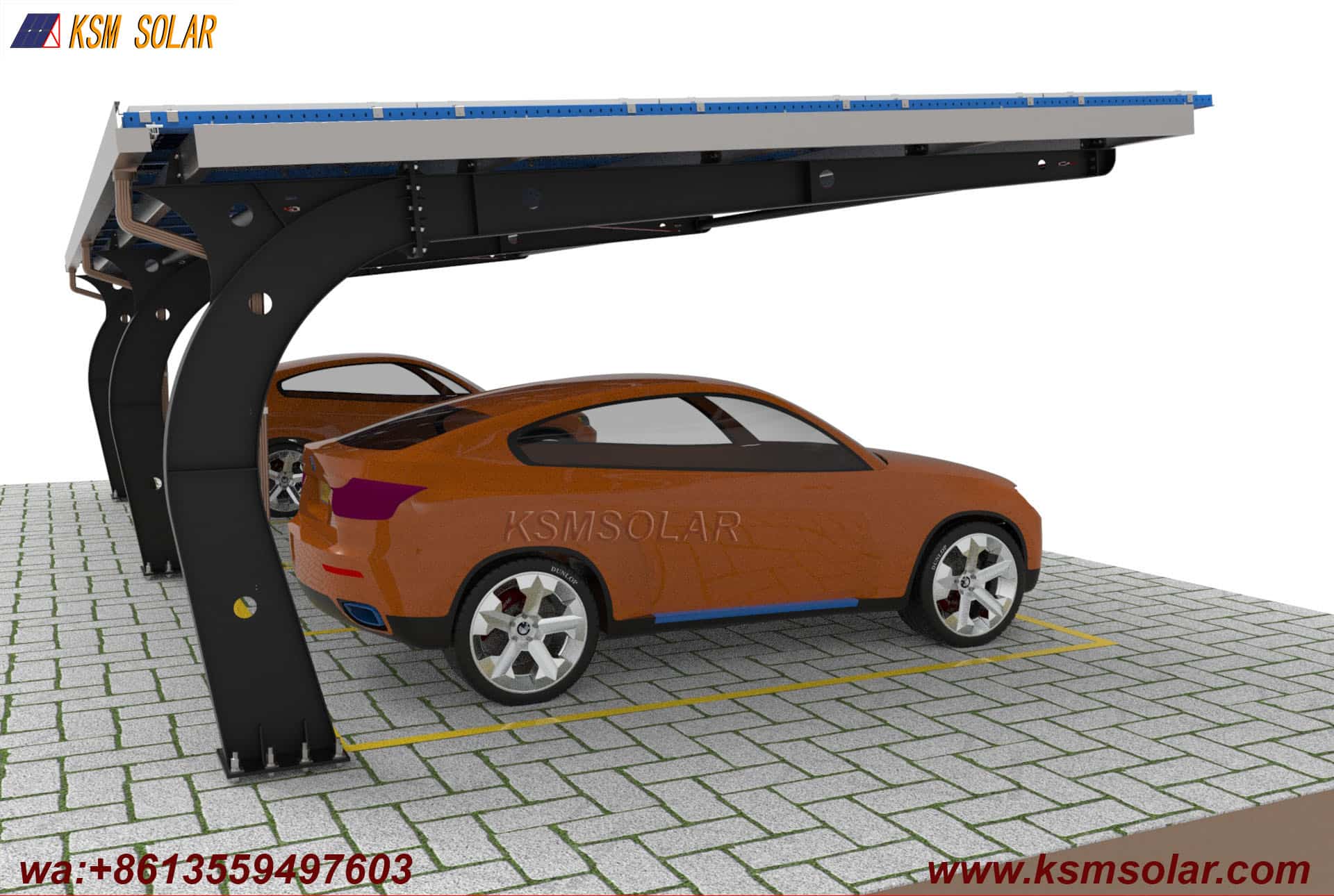
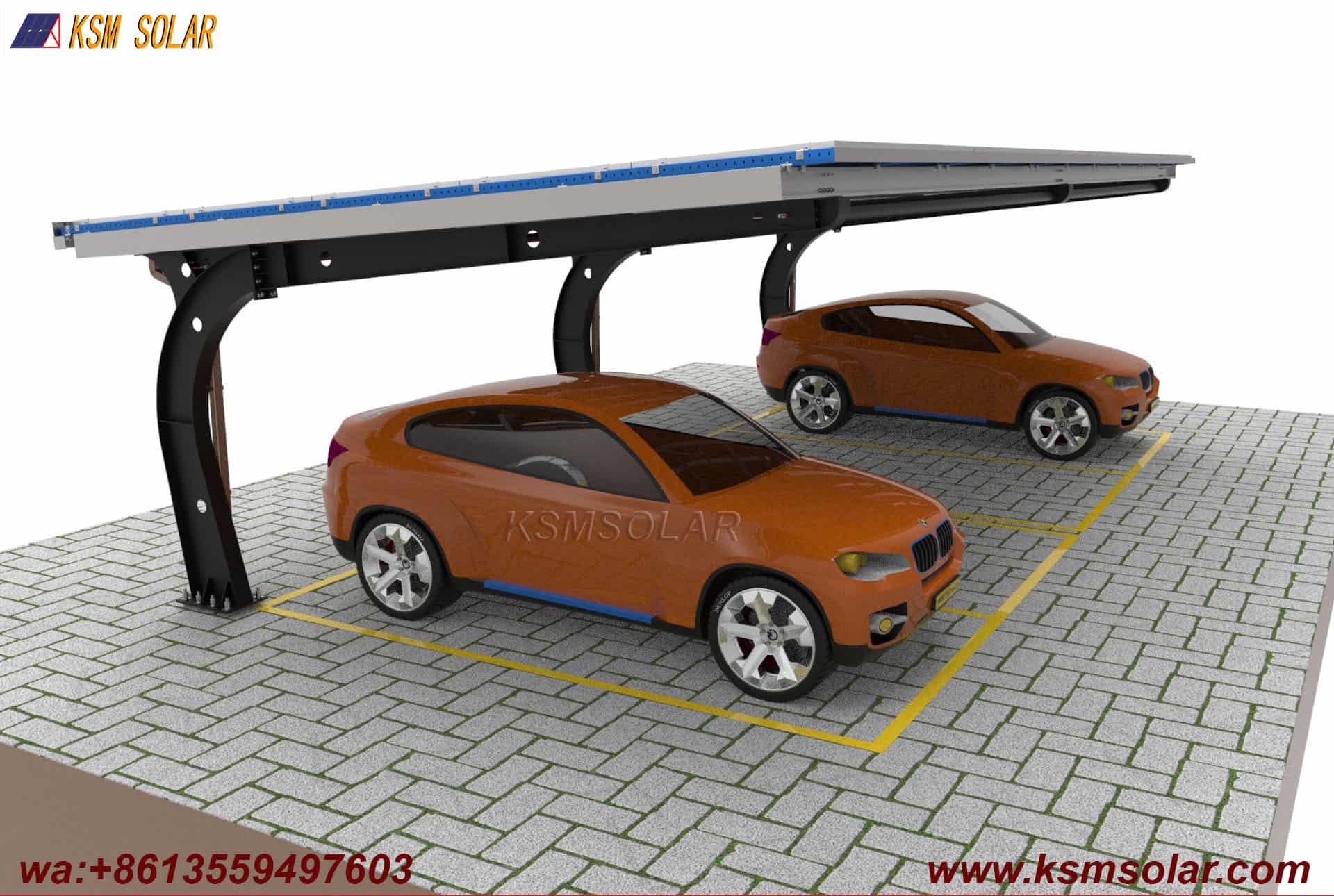
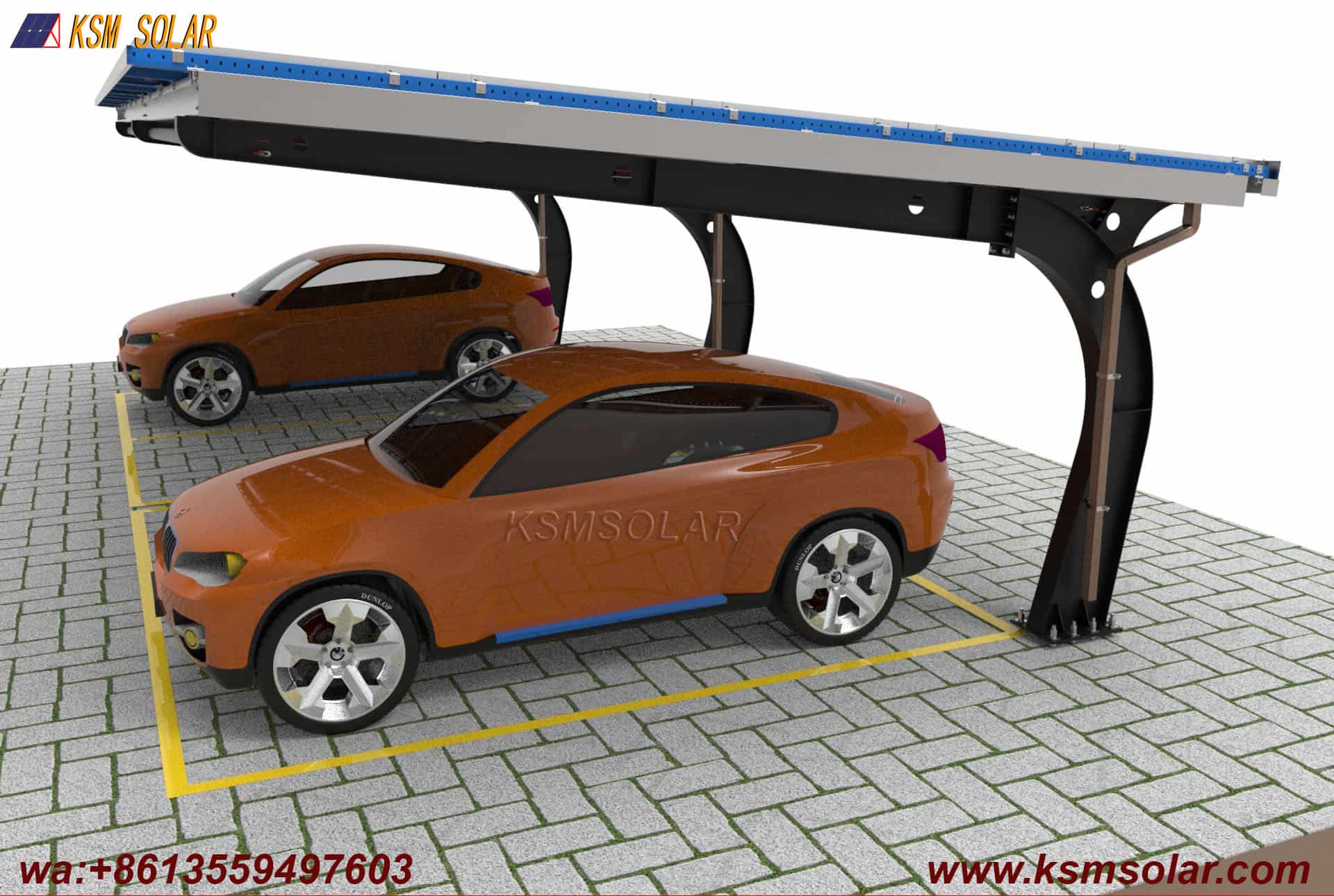
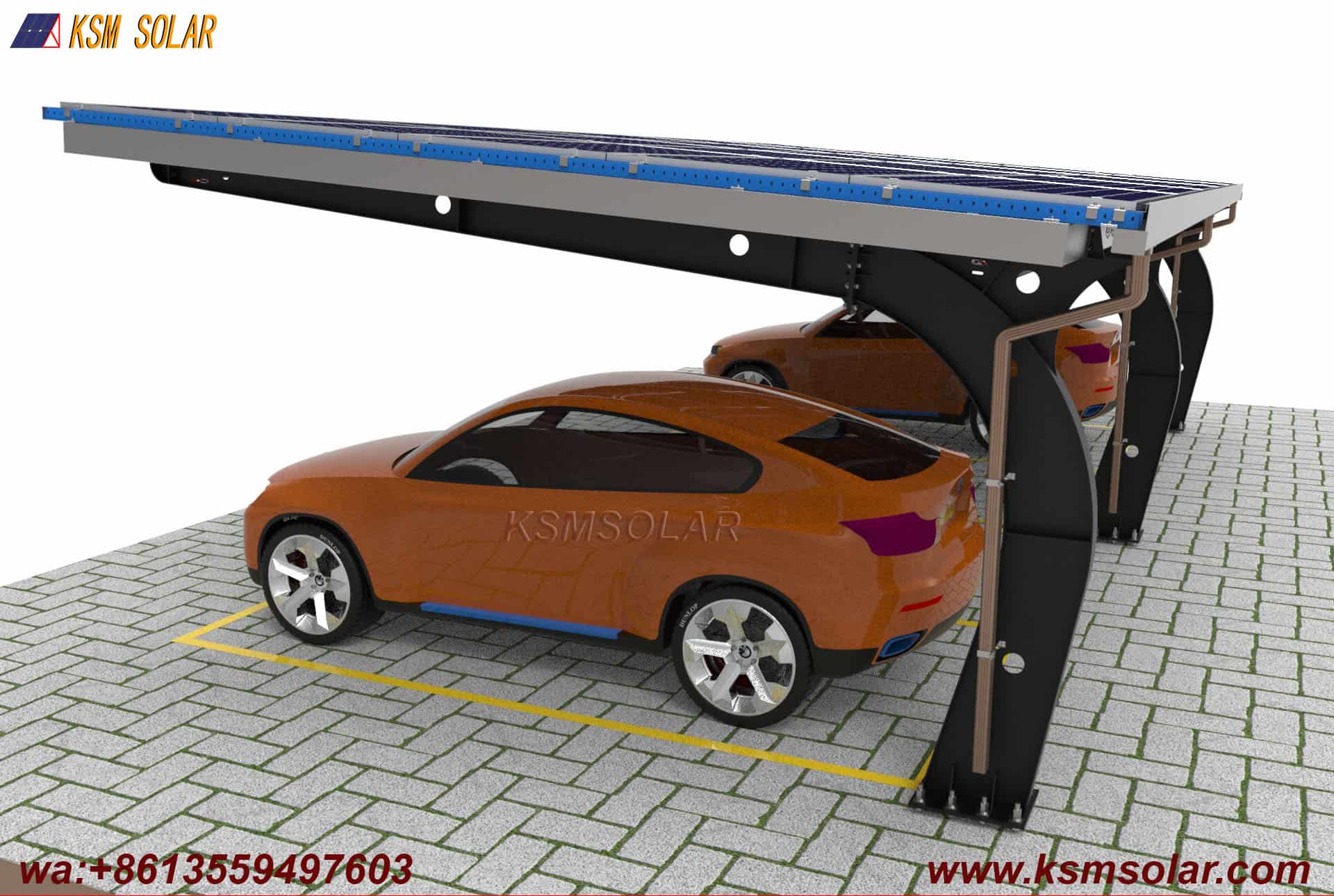
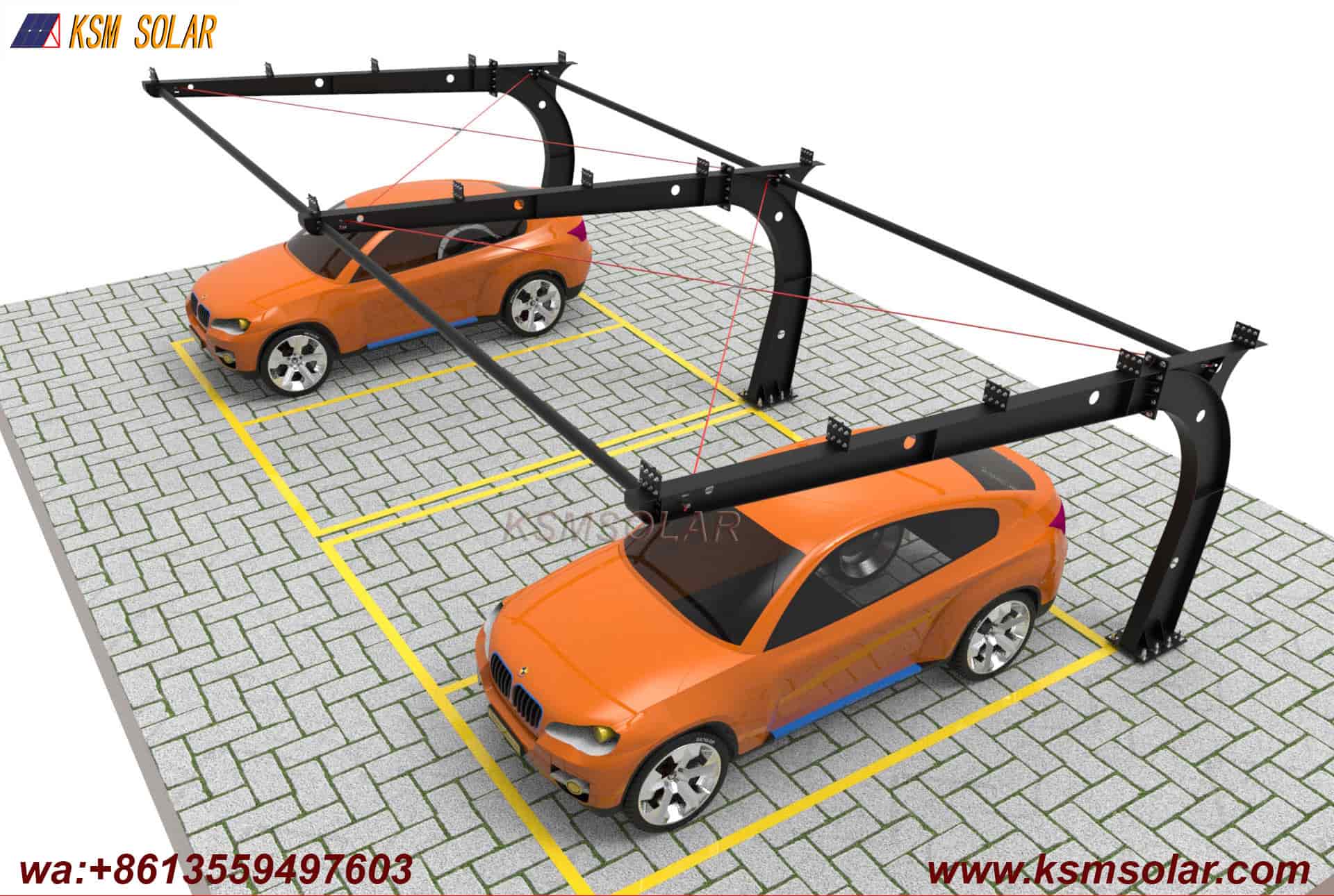
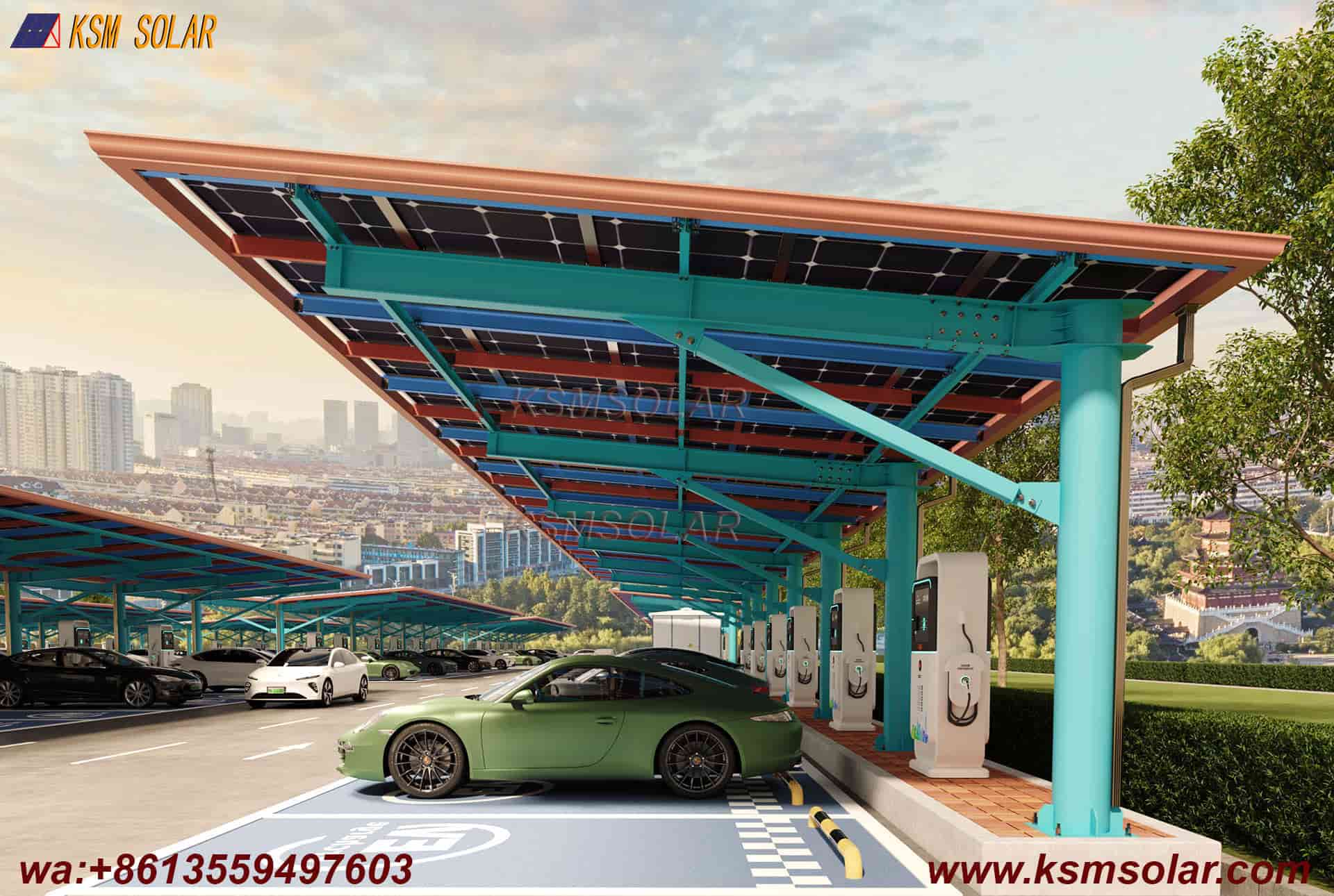
The Carbon Steel Single-Column Segmented Beam-Column Photovoltaic Carport introduces an advanced modular strategy where the primary structural support—comprising the vertical column and the horizontal beam—is not a single monolithic piece, but rather a system of pre-engineered, bolt-connected segments. This design paradigm offers a superior balance between the structural efficiency of an integrated form and the logistical, financial, and adaptive advantages of a modular system, ideal for projects requiring scalability, transportation ease, and design flexibility.
Core Engineering Features & System Advantages
1. Segmented Structural System
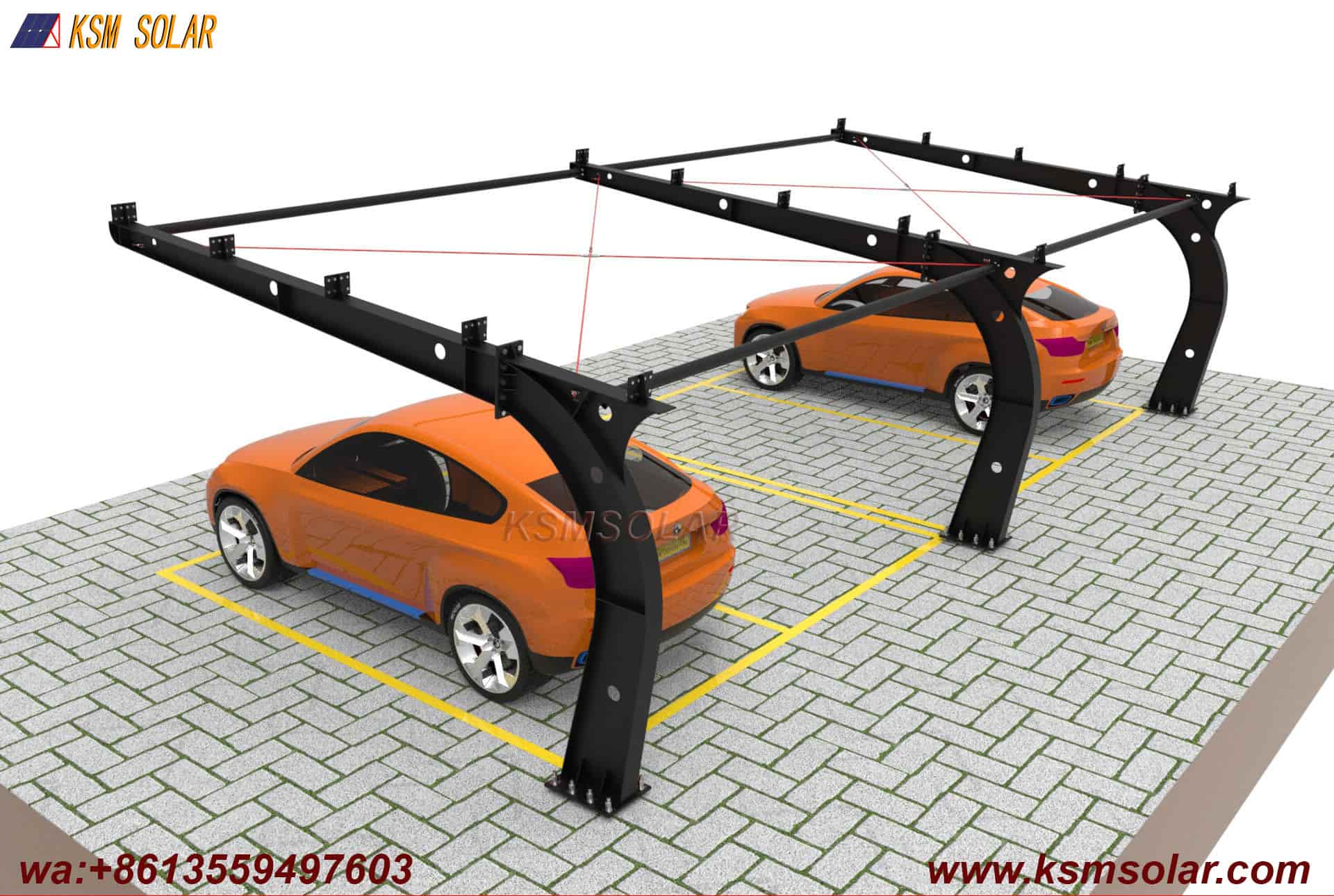
Modular Beam-Column Assembly: The core support is constructed from two or more precision-fabricated carbon steel segments. Typically, this includes a vertical column segment and a horizontal cantilever beam segment, which are joined at a critical, reinforced node using a high-strength, pre-tensioned bolted flange connection. More complex designs may incorporate a third, angled haunch segment at the junction for enhanced moment resistance.
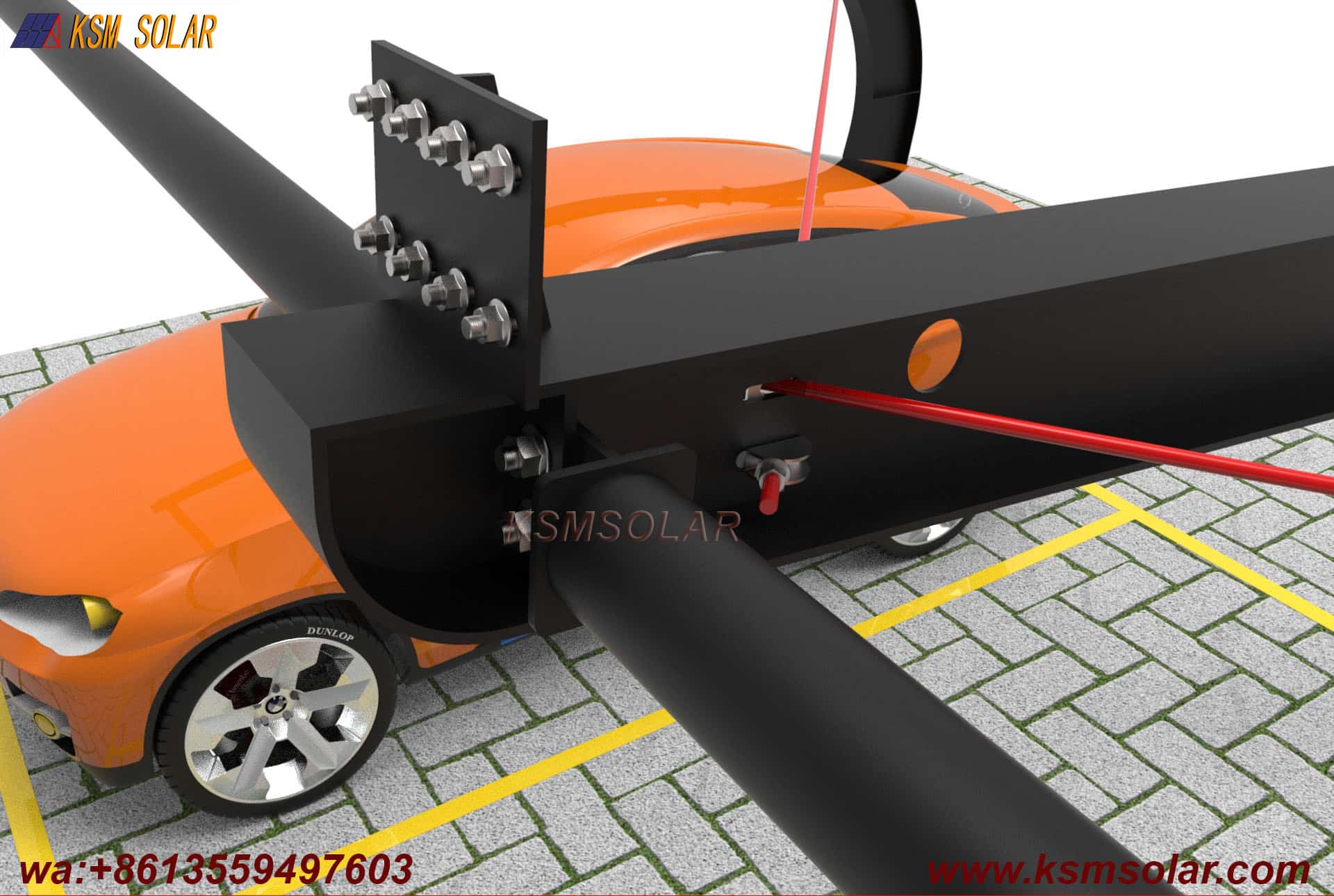
Engineered Connection Node: The connection is not a simple splice but an engineered moment-resisting joint. It features machined contact surfaces, thick flange plates, and often internal stiffeners or external gusset plates to perfectly transfer bending moments and shear forces between the beam and column. This creates a rigid, "continuous" structural behavior from discrete parts.
Material & Fabrication: Segments are fabricated from high-strength carbon steel plate (Q355B/S355JR) using CNC cutting and robotic welding to ensure dimensional accuracy. Critical weld seams are 100% ultrasonically tested for integrity.
2. Strategic Advantages of Segmentation
Logistical Optimization: By breaking down the largest structural element into manageable segments, the system overcomes transportation limitations associated with single-piece units exceeding standard truck lengths or weights. This reduces shipping costs and expands the feasible project locations.
Design Versatility & Customization: The segmented approach allows for easy customization of the cantilever length (L), column height (H), and the beam-to-column angle (θ) by simply modifying or swapping one segment without redesigning the entire unit. This facilitates tailored solutions for varied site conditions (e.g., different clear heights or parking bay widths).
Simplified Maintenance & Future Modification: If a specific segment is damaged (e.g., from impact), it can be individually replaced without dismantling the entire carport structure. This modularity also allows for future adaptation, such as increasing the column height to accommodate taller vehicles.
3. Enhanced Corrosion Protection & Durability
Superior Coating Application: Each smaller segment can be hot-dip galvanized or painted in a controlled factory environment with far greater precision and quality assurance than is possible for a single, oversized piece. This ensures a uniform, high-integrity protective coating on all surfaces, including hard-to-reach areas inside complex joint details.
Protected Connection: The bolted flange connection is designed to be sealed against moisture ingress. Methods include using sealant between flange plates, protective caps over bolt heads, and drainage weep holes to prevent water accumulation and internal corrosion at the joint—the system's most critical point.
4. Efficient Installation & Assembly Process
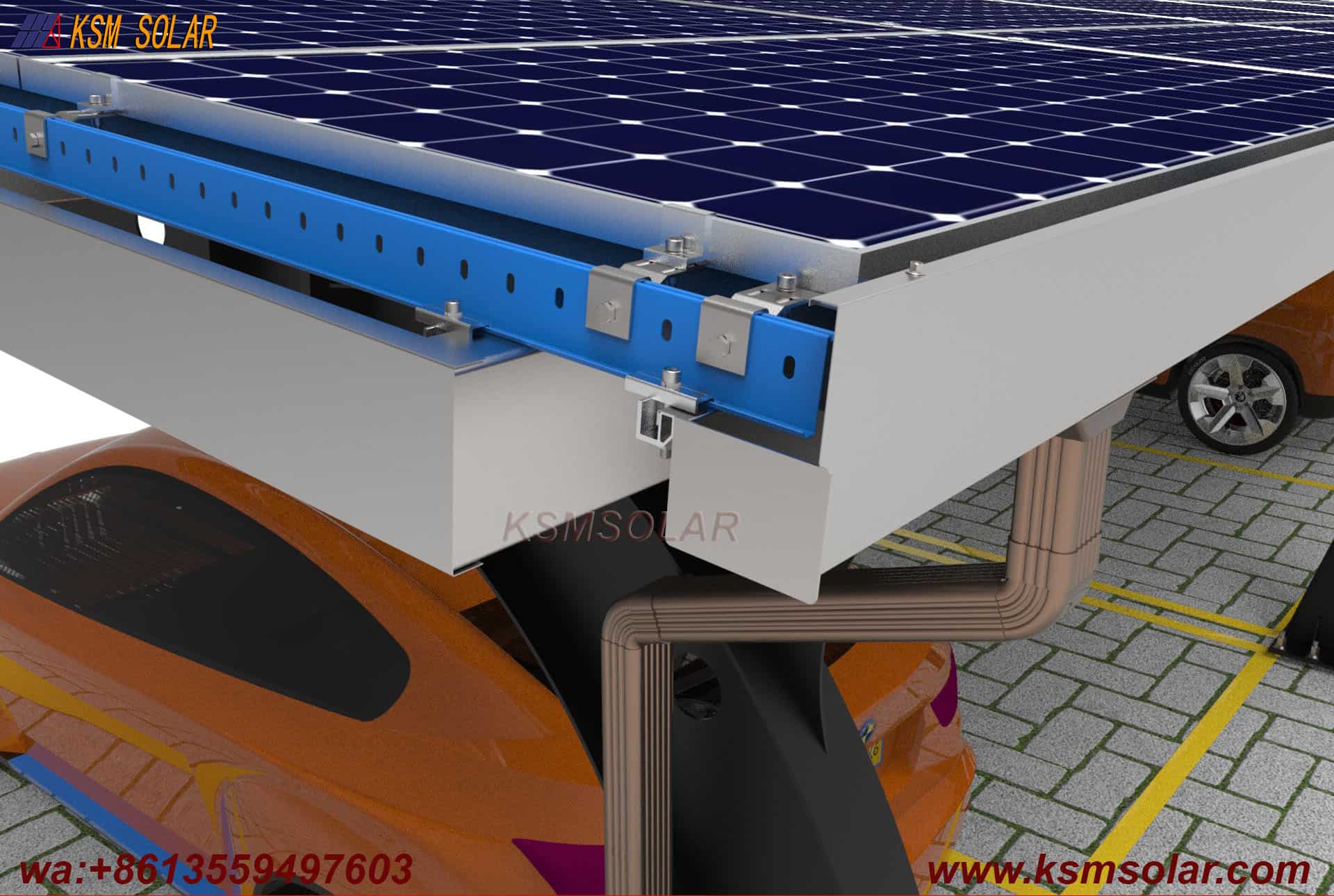
Controlled Pre-Assembly: Major segments can be partially pre-assembled at the factory (e.g., welding shear studs, attaching connection plates) to minimize on-site work. The bolted connection is designed for simple, tool-friendly assembly.
Sequenced Erection: The process involves: 1) Setting and grouting the column base, 2) Hoisting and bolting the column segment, 3) Attaching the beam segment(s) using the flange connection, 4) Torquing all high-strength bolts to a specified sequence and value. This methodical approach reduces crane time and on-site labor complexity compared to field-welding large structures.
Quality Control at the Joint: The use of calibrated torque wrenches on pre-tensioned bolts provides a verifiable and consistent measure of joint integrity, eliminating the quality variability associated with field welding.
5. Optimized for PV Integration & Performance
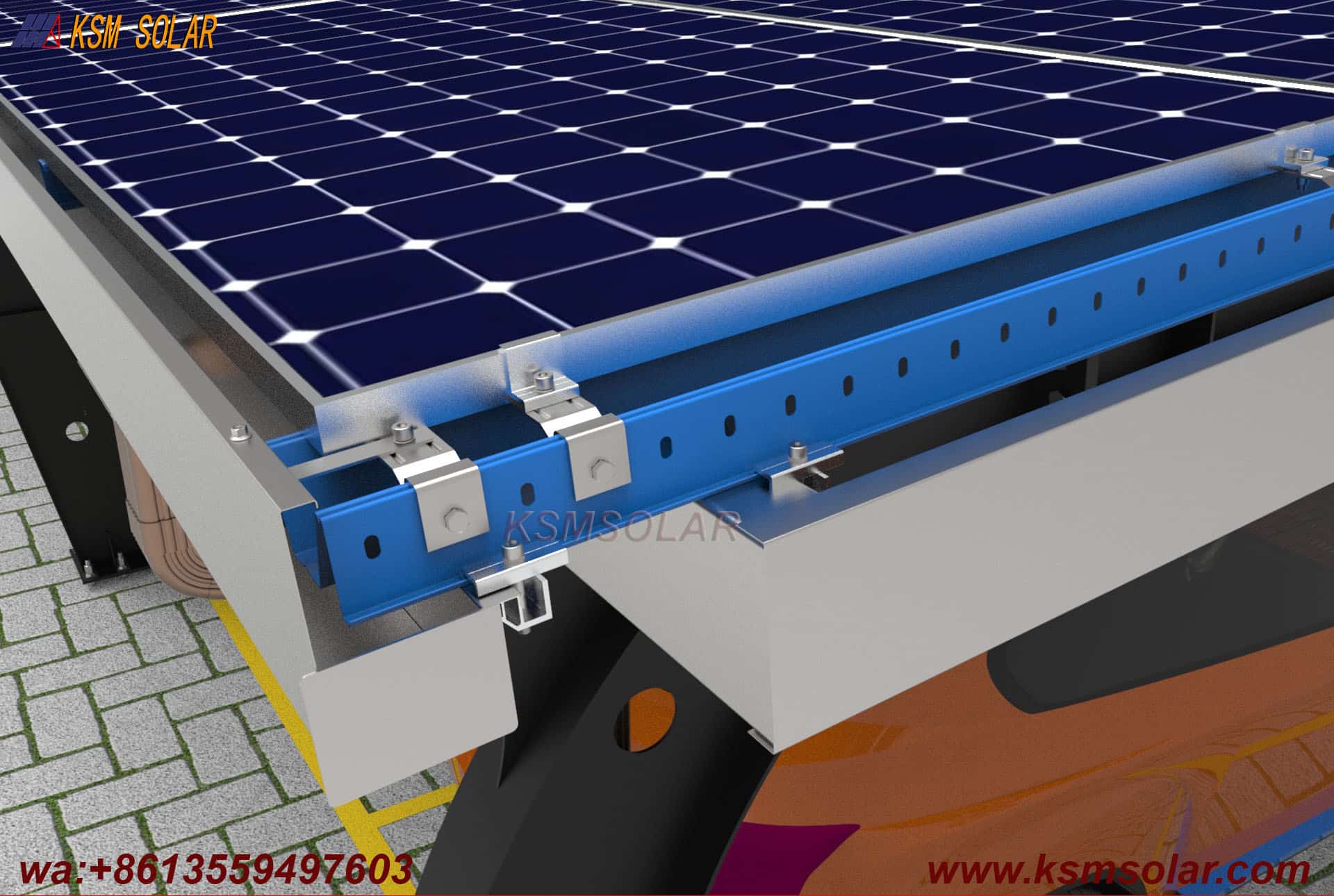
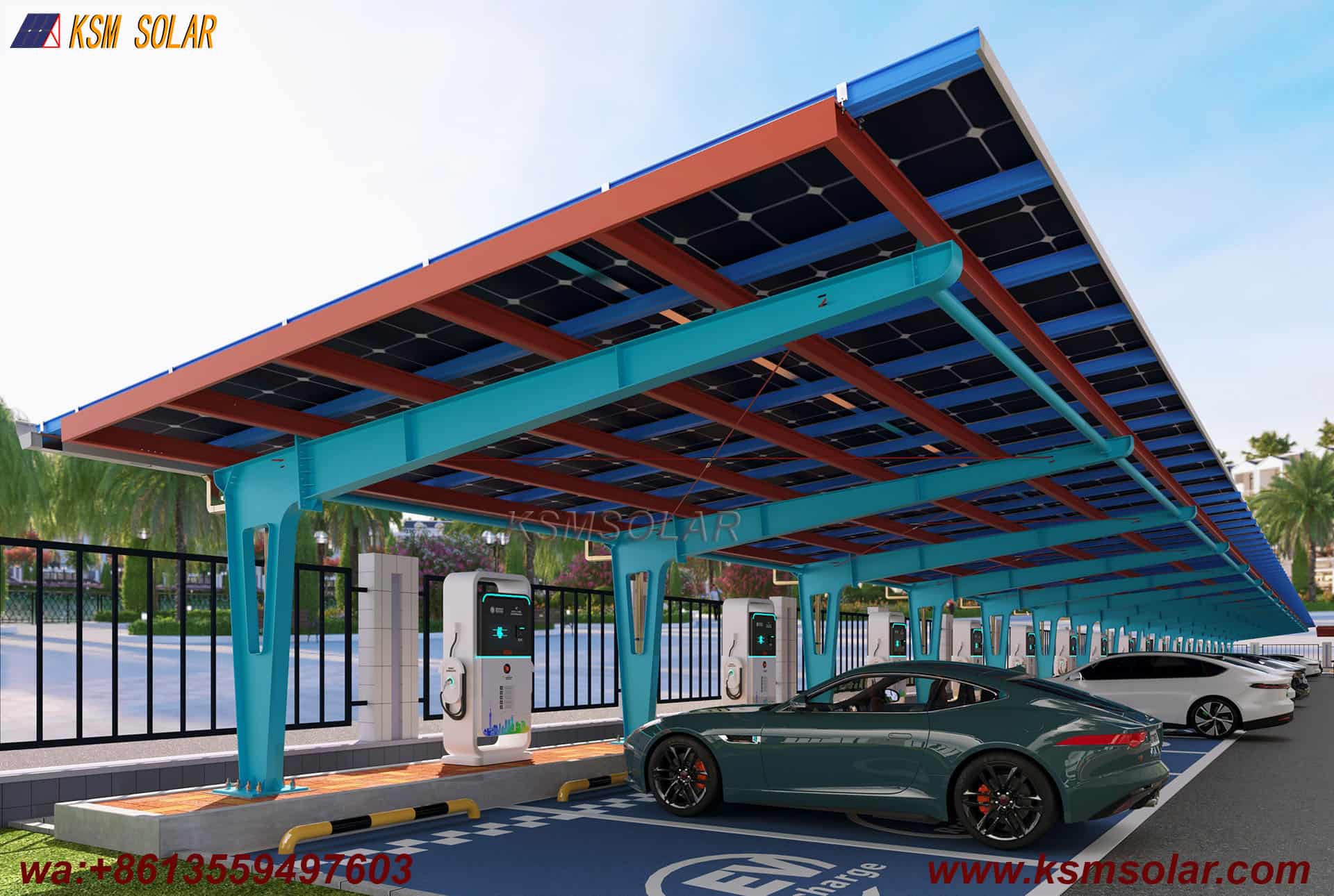
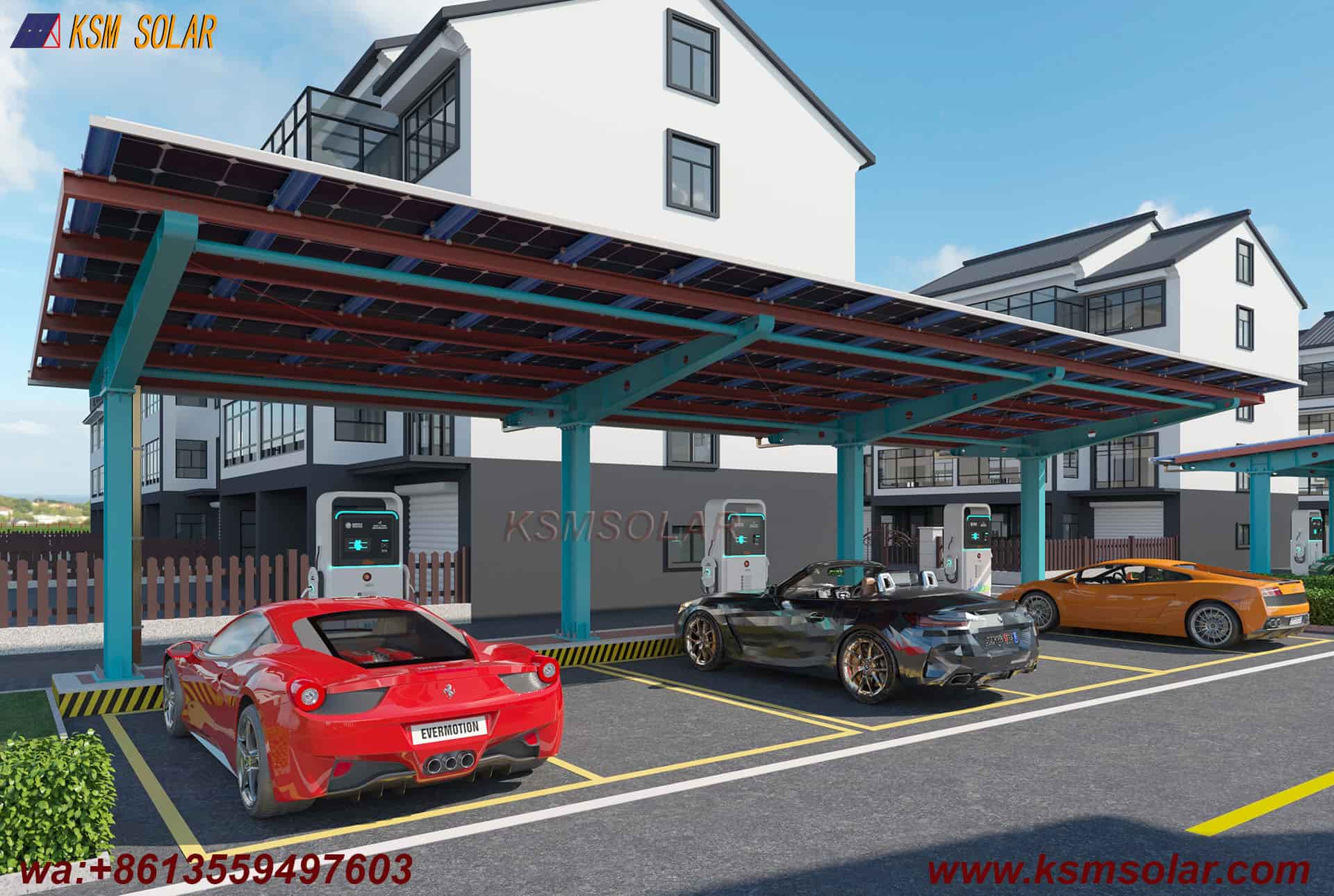
Stable Mounting Platform: Once assembled and torqued, the segmented unit performs as a rigid, continuous support, providing a stable and precise plane for mounting PV rail systems along the beam's length.
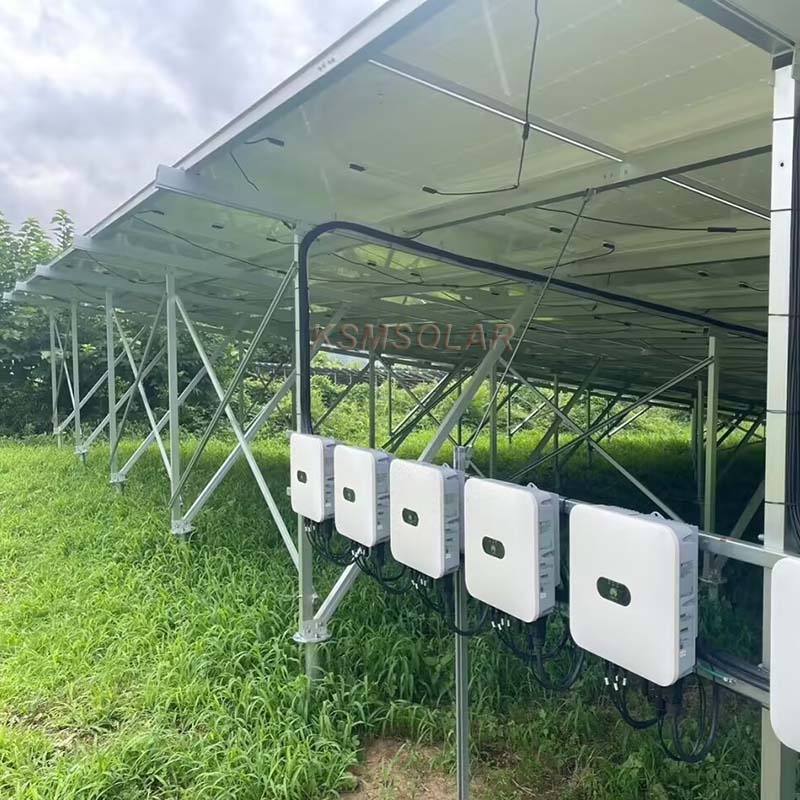
Integrated Service Routing: Conduits and cable trays can be pre-planned to run along the segments, with pre-drilled holes or welded-on clips, ensuring neat and protected electrical pathway integration from the design phase.
Scalable Layouts: The modular nature allows for easy replication and adaptation. Standardized segments can be used to create long, continuous canopies or complex geometric layouts by adjusting the connection angles and spans between units.
Parameters
Material: | Q235B/Q355B |
Standard: | ASCE7-10/EU/JISC8955-2017 |
Surface Treatment: | Hot-Dip Galvanized/Spray Paint |
Wind Load: | 0-60m/s |
Snow load | 0-150cm |
Warranty | 10 Years |
Service Life | 25 Years |
Details