Welcome to KSM SOLAR


Welded Carbon Steel Solar Carport
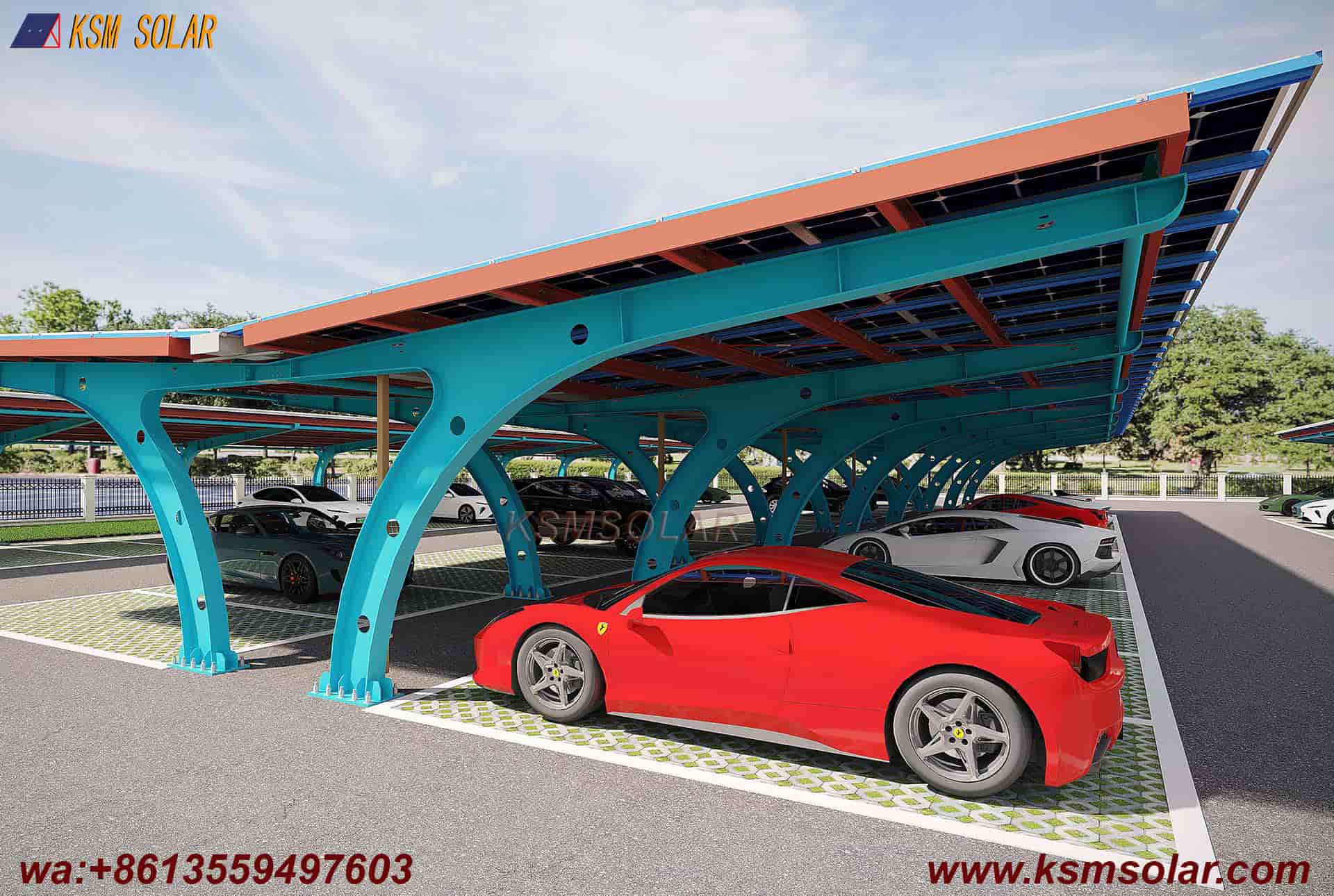
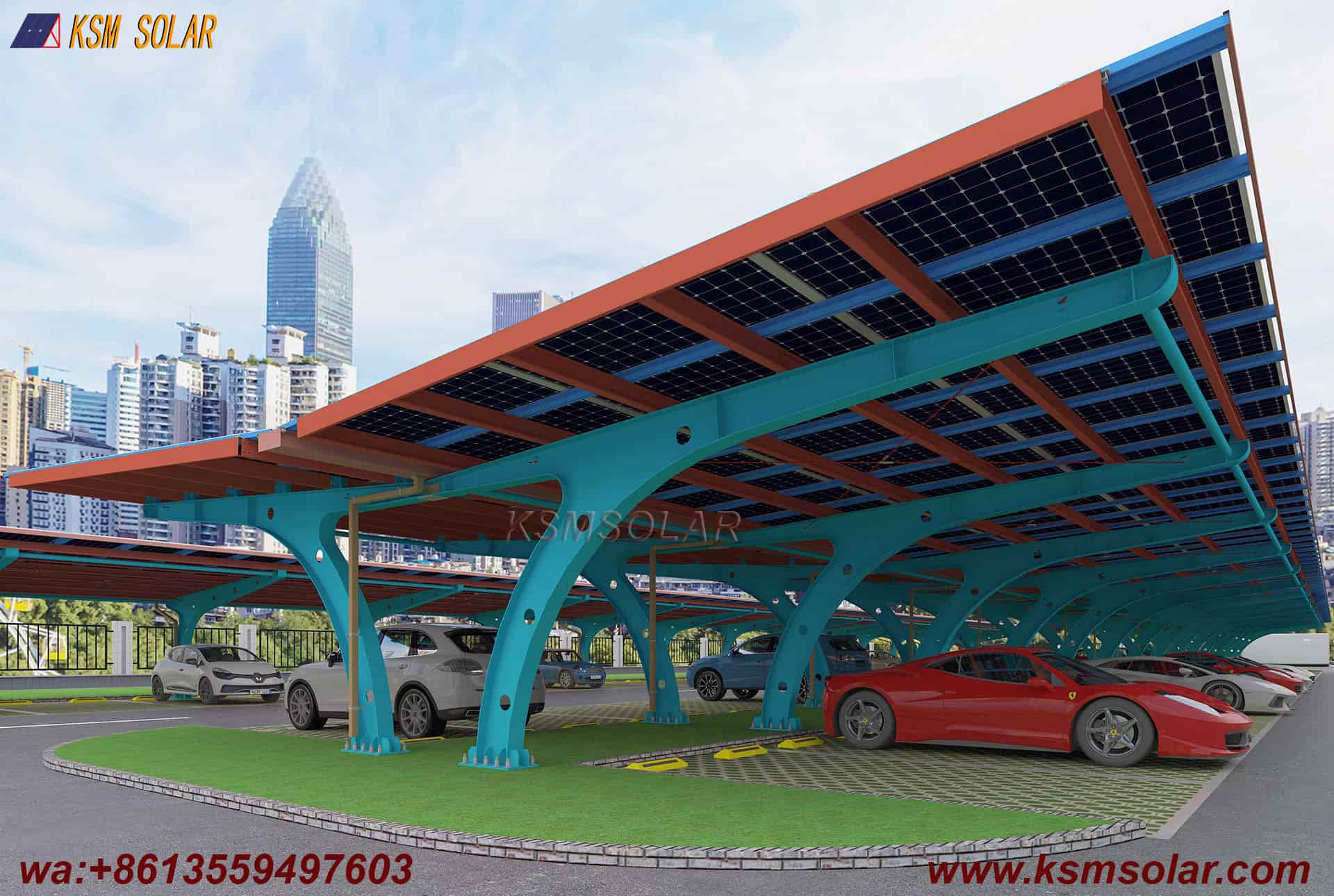
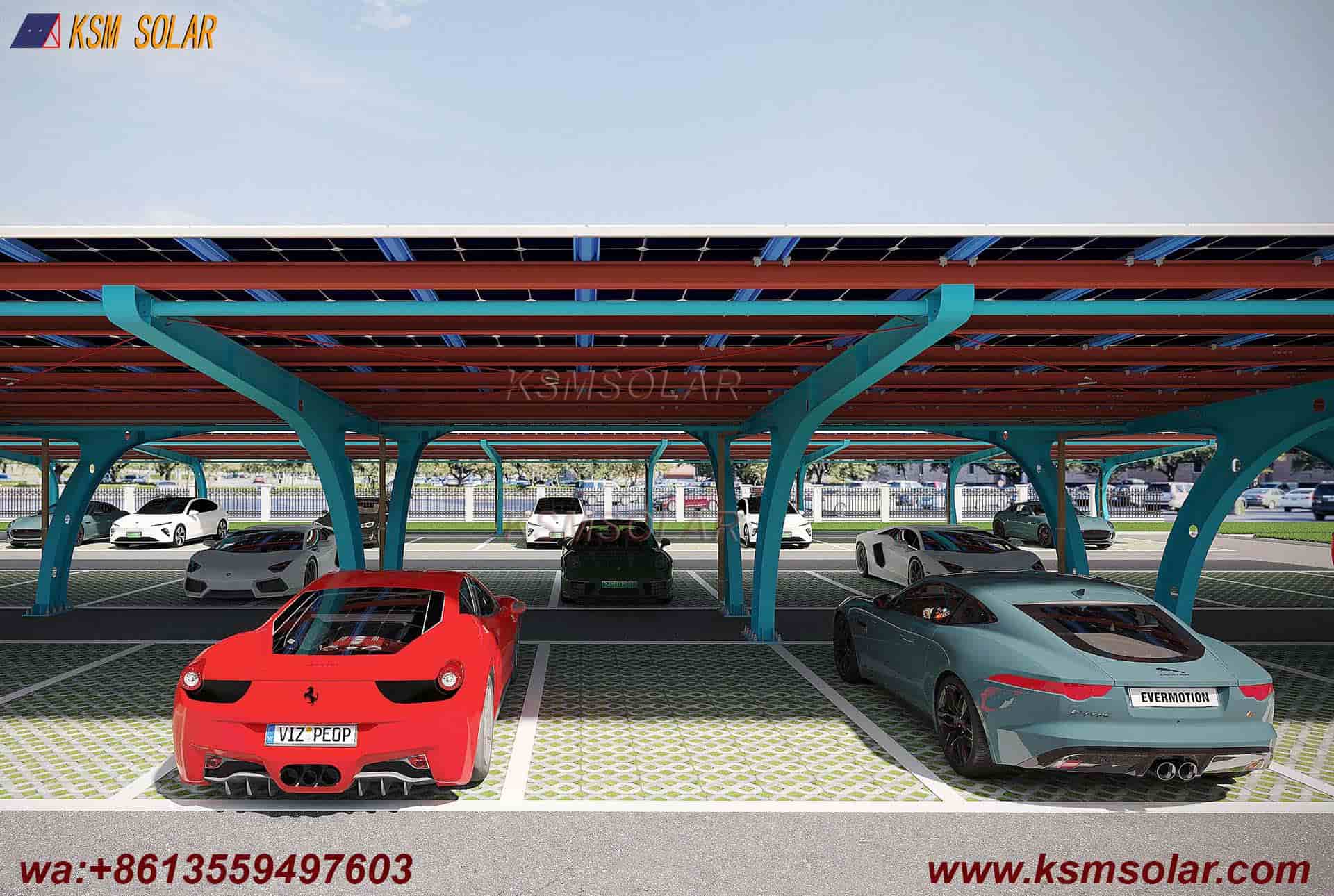
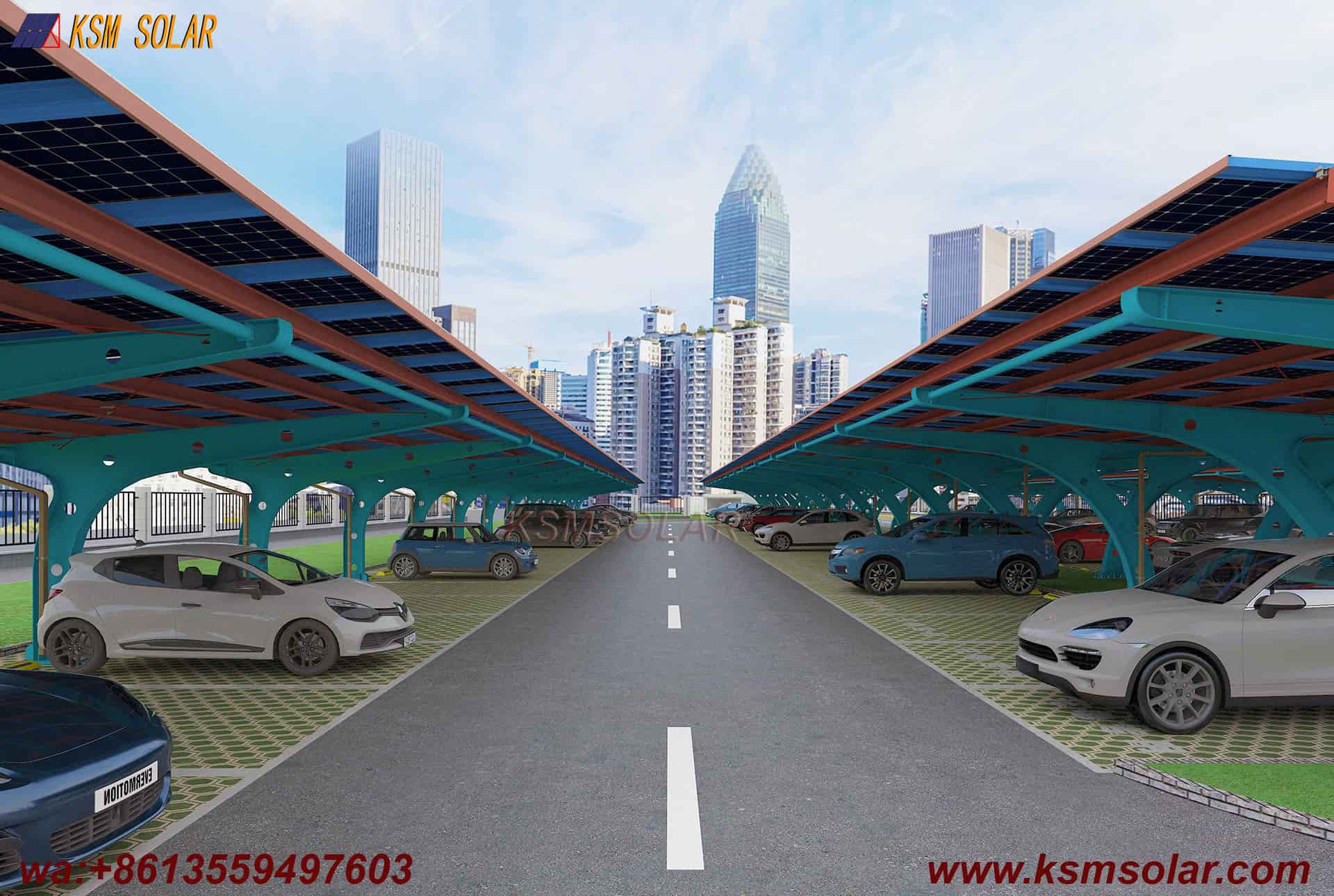
Carbon Steel Double-Sided Back-to-Back PV Carport
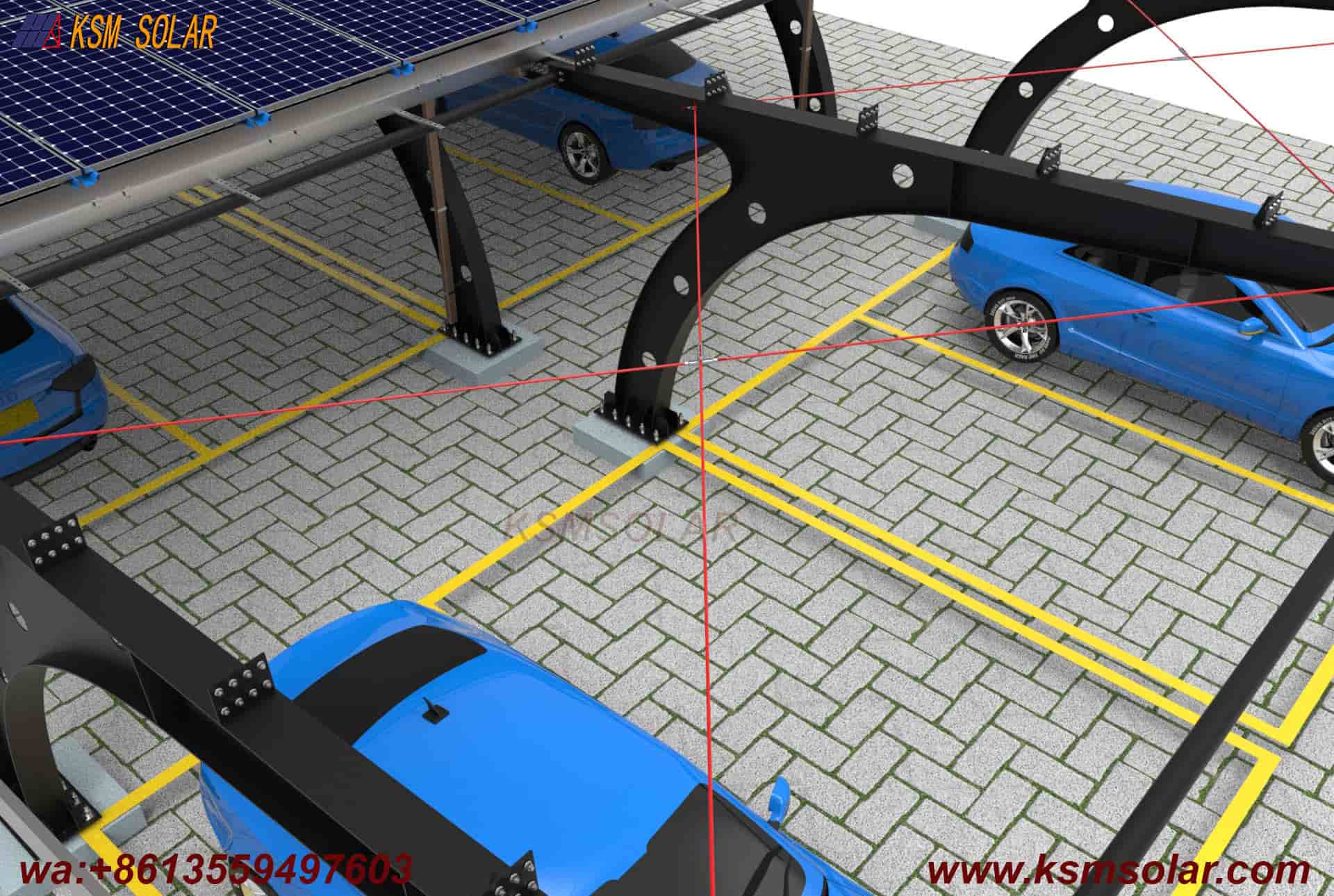
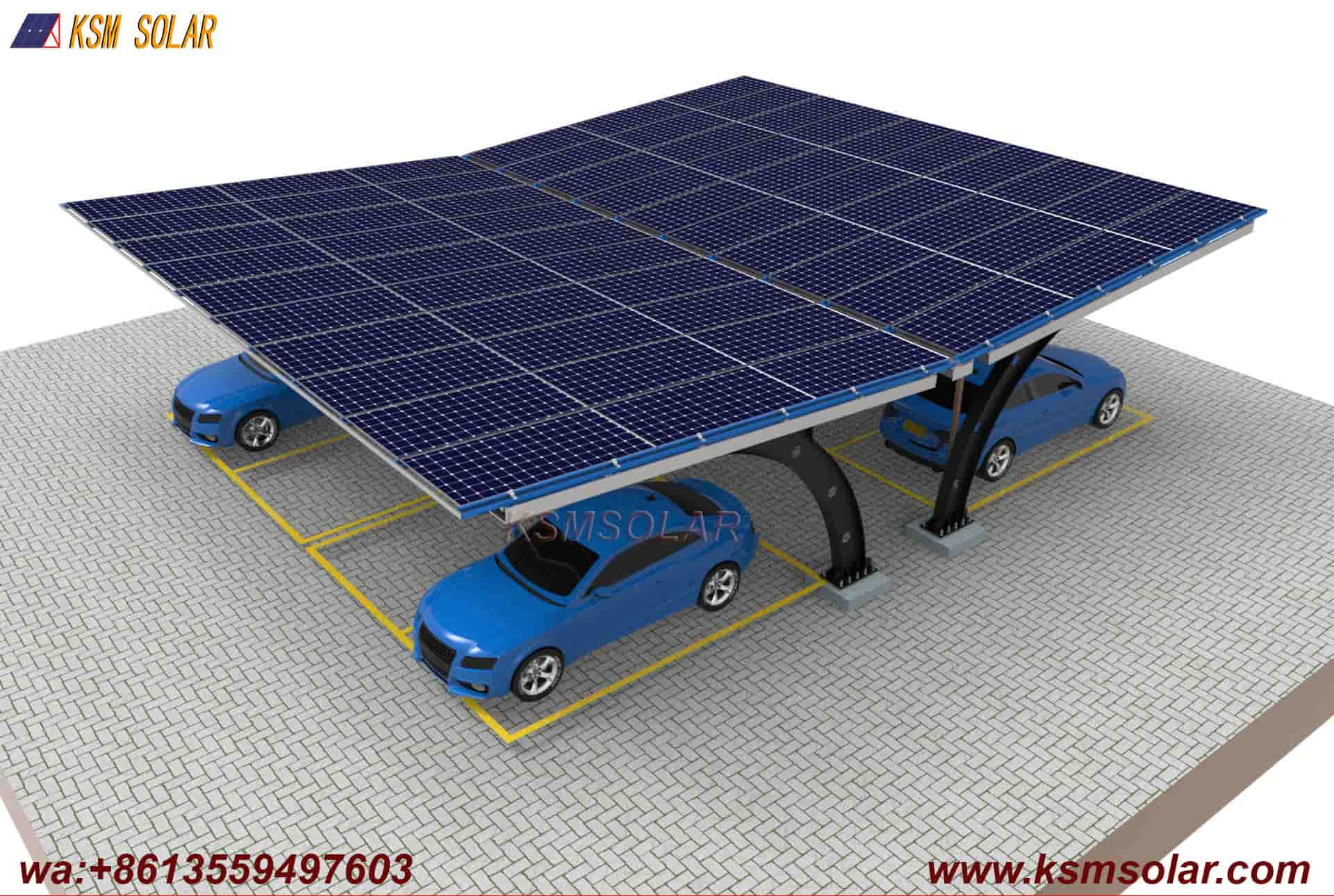
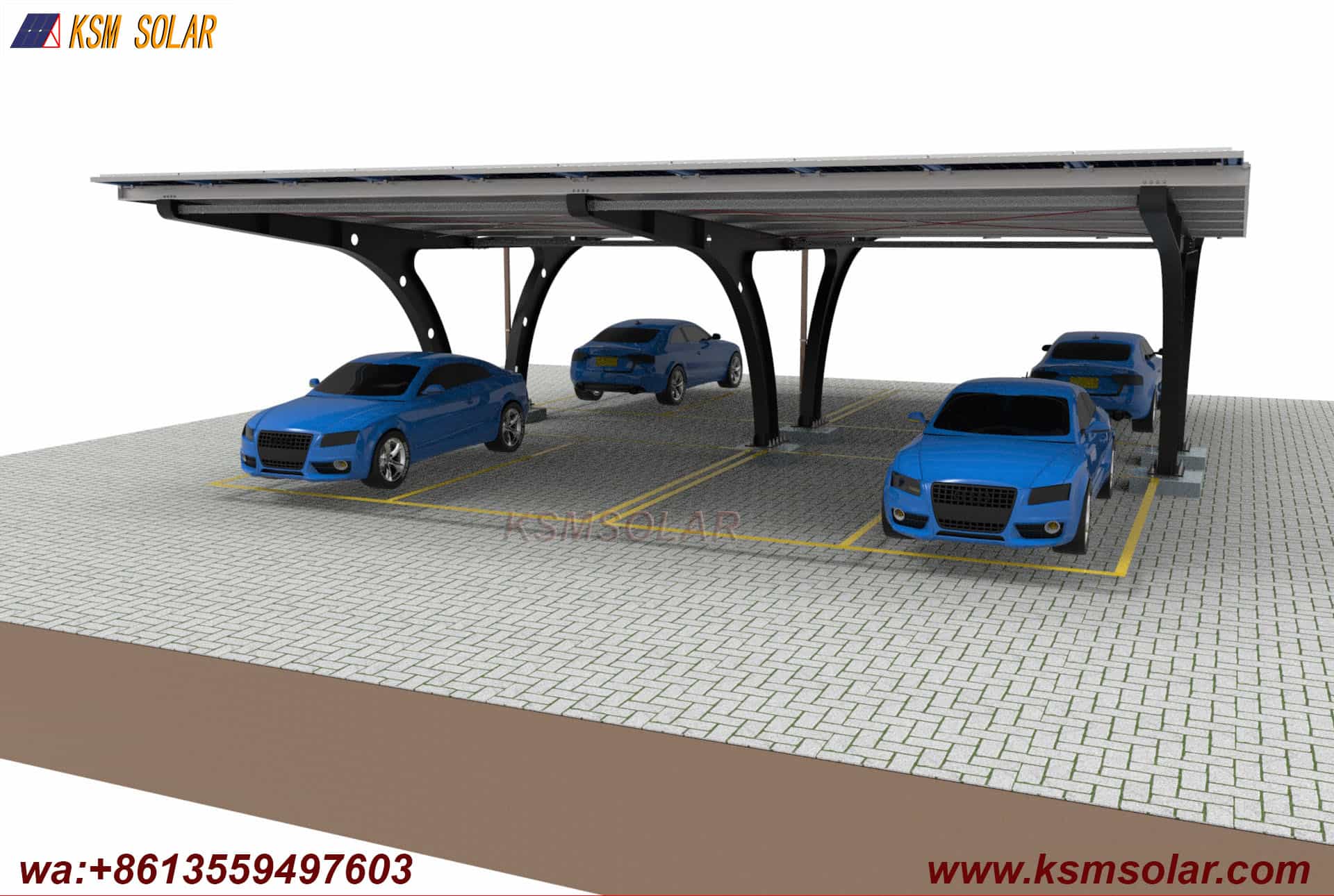
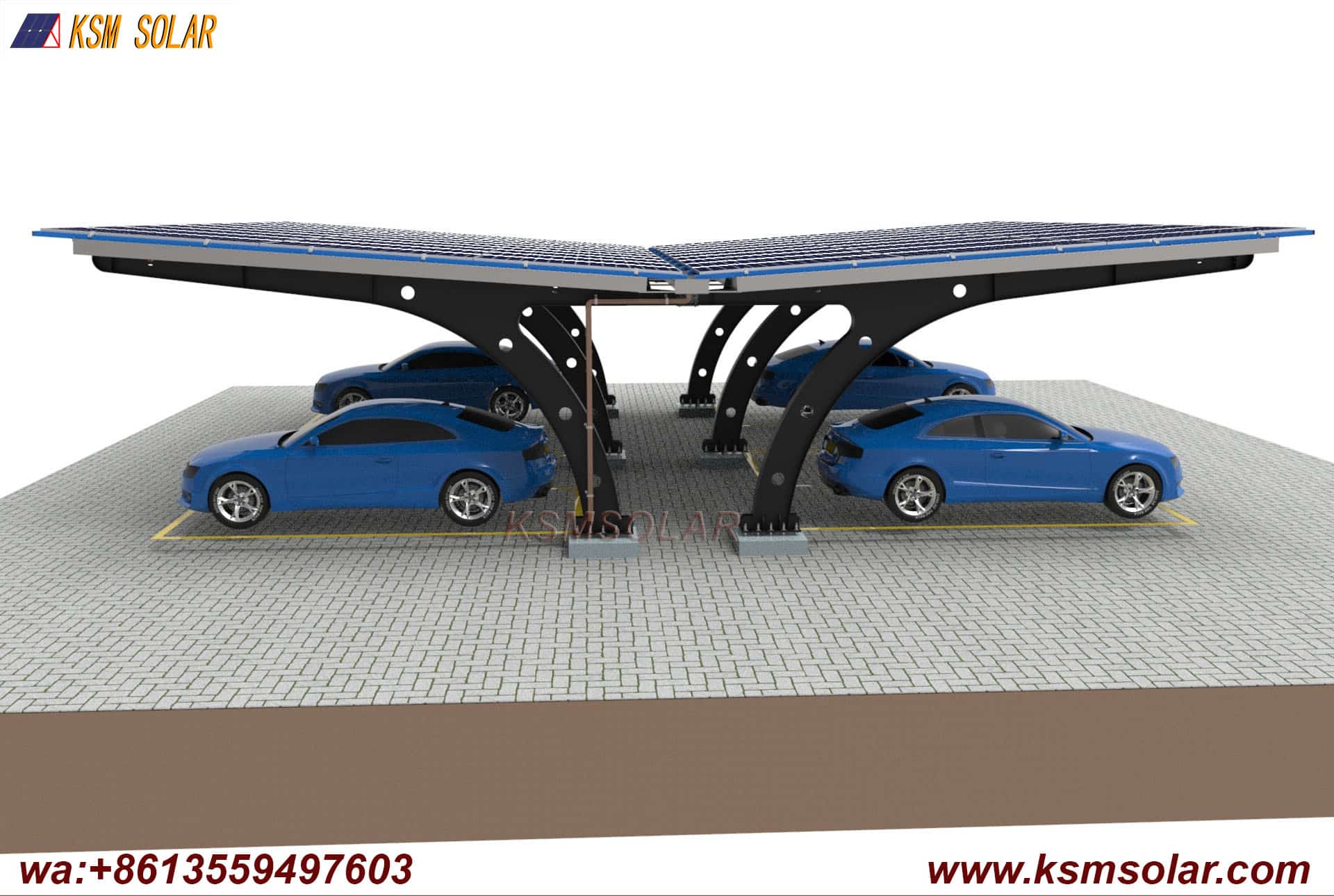
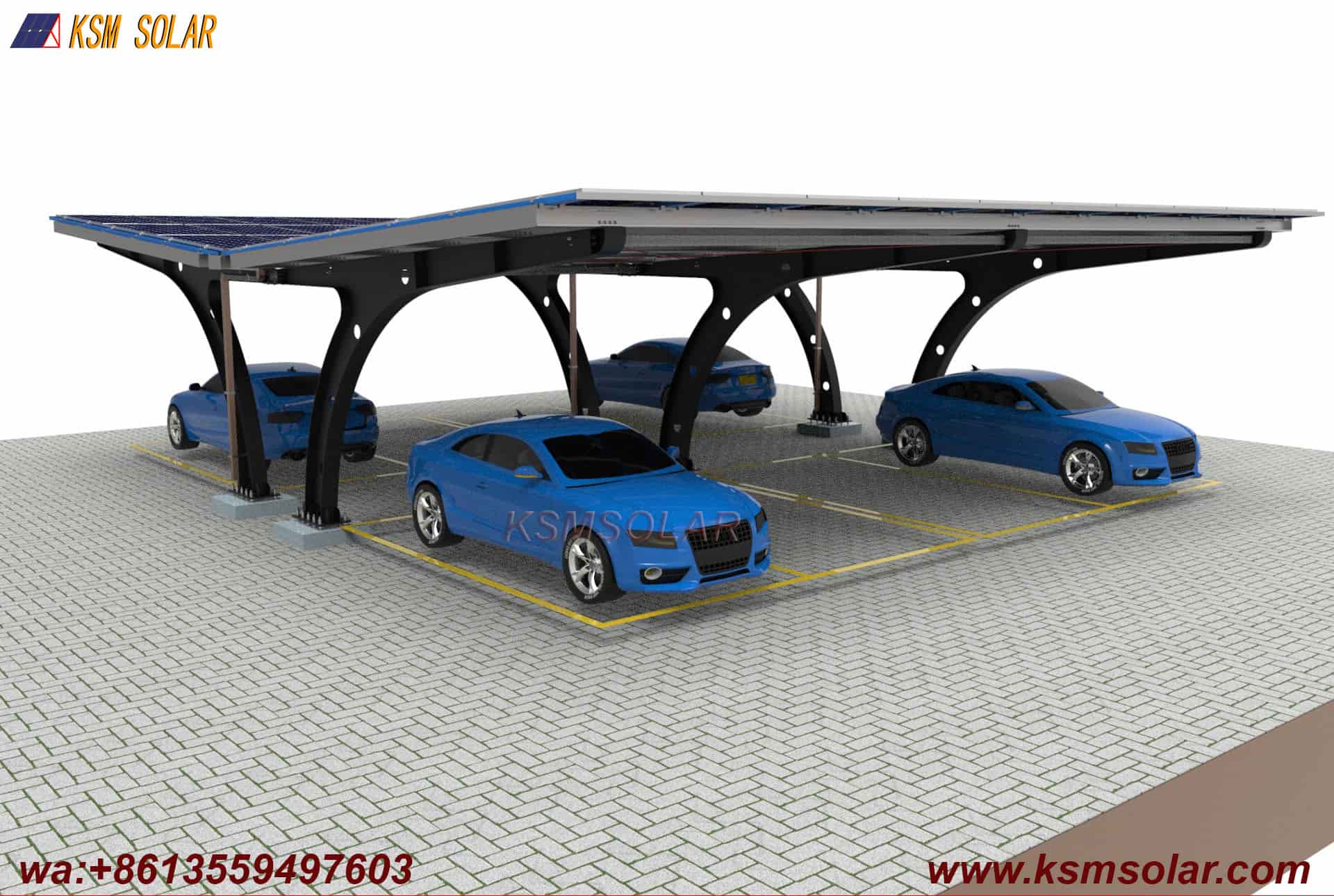
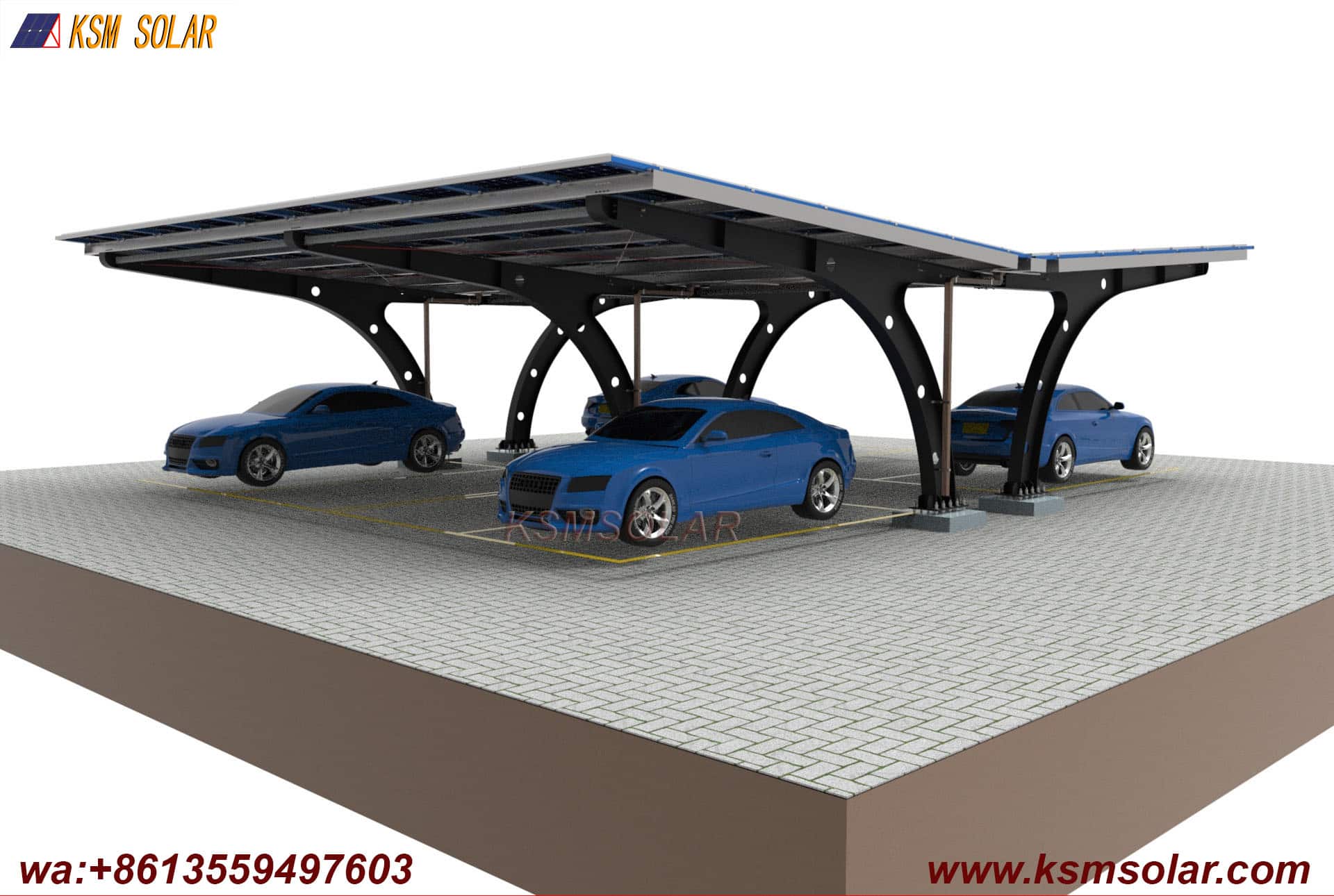
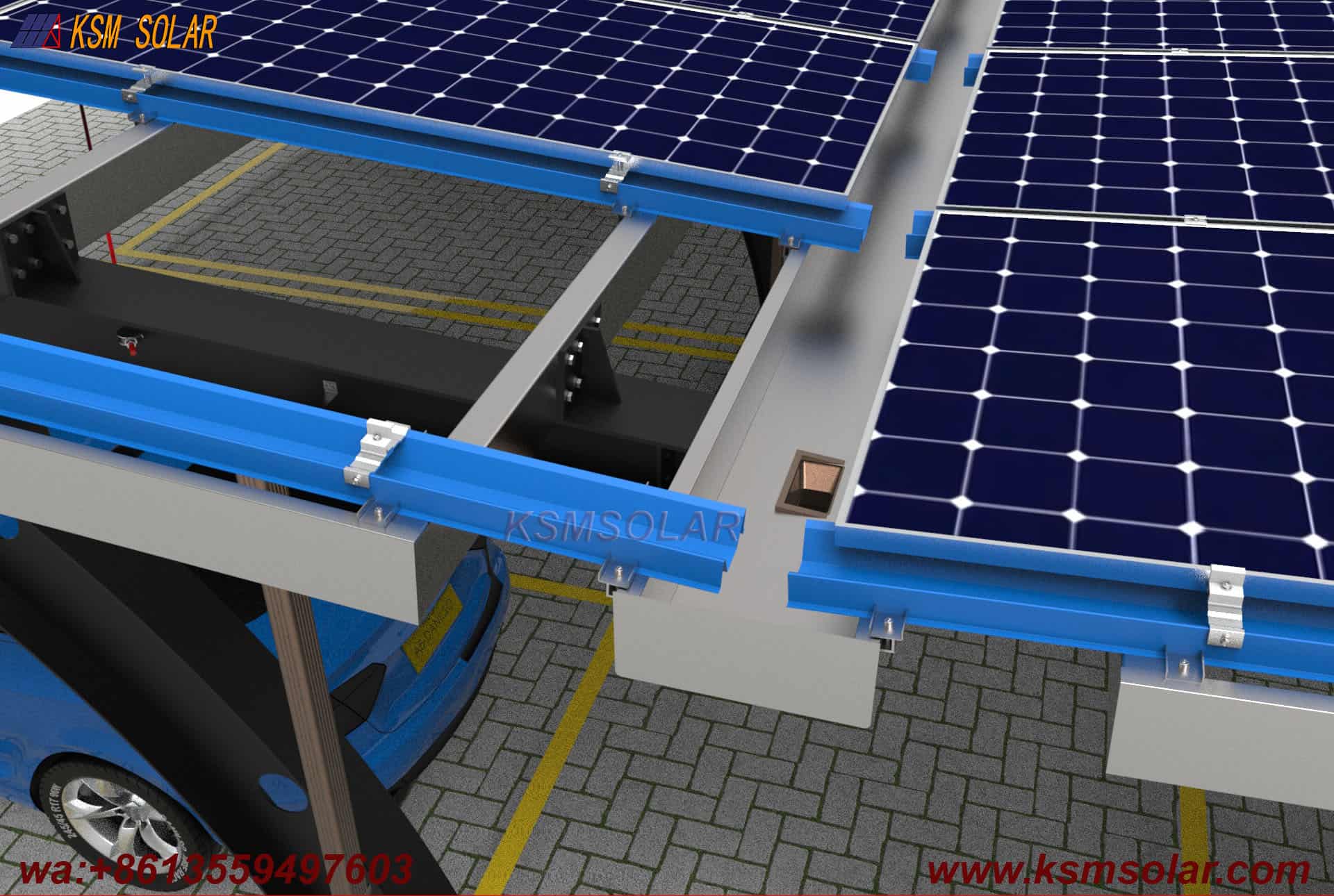
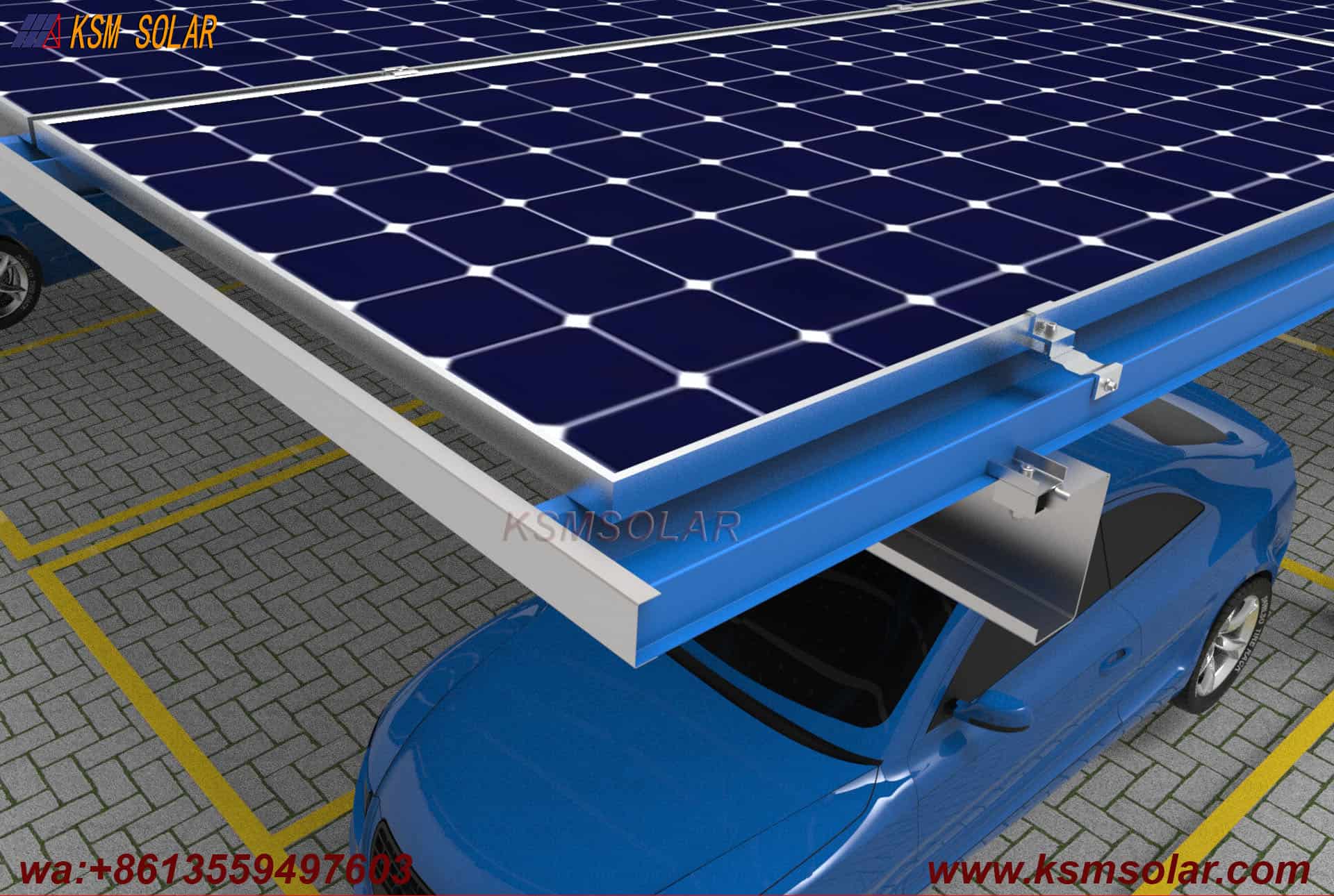
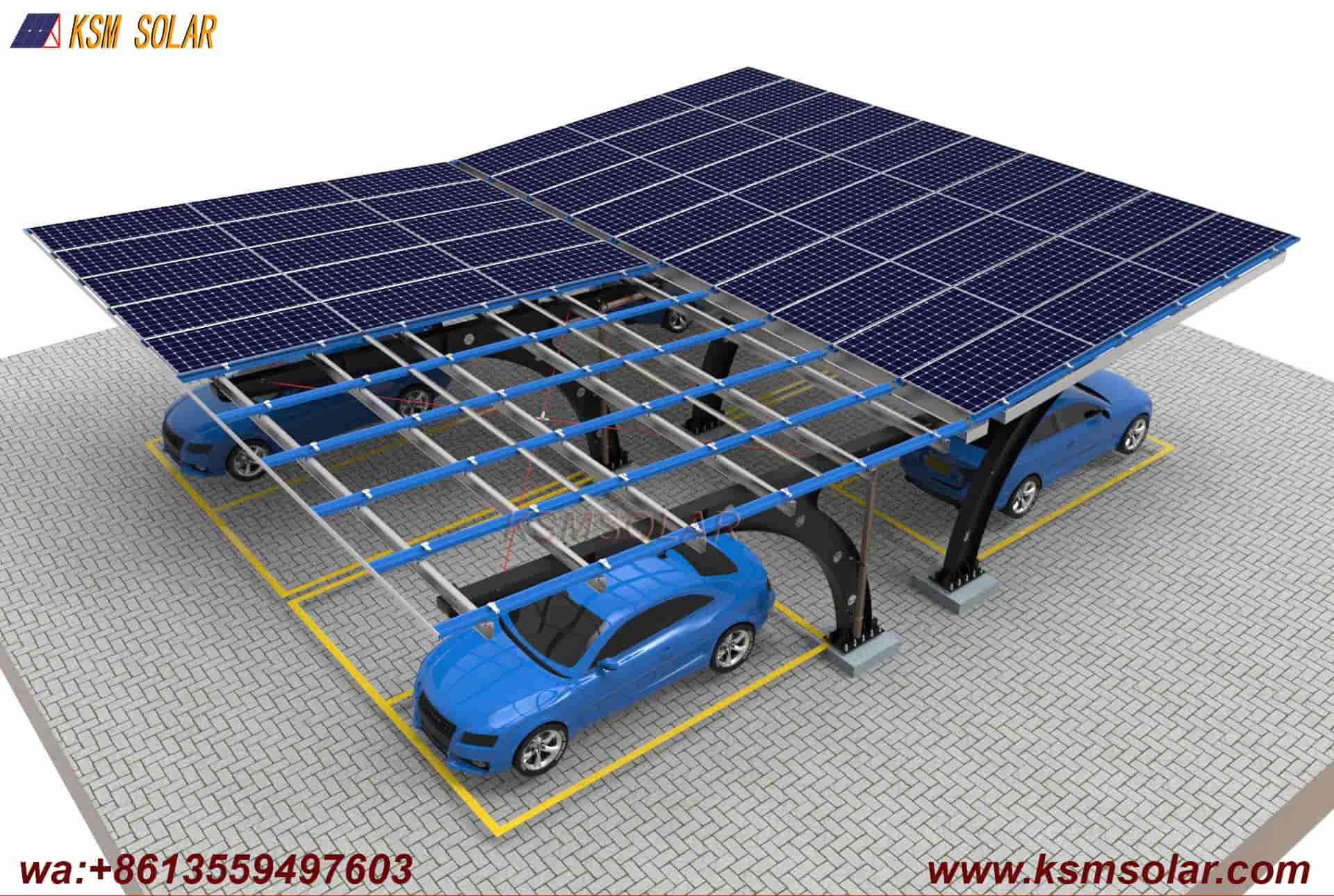
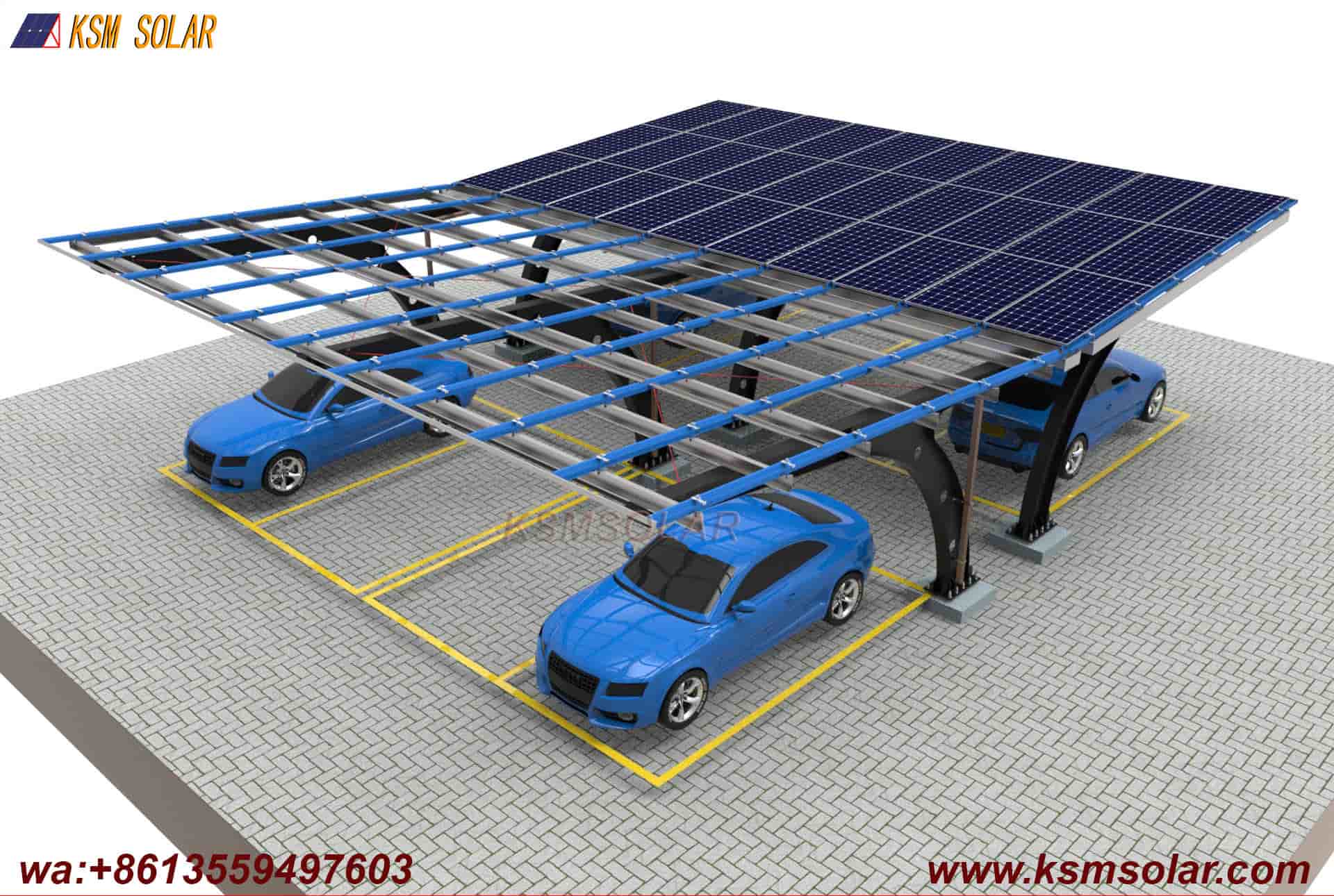
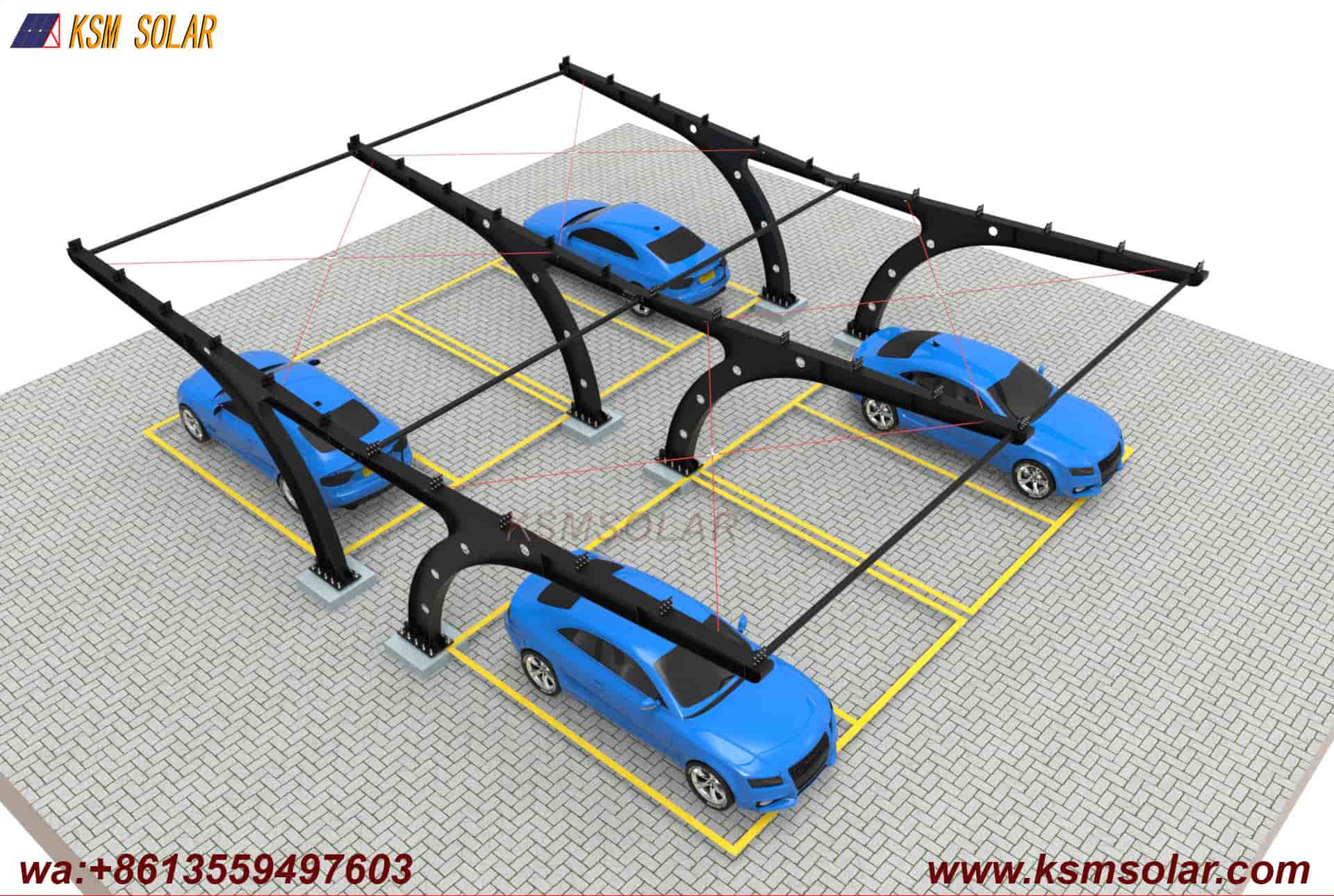
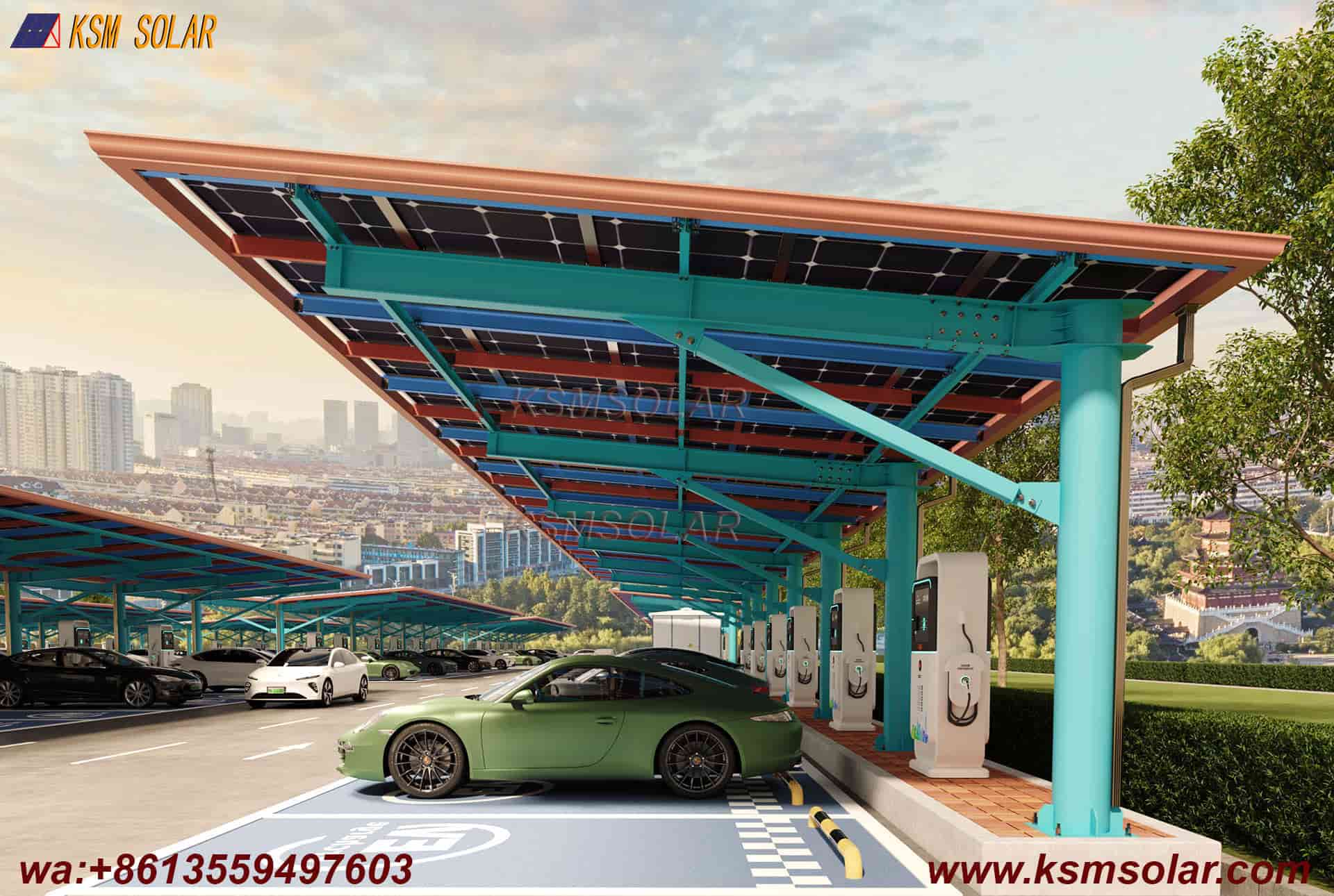
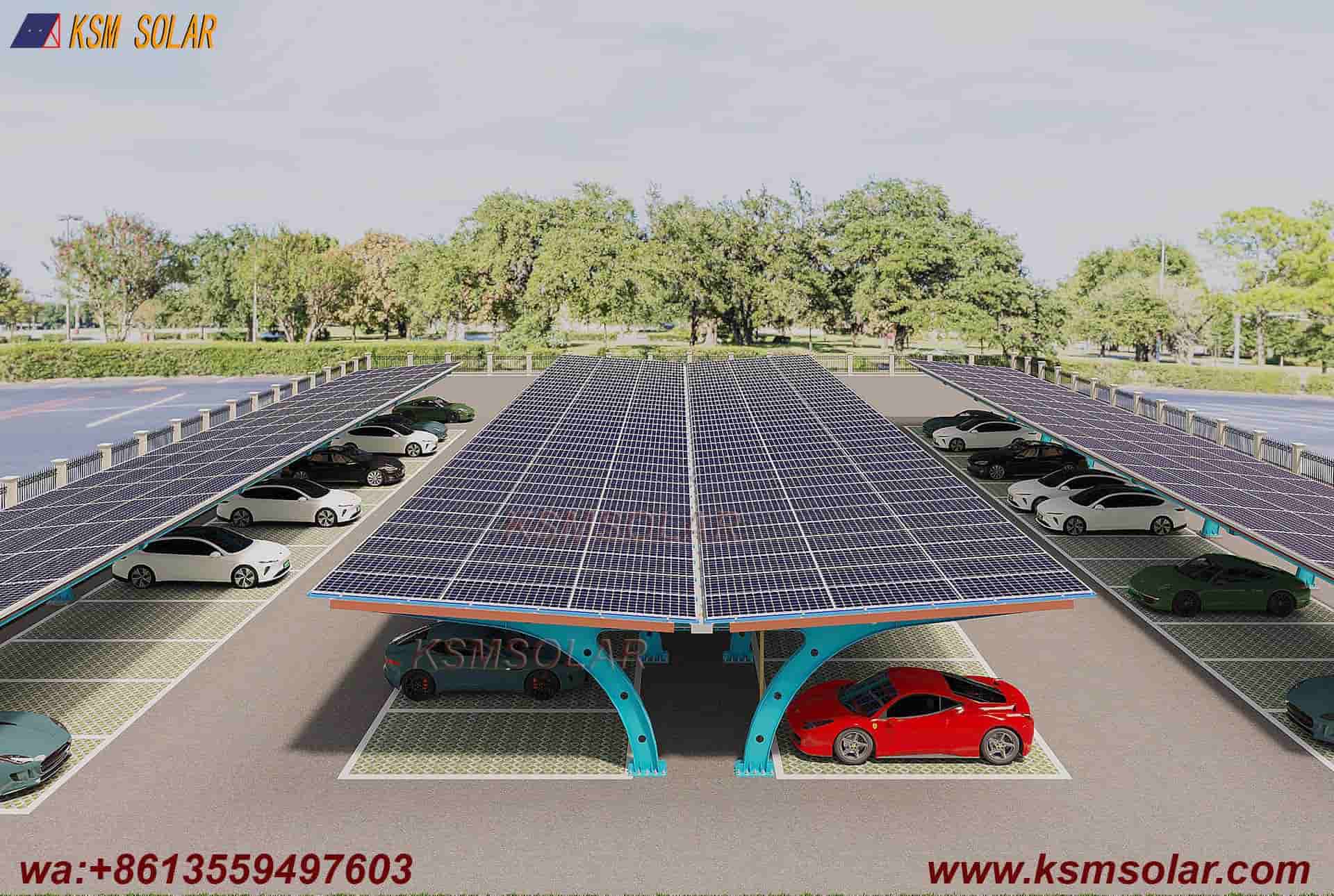
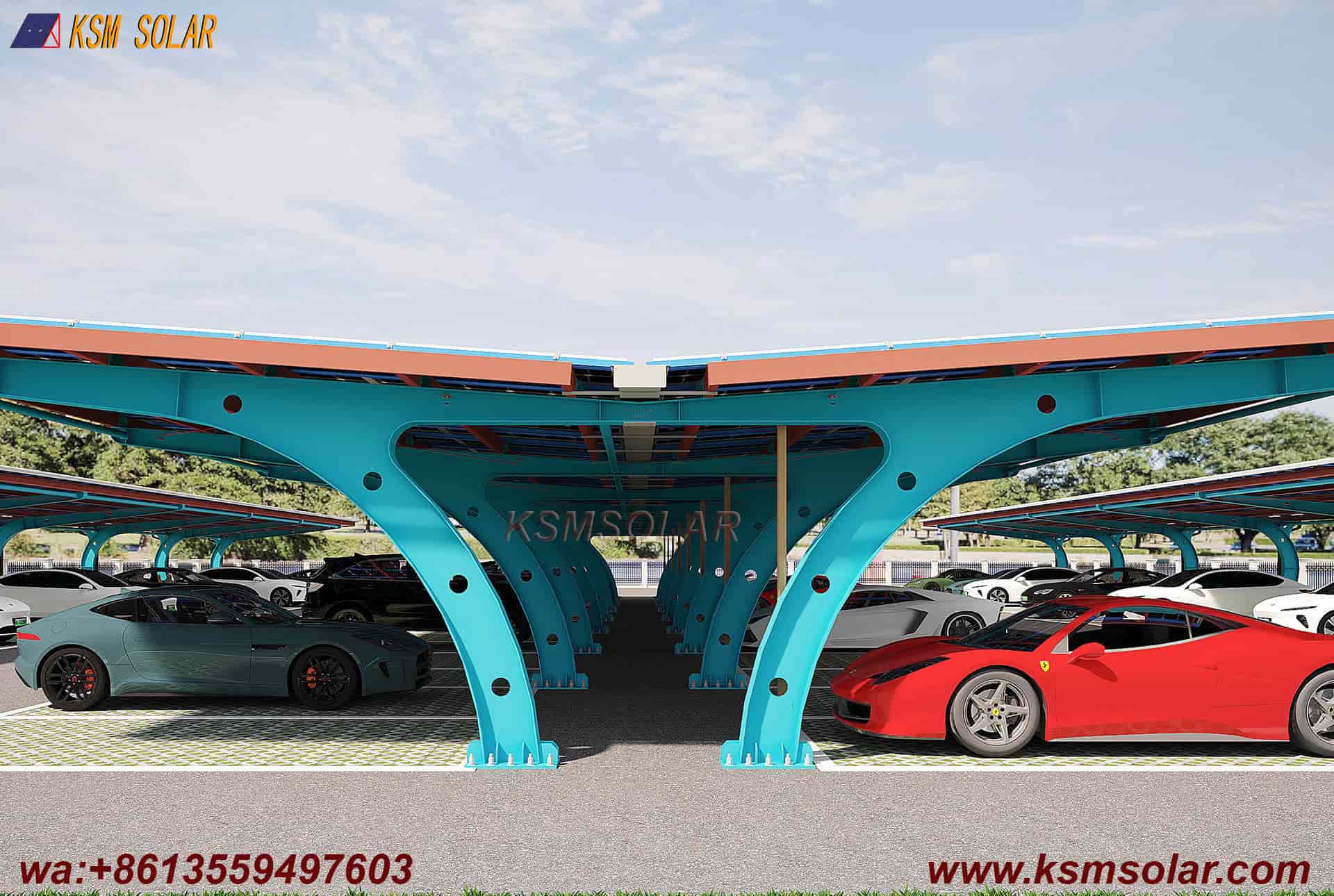
The Carbon Steel Double-Sided Twin-Column Back-to-Back Photovoltaic Carport represents a highly efficient structural solution for maximizing land use and solar energy generation density. This configuration features two independent yet conjoined carport canopies sharing a central row of reinforced twin columns, creating a mirrored, back-to-back layout that shelters two parallel rows of vehicles under a single, expansive photovoltaic roof structure.
Core Engineering Features & System Benefits
1. Centralized Twin-Column Support System
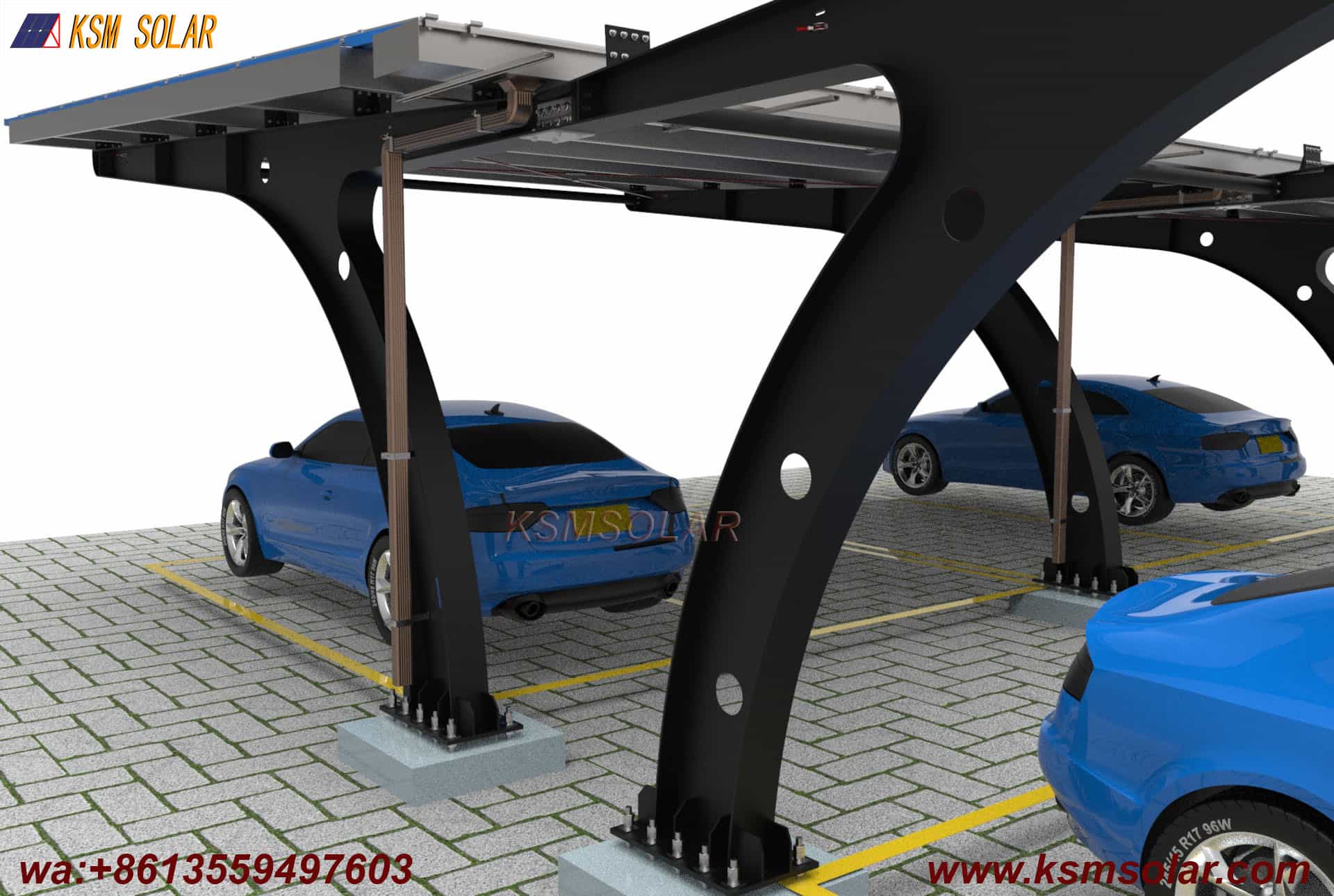
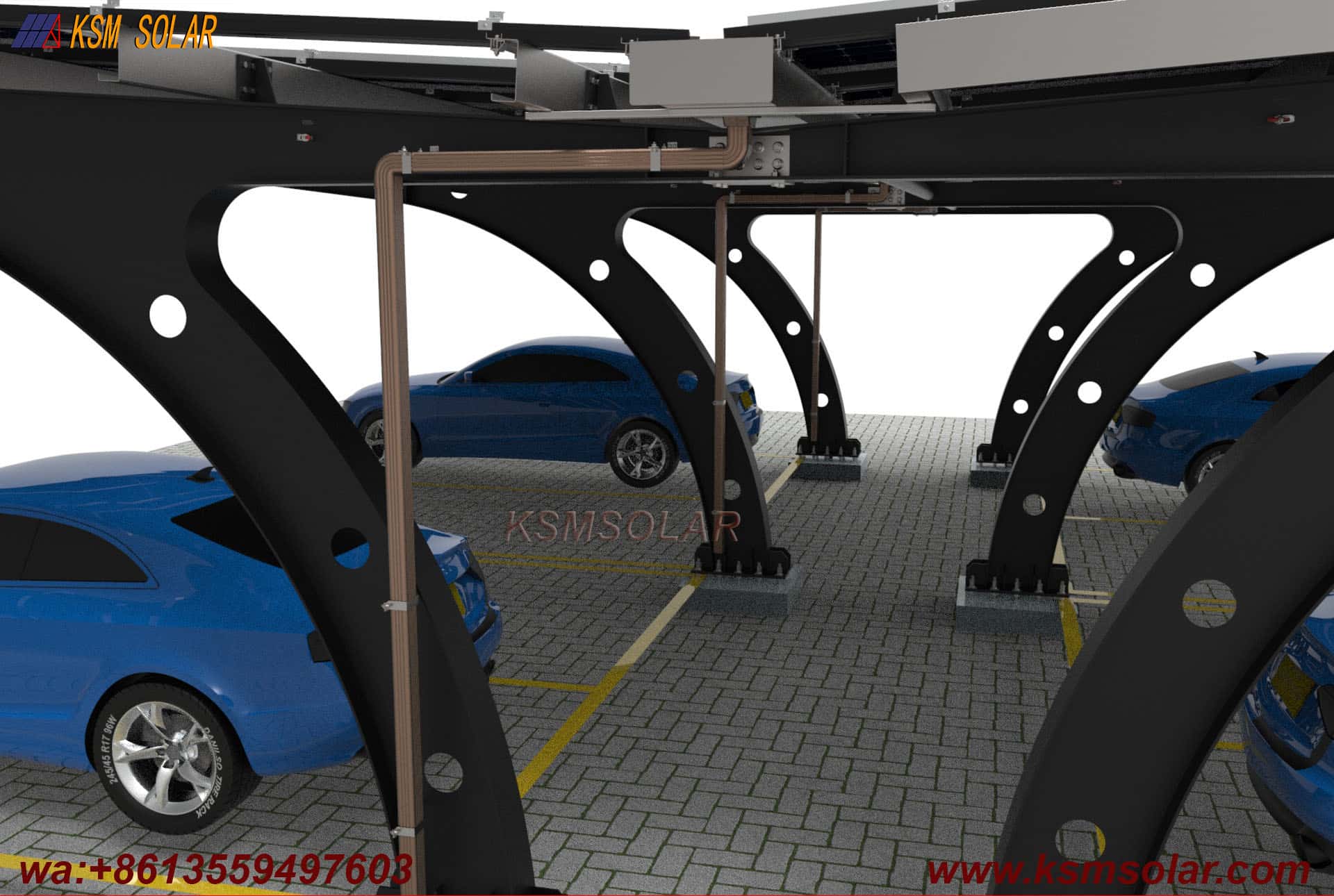
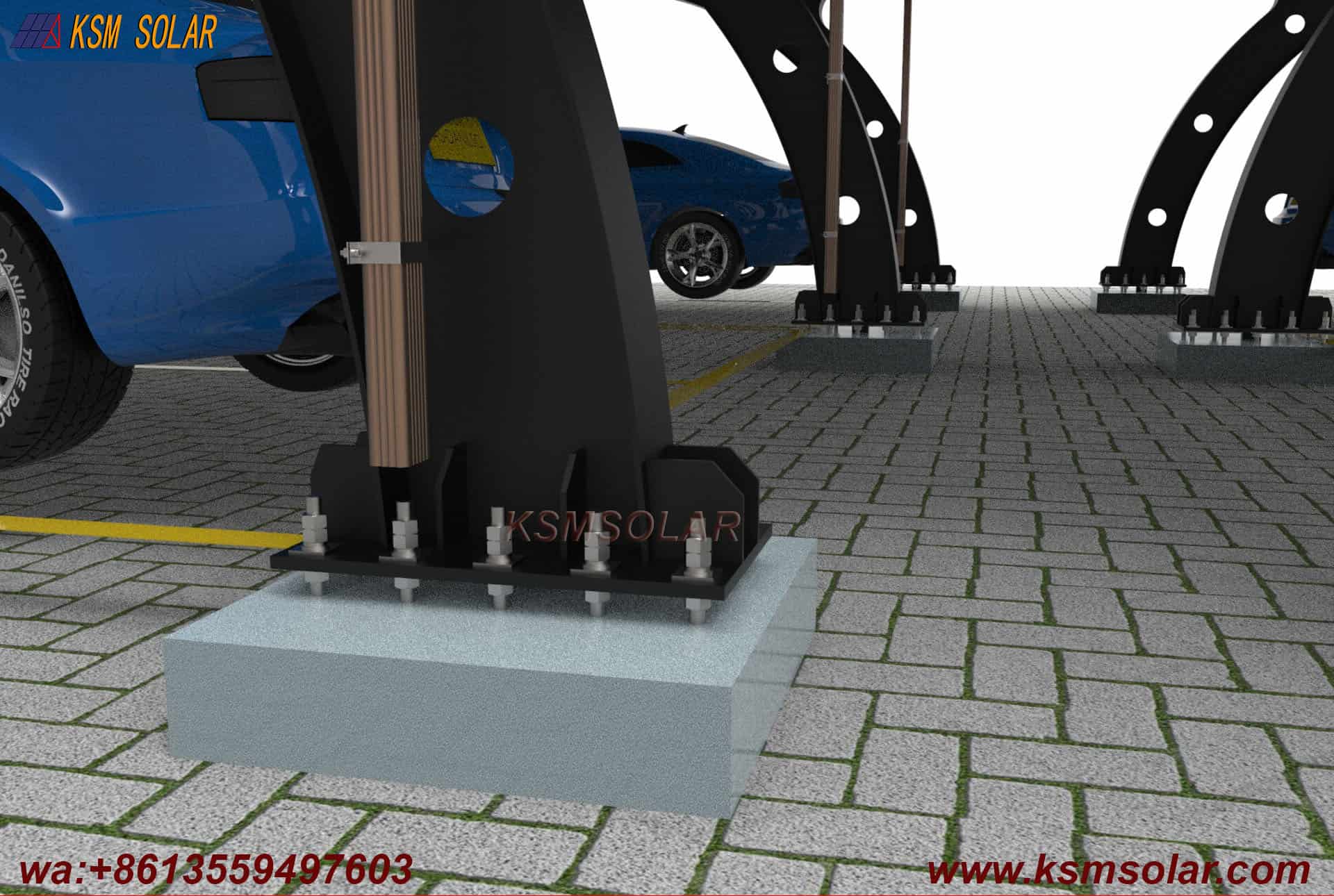
Shared Load-Bearing Core: The structure is centered on a row of paired carbon steel columns (H-beams, wide-flange sections, or large-diameter tubes) placed back-to-back with a minimal gap or connected by a central spine beam. This configuration creates a highly rigid central support spine that efficiently carries the loads from both cantilevered roof sides.
Optimized Structural Efficiency: By sharing the central support, the design minimizes the total number of foundations and columns per unit of covered area compared to two separate single-sided carports. This leads to material savings, reduced site work, and a cleaner, less obstructed parking layout.
Enhanced Lateral Stability: The paired columns, often connected with diagonal bracing or a moment-resisting frame at the top and sometimes mid-height, provide exceptional resistance to lateral forces (wind, seismic) from both directions, ensuring overall structural robustness.
2. Dual Cantilever Roof Design
Symmetrical Dual-Slope or Single-Slope Roofs: Extending symmetrically from the central spine are two primary roof structures. These can be configured as:
Dual-Slope (Butterfly/Gable): Two opposing single slopes meeting at a central valley or ridge beam on the spine, ideal for efficient drainage to both sides.
Independent Single-Slopes: Each side slopes away from the center, often preferred for simpler water management and PV orientation.
Long Span Capability: The twin-column spine allows for significant cantilever lengths on both sides (typically 5-8 meters each), creating wide, column-free driving aisles between parking rows and maximizing covered parking stalls.
3. High-Density Photovoltaic Integration
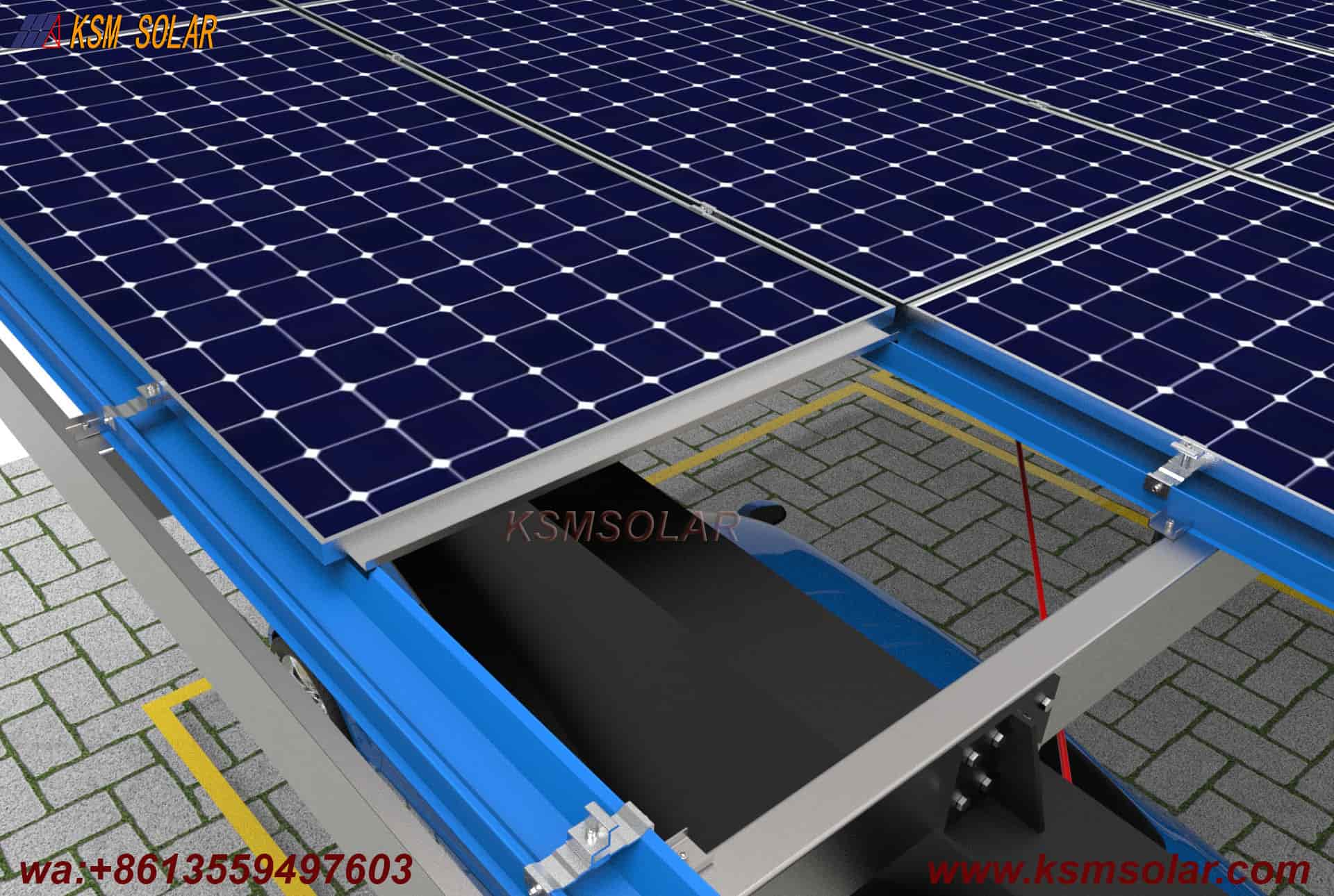
Dual-Aspect Solar Harvesting: The two roof planes can be oriented to capture sunlight from complementary directions (e.g., East-West), effectively extending the daily power generation curve and potentially increasing total daily yield compared to a single south-facing plane. Alternatively, both can face the same optimal direction (South/North).
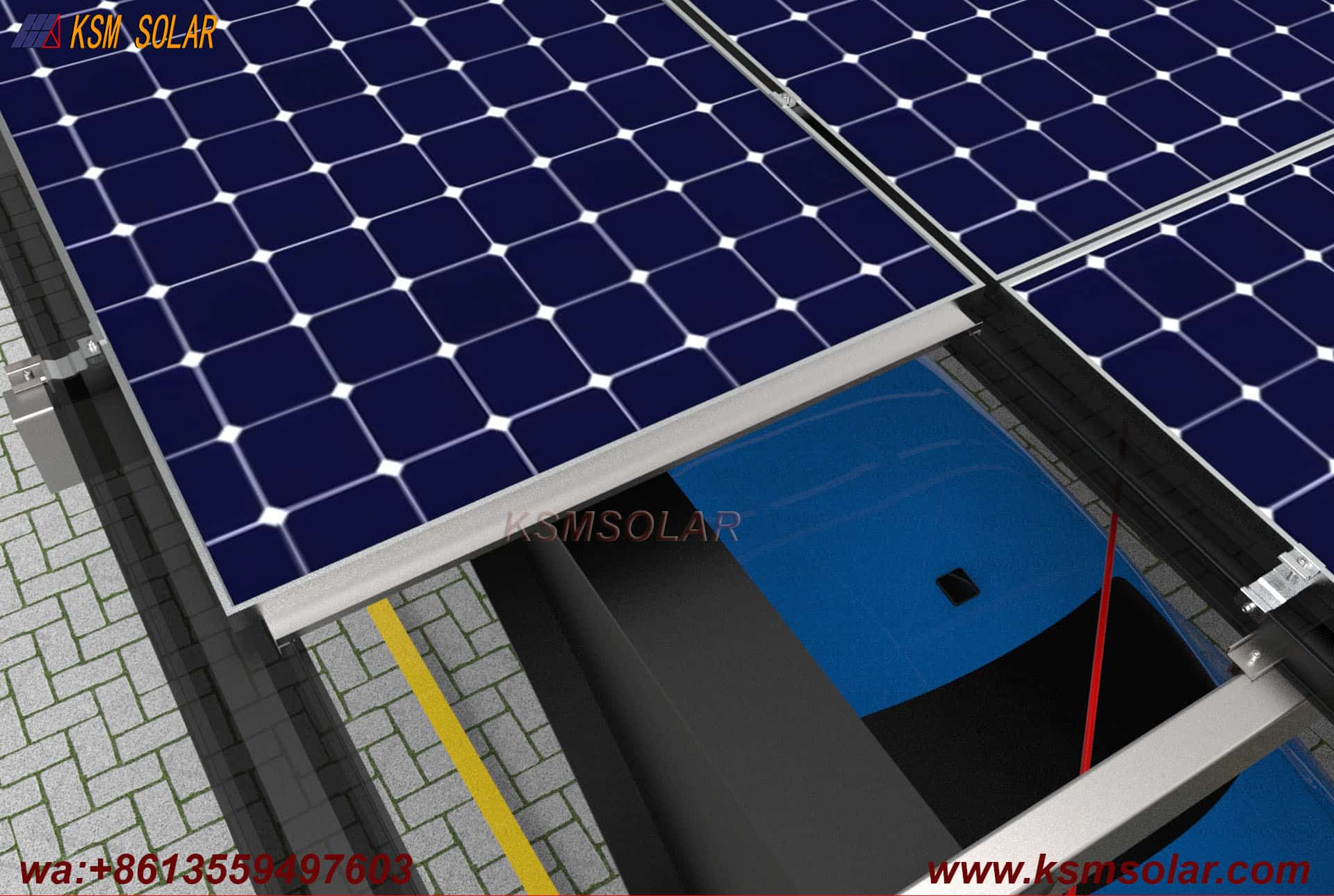
Centralized Electrical Infrastructure: All PV wiring from both roof arrays converges efficiently at the central column spine. This spine can be designed with integrated vertical cable channels or an attached cabinet to house inverters, combiners, and switchgear, centralizing maintenance and optimizing cable runs.
Maximum kWp per Footprint: This design achieves one of the highest possible ratios of installed PV capacity to ground area occupied, making it exceptionally suitable for solar farms on parking lots or sites where land/space is at a premium.
4. Material & Construction Efficiency
Carbon Steel Economy & Strength: The primary structure utilizes hot-rolled carbon steel sections, offering an optimal balance of strength, availability, and cost. All steel is protected with a hot-dip galvanized or advanced paint system for corrosion resistance.
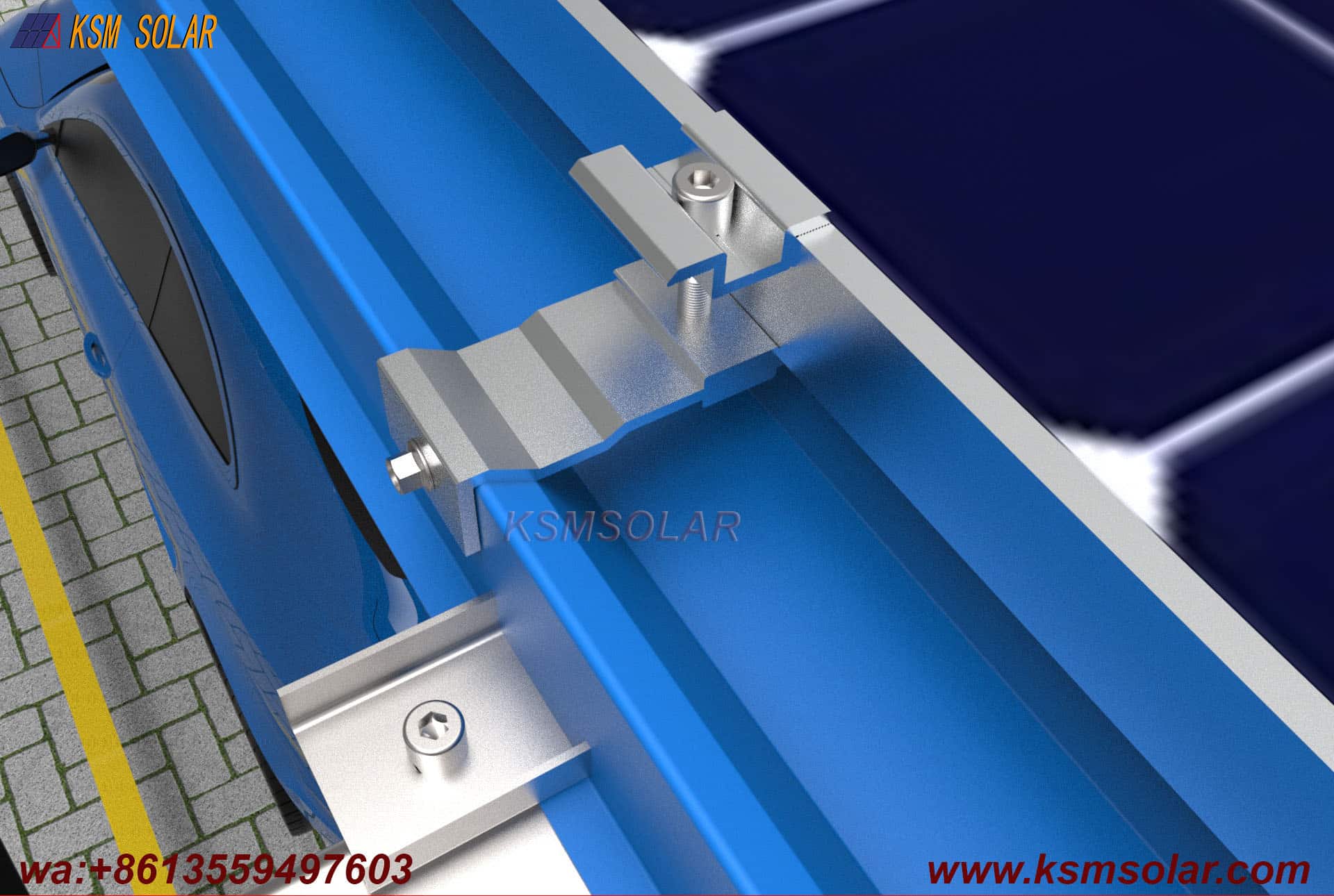
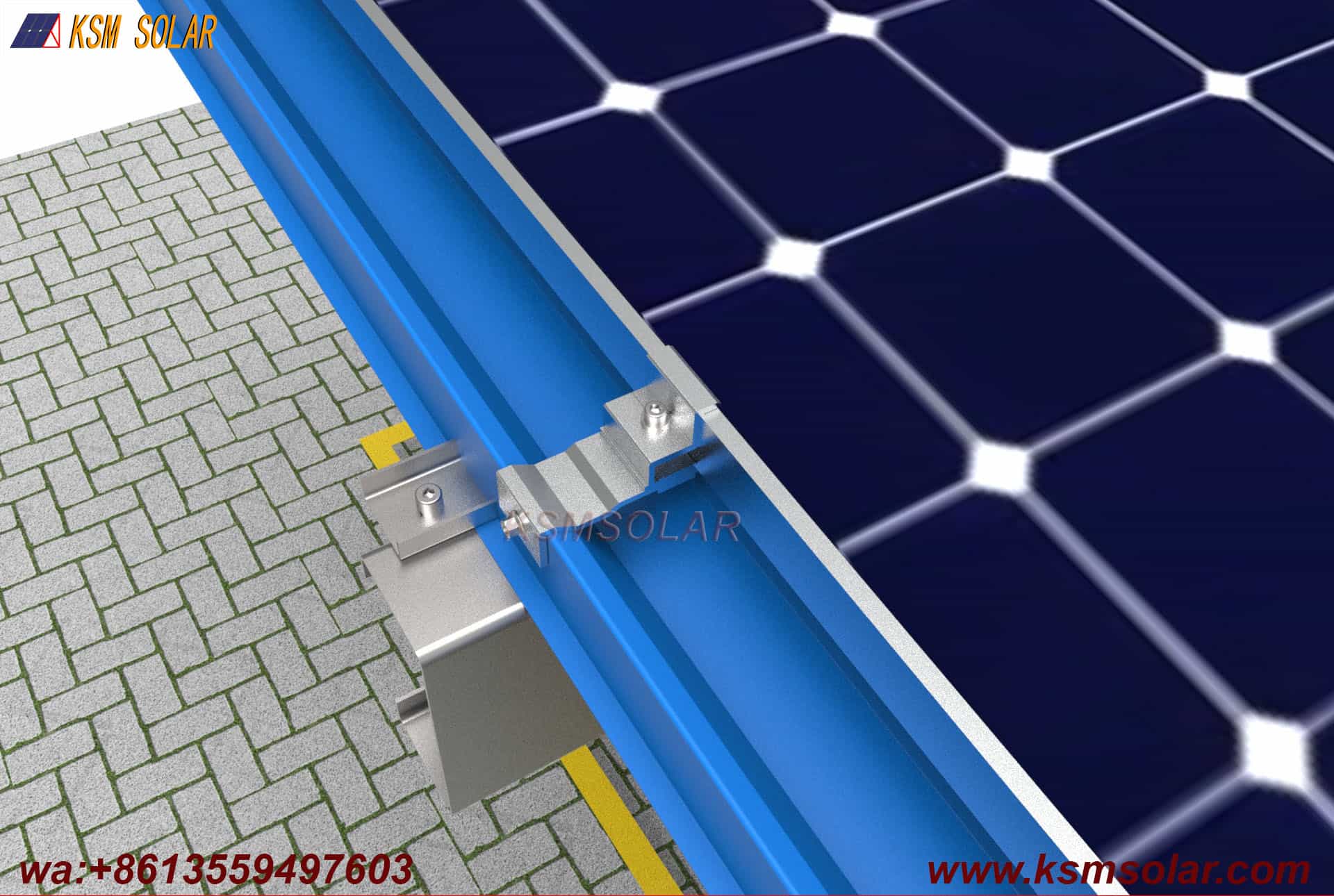
Modular Prefabrication: The central twin-column bents (two columns plus their connecting beams/braces) are fabricated as complete, rigid modules. The roof trusses or beams are also prefabricated. This allows for rapid on-site assembly using bolted connections.
Streamlined Site Work: The linear arrangement of foundations along the central axis simplifies excavation and concrete work. The design naturally organizes the site into clear zones for parking, driving, and services.
5. Functional & Operational Advantages
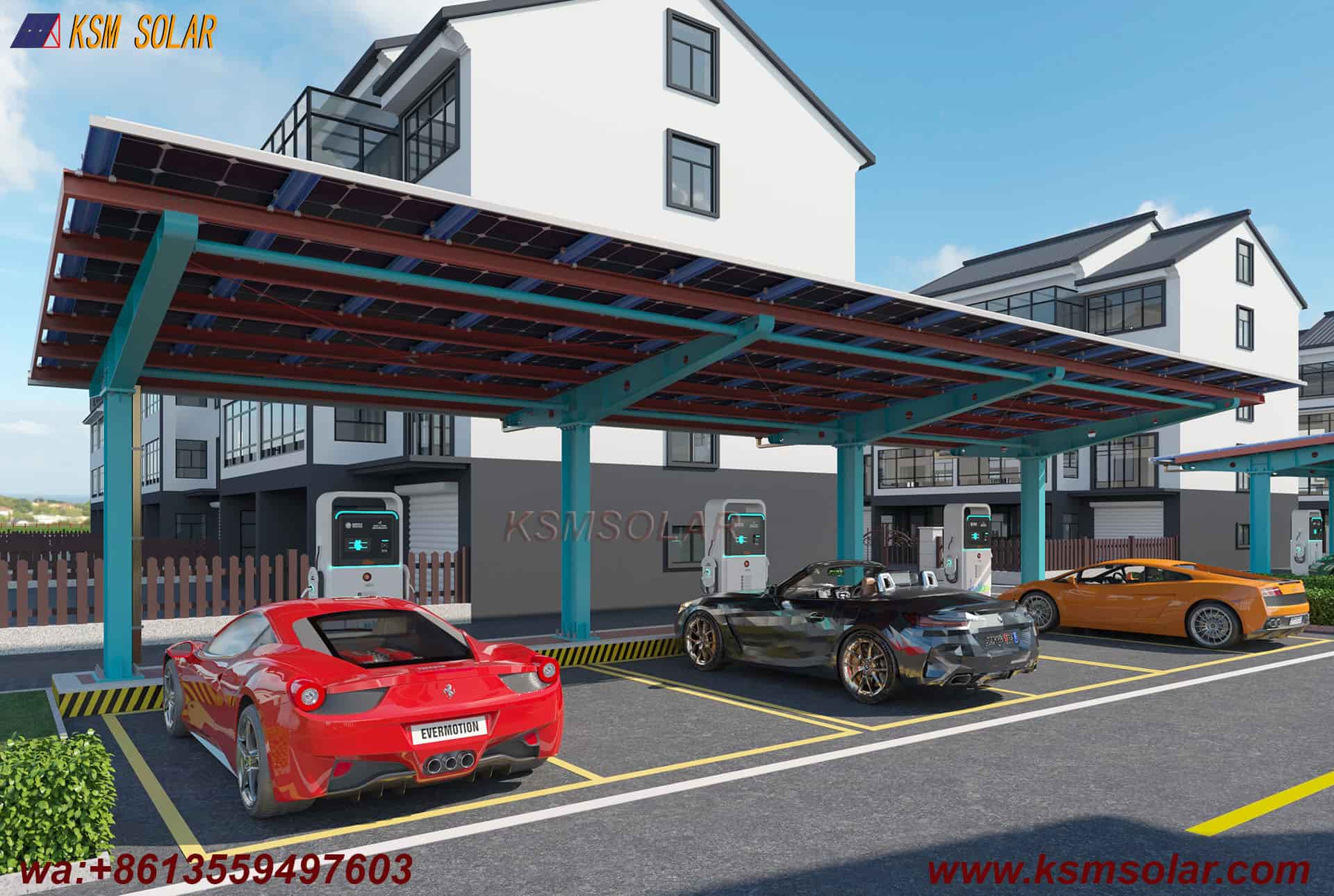
Superior Space Utilization: Ideal for organizing parking in long, parallel rows (common in commercial lots), effectively doubling the sheltered parking capacity for a given length of structure compared to a single-sided canopy.
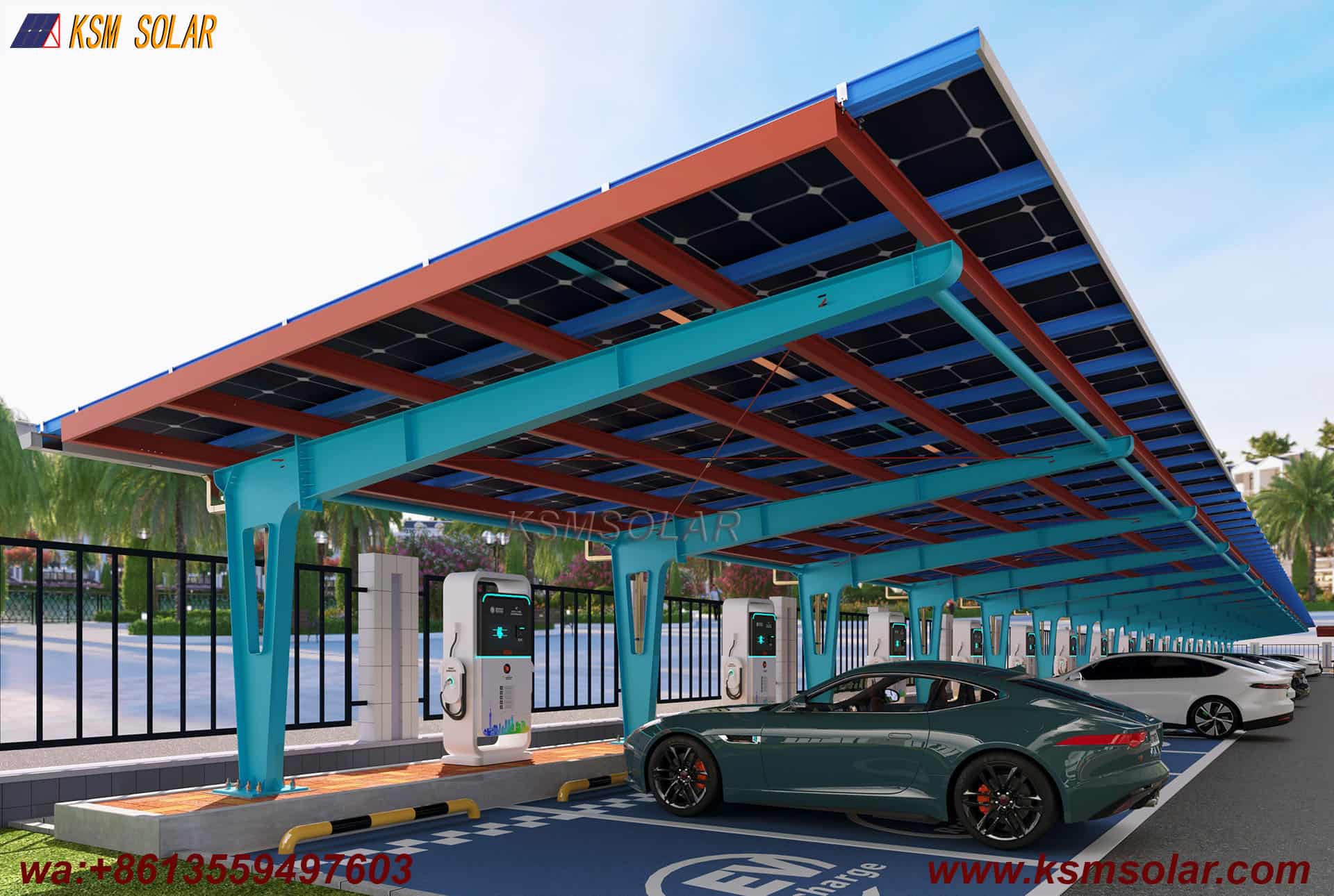
Clear Circulation & Safety: Creates a wide central corridor under the structure (between the column pairs) that can serve as a fire lane, main circulation path, or location for EV charging stations, keeping these services centrally located and protected.
Adaptability: The central spine can be designed to support additional infrastructure such as LED lighting, signage, security cameras, or rainwater collection gutters running its entire length.
Parameters
Material: | Q235B/Q355B |
Standard: | ASCE7-10/EU/JISC8955-2017 |
Surface Treatment: | Hot-Dip Galvanized/Spray Paint |
Wind Load: | 0-60m/s |
Snow load | 0-150cm |
Warranty | 10 Years |
Service Life | 25 Years |
Details