Welcome to KSM SOLAR


Photovoltaic accessories
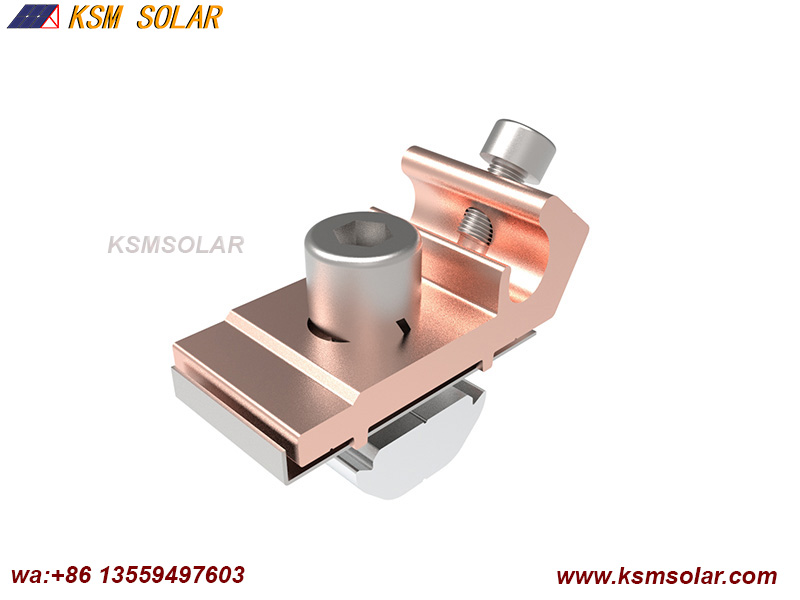
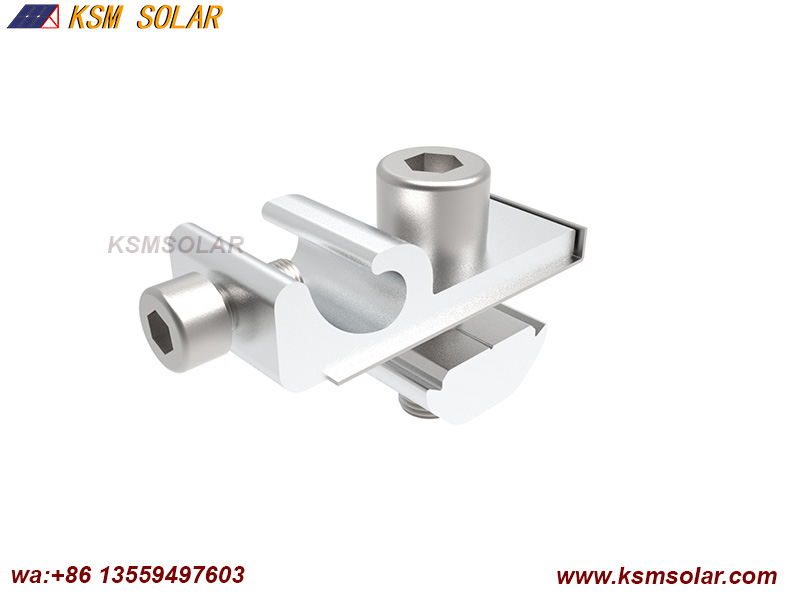
Grounding Lug
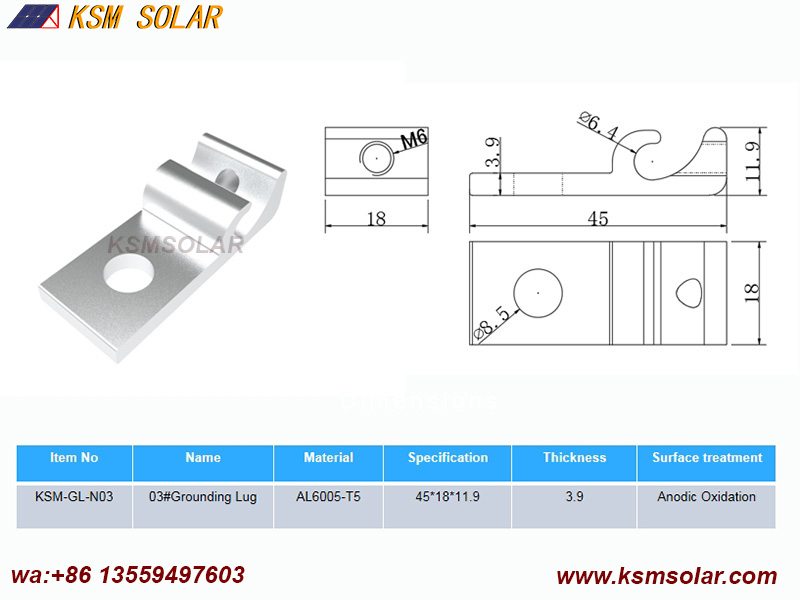
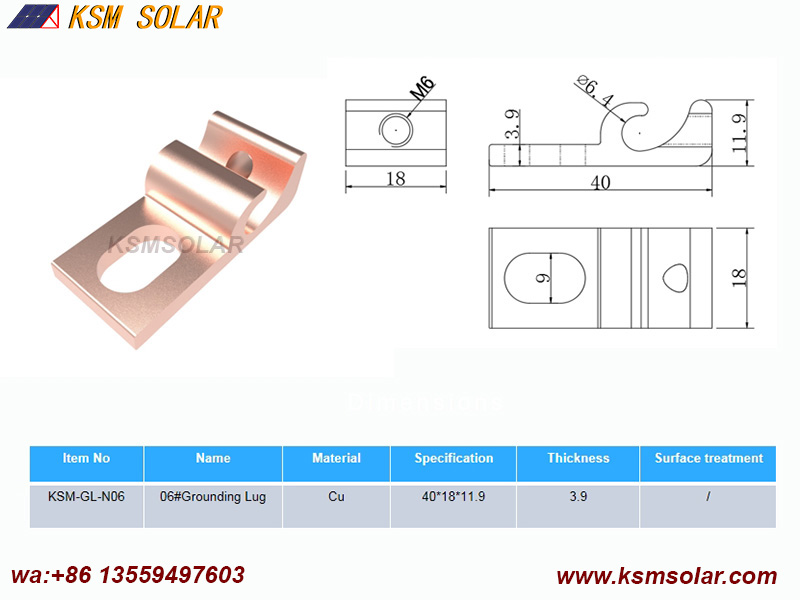
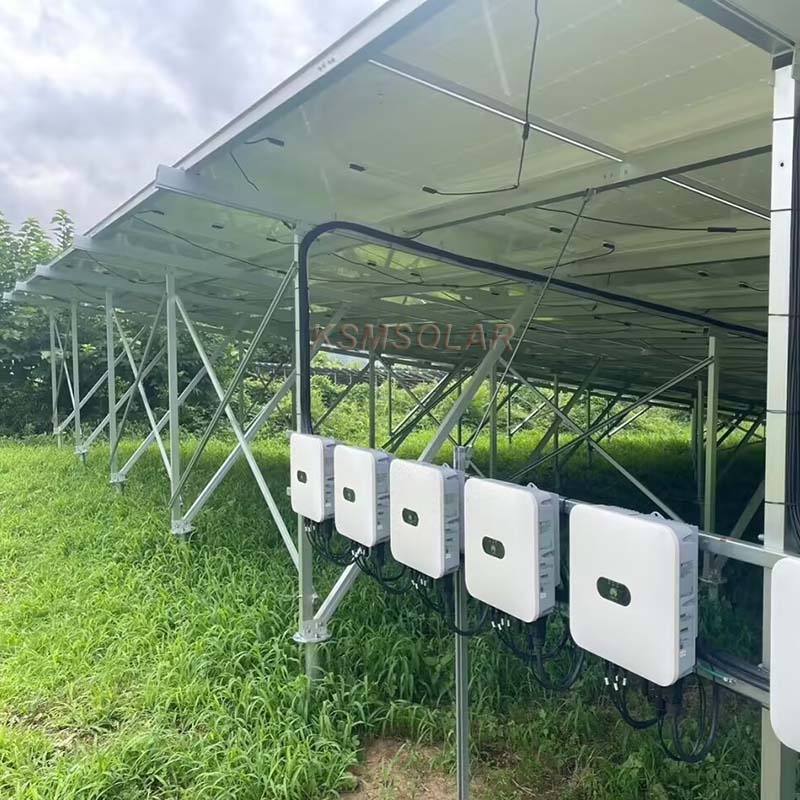
A grounding lug is a critical electrical termination device used to connect the PV array's equipment grounding conductor (EGC) — typically a bare copper wire — to the metal components of the solar mounting system (rails, racks, or module frames). Its defining characteristic is that it serves as the interface point between the bolted mechanical structure and the wired electrical grounding system.
Core Functional Principle: Termination and Interface
Wire Termination: The primary function of a grounding lug is to provide a secure, code-compliant termination point for the grounding wire (conductor). It ensures that the copper wire is mechanically secured and electrically bonded to the aluminum structure.
Single-Point Connection: Unlike grounding clips which are used at every module, lugs are typically used at intervals (e.g., every 50-100 feet of rail, at each array corner, or at the combiner box) to "collect" the ground from the structure and tie it into the home run wire leading to the ground rod.
Dissimilar Metal Management: A key engineering challenge is connecting a copper wire to an aluminum rail. The lug is specifically designed to manage this dissimilar metal interface to prevent galvanic corrosion.
Design and Physical Configuration
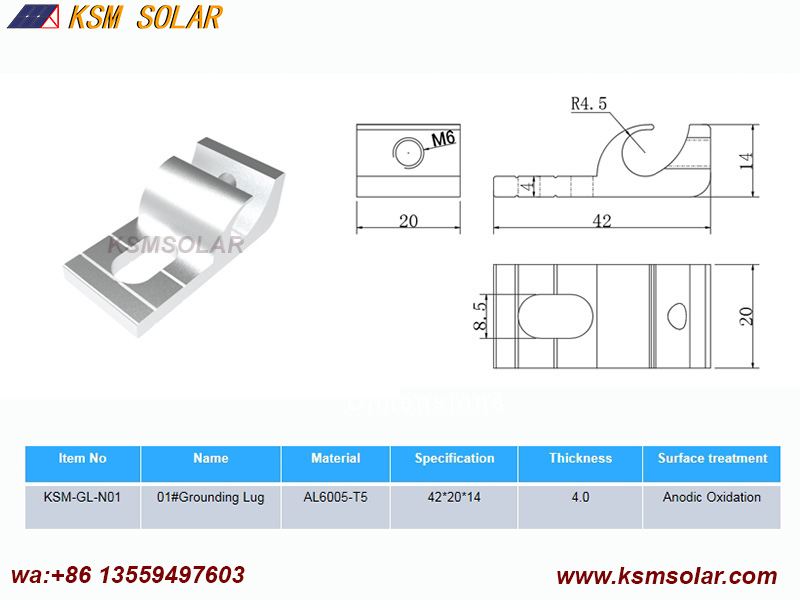
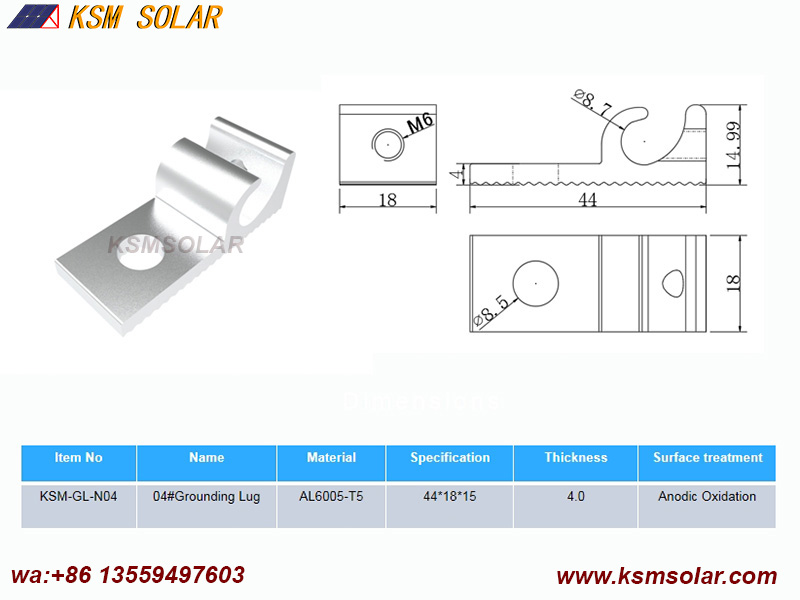
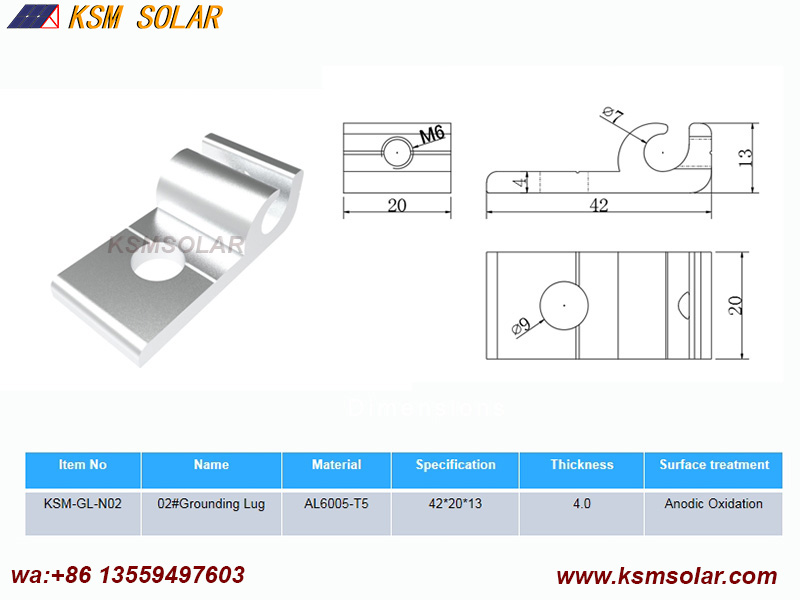
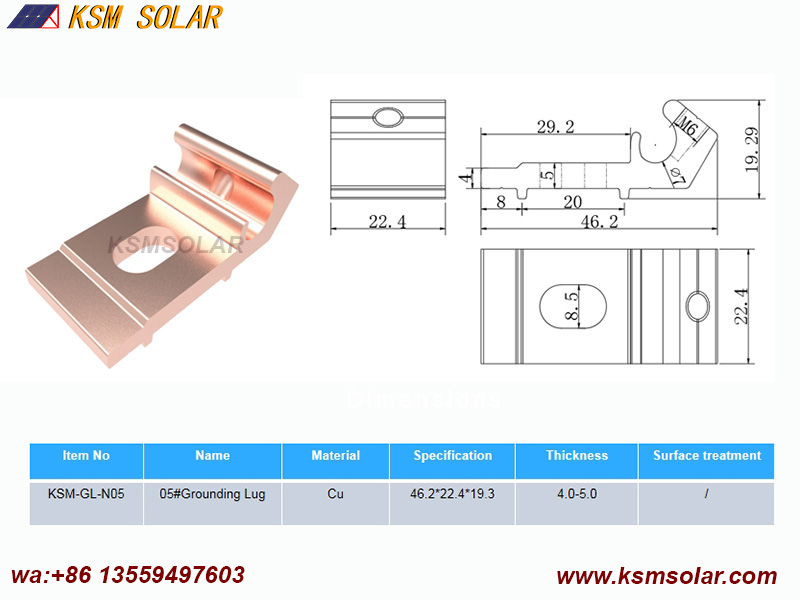
Paddle or Platform Base: The lug typically features a flat base (paddle) with a hole for a bolt to attach it to the aluminum rail or module frame.
Wire Barrel or Clamp: The opposite end features a mechanism to secure the copper wire. This can be:
Set Screw Barrel: A cylindrical barrel where the wire is inserted and clamped down by one or more set screws (common for smaller gauges).
Split-Bolt Clamp: A heavy-duty clamp that wraps around the wire and is tightened with nuts (common for larger gauge wires).
Compression (Crimp) Barrel: A tube where the wire is inserted and then physically crushed (crimped) with a specialized tool for a permanent, cold-weld connection.
Inspection Holes: Many lugs feature a small hole in the barrel opposite the set screw. This allows an installer to insert a small tool to verify that the copper wire has been inserted fully to the proper depth before tightening.